In Review ‘Songs of the Chambermaids’ and Interview with Writer & Director Mark C. Hewitt

The talents of playwright, poet, theatre maker & filmmaker Mark C. Hewitt have been deservedly recognised at Rocks Festivals over the years as his work continues to challenge, surprise and captivate audiences and reviewers alike. A sequence of microfilm-poems with the overarching title ‘Les Coffrets’ played at Brighton Rocks 2022, and in June this year we were thrilled to screen his latest work ‘Songs of the Chambermaids’, which was joint winner of the Best Experimental Film Award.

‘Songs of the Chambermaids’ is a wholly absorbing, cacophonous and captivating original short film whose origins lie in an as-yet unperformed stage play called ‘Civilization and its Discontents’ from which Mark extracted part of the 9th movement to form the digital piece we see today. The play takes inspiration from Sigmund Freud’s eponymous book, examining the primary tension that exists between human beings’ desire for freedom and civilization’s demand for conformity.

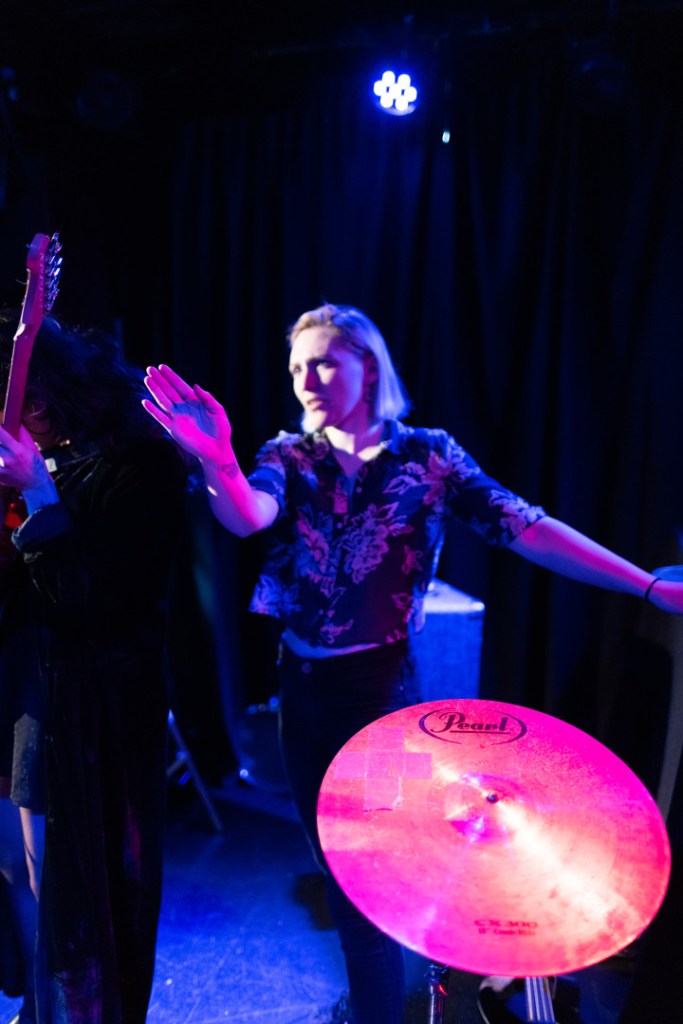
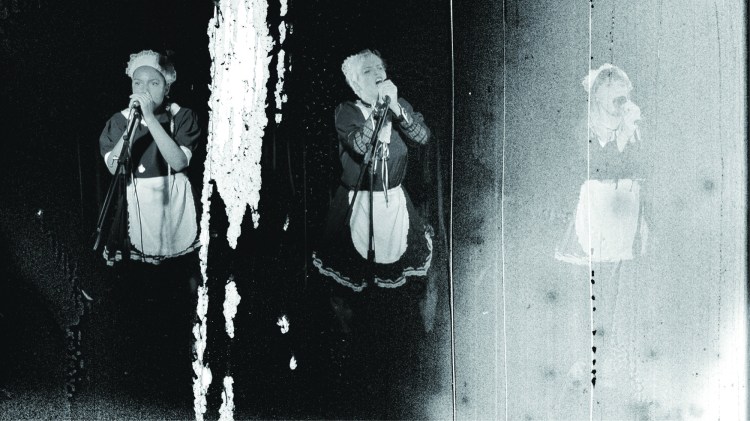
These notions are explored and reworked through the alluring and seductive chanting voices of three chambermaids, deftly performed by Marta Carvalho, Leann O’Kasi and Melissa Sirol, whose lyrics are seamlessly paired with the drumbeats and guitar music of Norwegian jazz percussionist Thomas Strønen. In three songs, the chambermaids discuss their philosophical ‘reasons for being’ and speak of the many trials and tribulations caused by living in a male-dominated, aggressive and violent world. “Men are not gentle creatures who want to be loved,” they chant with conviction. “They are savage beasts.”

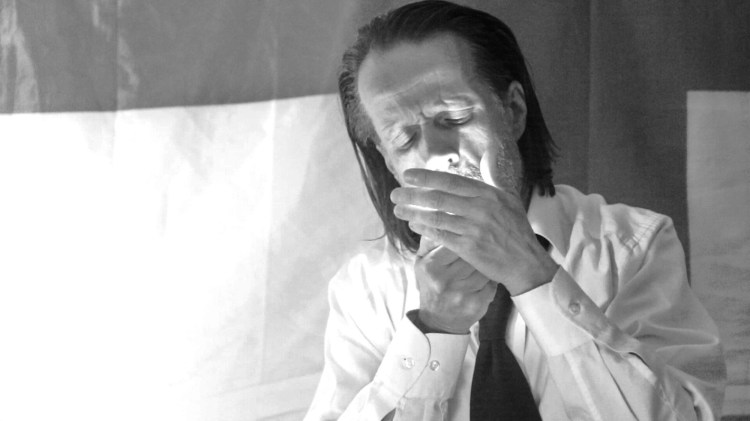
To bring the project to life, Mark worked with long-time collaborator videographer and editor Matt Parsons. It is undeniable that ‘Songs of the Chambermaids’, which aims to critique the ethical implications inherent in the artist/subject relationship, adroitly marries with Matt’s work. Through an unquestionably sensible choice of black and white and dysphoric flickering film which oscillates between the increasingly imploring chorus of our chambermaids and a series of evocative and ultra-violent images, ‘Songs of the Chambermaids’ transcends the realms of a ‘normal’ viewing experience. At the film’s climax, a relentless torrent of subliminal images is unleashed evoking mankind’s history of war and atrocity.

“It’s the sort of piece which comes out through the fourth wall and addresses its audience directly, or at least appears to, which some people like and some people don’t”, comments Mark. ‘Song of the Chambermaids’ is certainly a film which I wanted to watch on repeat, alone in a dark room with the sound reverberating around me. At each viewing I found myself totally hypnotised by the words, the rhythmic chanting and the chambermaids themselves, leaving me with disparate feelings.  It is a piece of work that demands a discussion. Perhaps it is the existential questions that strike such a chord, or its exploration of the misogynistic and arrogant male world we unfortunately continue to live in. Whatever the reason, ‘Song of the Chambermaids’ is an extraordinary work of experimental cinema and it was my utmost pleasure to be able to work with Mark at both reviewing this piece and elucidating some of the filmmaking practices behind ‘Songs of the Chambermaids’.
How did you come to be working with Thomas Strønen on this piece where, as mentioned, the music is woven so seamlessly into your written words. 

In 2013 I received a grant from the Artists International Development Fund which sadly no longer exists, to initiate a collaboration with Norwegian musician and composer Thomas Strønen related to a play I was writing/developing called ‘Civilization and its Discontents’. I was aware of Strønen through his work as drummer and sampling percussionist with a band called FOOD, whose sound I felt connected with the world I was trying to create in the play. Something about the mixture of jazz instruments and otherworldly electronics. I emailed him out of the blue and it happened to coincide with a period when he wanted to do less gigging and more composing. It was probably while I was in Oslo for a first discussion of the project that he must have mentioned that he was also working with a drum ensemble at the Norwegian Academy of Music, where he’s an Associate Professor and I felt there could be a synergy between this drum music and the chorus I was imagining for my play. 

It will probably sound a bit crazy but the idea for ‘Songs of the Chambermaids’ came to me in a vision. By a vision, I mean I was awake all night in a heightened imaginative state, doing nothing other than lying down visualising, thinking things through and making notes until the dawn broke.

Later, I made an application to the Norwegian Composers Fund, which is how I commissioned the music. Strønen sent me about an hour’s worth of music to use or not use as I wished. In that sense it was quite a loose and trusting collaboration. With some of this music I immediately knew what I would do with it as it had a particular role in separating sections of the play but the music for drum ensemble was less obvious. It will probably sound a bit crazy but the idea for ‘Songs of the Chambermaids’ came to me in a vision. By a vision, I mean I was awake all night in a heightened imaginative state, doing nothing other than lying down visualising, thinking things through and making notes until the dawn broke. To give a bit of background, the play I was working on is set in a louche private members establishment called The Paradise Club at a time of violent civil conflict. There is a chorus of chambermaids and night porters who are the last remaining staff at the establishment. I’d conceived the notion (sort of a conceit, really) that this chorus might recount the narrative arc of Sigmund Freud’s essay Civilization and its Discontents but in their own words and for their own reasons. However, my attempts to write this hadn’t been at all convincing; it was difficult to find the right tone or work out which source material to use and which to leave out. In the vision, the idea came to me that this narrative could be delivered over music for drum ensemble in the voices of the three chambermaids, who would transform themselves into a sort of girl band. It was an exciting and appealing idea.

Magical moments occurred when certain lines just landed beautifully and resonated with the music.

But it proved to be incredibly difficult to write because of the complex, ceaselessly shifting rhythmic patterns. It actually took me about a month or so to complete a first draft, working on it every day, listening over and over again to the tracks, extending the lyric bar by bar, the lines one by one, with various translations of Freud’s essay open on the desk in front of me, from which I might steal a phrase or somehow refashion or paraphrase in a way that responded to the highs and lows of the music and nuances of character. Each track and each part of each track required a different strategy, there was no formula – but then magical moments occurred when certain lines just landed beautifully and resonated with the music. The process also had an editorial value in that the musical structure determined which content from Freud’s essay could be used and which couldn’t. It was a crazy undertaking. No one in their right mind would do such a thing. 

Of course, once the task was completed, I then realised how difficult it would be to perform. And it was because I knew that it would be difficult to perform that I started trying to develop the sequence separately, ahead of the rest of the play – firstly, just to prove that it could be done, then to try to get it better and make a record of it. And it’s that process which led to the digital/film version which now exists, and which, I think, can be considered a thing in its own right.
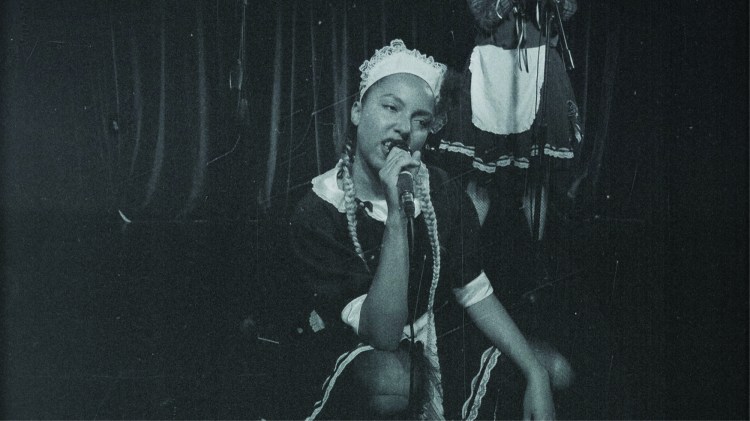
Your flashing images are hypnotic, terrifying and incredibly evocative, but also achieve a delicate balance and cohesion. How were these first approached and then brought about with Matt Parson?

I think we both felt that the performance itself, in filmic terms, wasn’t enough. It somehow needed more. More distress.

The flashing images were really down to videographer and editor Matt Parsons. We filmed ‘Songs of the Chambermaids’ following a 10-day residency in Portugal in 2021 where myself and the three actresses were developing the piece for a live performance. Pressures of time and money meant that when we got back to England we had to shoot the sequence in just a 4 hour session. Matt still hadn’t seen the performance so didn’t know what to expect – although he had read a draft of the play. Pretty much as soon as we’d finished the filming he was starting to talk about an idea for dropping in subliminal images – related to the themes of the play – an idea he associated with the director Buñuel. Unfortunately, Matt’s crappy old computer that he had at the time couldn’t handle the density of the footage and went into meltdown so it took him another year to get together the resources to get a better machine and we had actually only just finished the current edit when it was submitted for Brighton Rocks. I think we both felt that the performance itself, in filmic terms, wasn’t enough. It somehow needed more. More distress. I identified the key places where I thought Matt’s subliminal interventions would work then left him to it. We also bought in a lot of extra film damage so that we could disrupt the surface textures – sometimes quite violently – throughout the piece. Matt feels it helps the words make sense and I think he’s right. 

I’m proud of the fact it’s artist-led work and made with zero infrastructure on minimal resources. It’s great to get to a place where something is so wrong it’s right.

You screened at Brighton Rocks in June. As it is such a challenging piece, how was the audience reception from your viewpoint?

The audience reception at Brighton Rocks: I think it was mixed actually. The piece is quite demanding – it asks a lot of an audience – and it came at the end of quite a long 2 and a half hour session so I think some people who’d been in the theatre for quite a while seeing various other pieces couldn’t take it – it was just too much – at that time – within that specific context. Those I did speak to picked up on different things. One woman talked about liking the differences between the three characters/performers and their different accents, (none being English). It’s the sort of piece which comes out through the fourth wall and addresses its audience directly, or at least appears to, which some people like and some people don’t. The last time it was performed live, some guy commented in an after show Q&A that he found it “pornographic and disturbing”. I don’t think it is pornographic but I was quite amused by the comment.
Video Interview with Deborah Espect Festival Director of FilmPride

Filmmaker and Festival Director Deborah Espect has been successfully operating and growing Brighton & Hove’s official LGBTQIA+ film festival FilmPride, which is now in it’s fifth year.

FilmPride curates indie queer films, made by, and about, members of the LGBTQIA+ community from all over the world and 2023 boasts a packed programme of shorts, documentaries and animations all broaching a wide range of topics within the queer community.

Beyond their home at the annual We Are Fabuloso Pride, Deborah has grown the screenings to cover an evening at The Ledward Centre & Duke’s at Komedia expanding the audience and offering even more distribution to the filmmakers. Alongside the physical screenings FilmPride is unique as, as well as hosting live events they offer selected filmmakers the opportunity to be screened on community, not-for-profit local TV channels in the UK such as Latest TV in Brighton and Northern Visions in Belfast. The FilmPride TV festival is a huge success; the two channels combined serve over 700,000 households, so if your film is on their channels, it will be seen by thousands more!

Ahead of the festival next week we spoke to Deborah about all of her work on the growing this unique and burgeoning festival which sits beautifully within the city of Brighton and also her work as a filmmaker.

Tickets can be purchased for all screenings over the various venues here and check out their instagram @filmpride for regular updates.

In Review: ‘Daniel Came Home’ by Brian Gregory

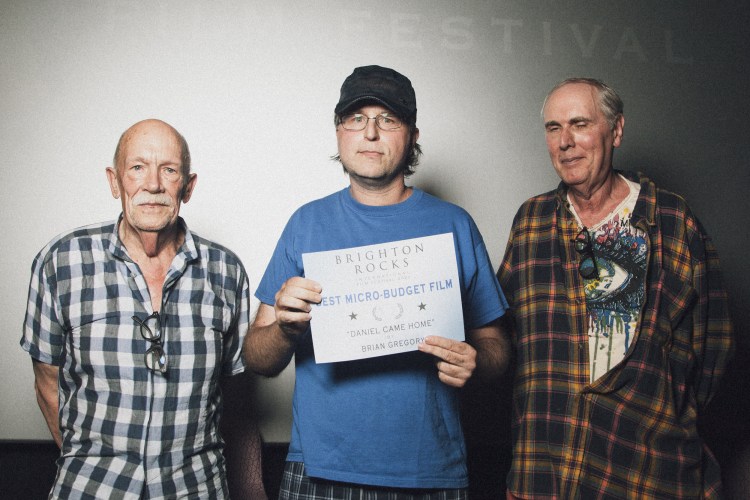
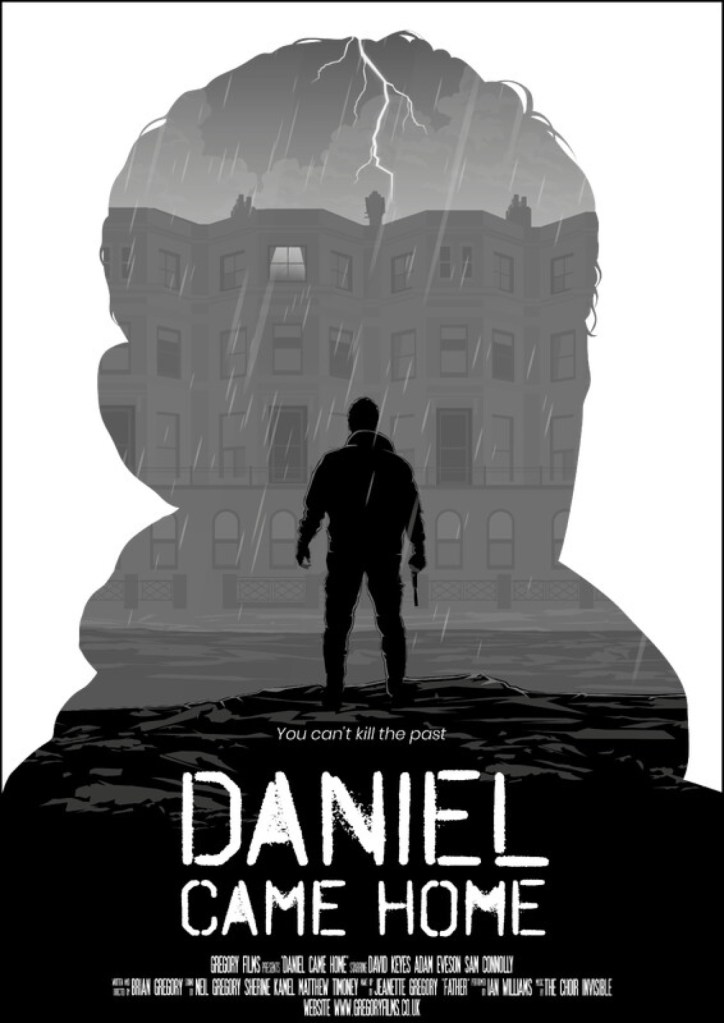
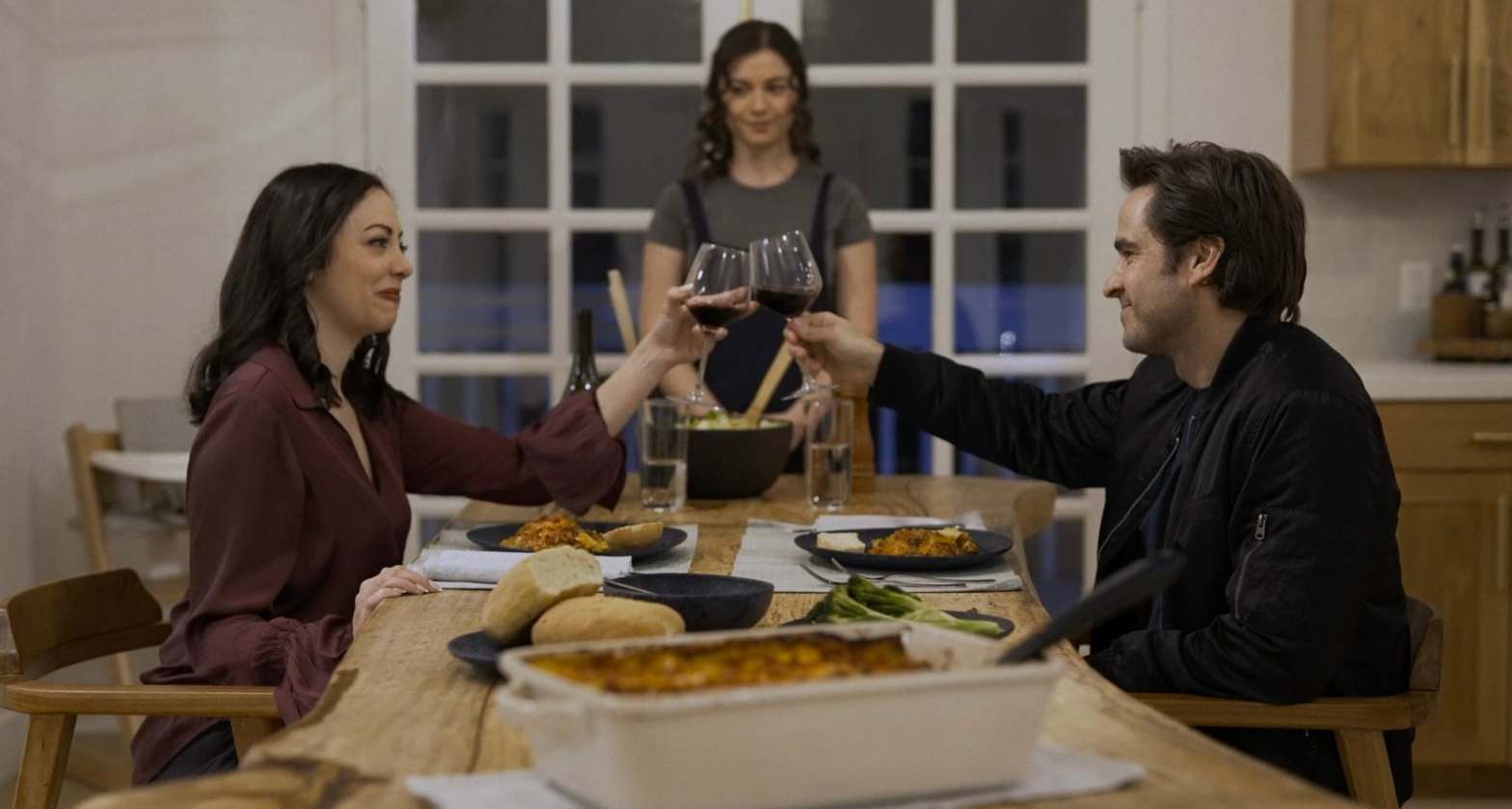
Written, directed and produced by Brighton-based filmmaker Brian Gregory,Daniel Came Home’ looks at the indelible trauma and lasting effects that our upbringing can have on us – even posthumously. The horror-fuelled dramatic experimental film employs a myriad of skilful cinematic techniques which wholly absorb you throughout the 16 minute runtime.

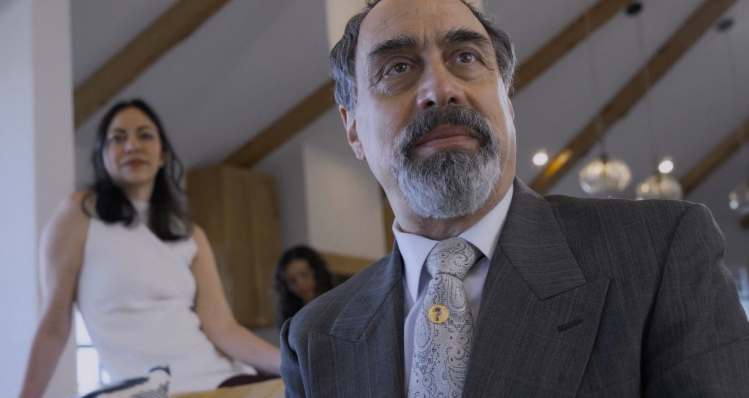
The film is adapted from a short story written by the director himself which lends to the notably powerful script and dialogue within. Jack (the father), astutely played by David Keyes, is initially overjoyed at his son’s unexpected return after having held a funeral for him, but soon reverts into the cruel man Daniel grew up under. His commentary rapidly becomes what we only assume Daniel suffered for years – petty, combative and derogatory racist rants which made me as a viewer flinch, as I’m sure was intended. 

Horror, although present throughout, brazenly raises its ugly head as Daniel is seemingly possessed by his long-dead mother, whose words finally seem to put his father in his place and we see him truly terrified by the bizarre situation. The monster created by Jack is no mythical devil but instead a product, alongside his upbringing, of the horrors of war. Brian alludes to these atrocities from the very opening scene with the crackle of a radio and subsequent flashbacks to the violence and long-lasting damage the fighting had on Daniel. 

The terrifying world created in ‘Daniel Came Home’ is strengthened and guided by a thoughtful and provoking sound design. A raging storm and some fabulous sound FX are woven deftly alongside a fitting synth piece by Neil Gregory. The film also employs shadowy apparitions, mind bending fish-eye views and snappy edits with overlaid images, which all come together to create this darkest of dystopias, as envisaged by Brian. 

After avenging both his mother and himself, the film closes with Daniel (played brilliantly by Adam Eveson) crawling through the corridor haunted by the trauma suffered in war, only to be juxtaposed with happier times gone by and the cacophonous sounds of birthday party. Flashbacks of Daniel’s own childhood and the promise of joining his departed mother as the light of day dawns brings us back to his aforementioned promise that neither of them would be alive the next day. ‘Daniel Came Home’, which won Best Micro Budget Film at Brighton Rocks 2023, is testament to Brian Gregory’s vision and talents and provides a chilling glimpse of what is surely to come in his future work. 

In Review: ‘REVERB’ by Liv Boren

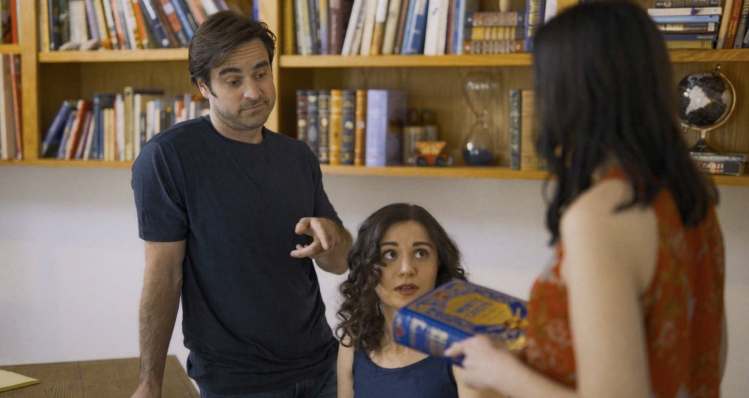
‘REVERB’ by Liv Boren and production company Jack and Grace Productions is a powerfully perceptive examination of grief through the eyes of a young girl. The ambitious New York-based filmmaker succinctly devised a script which centralises on twelve-year-old Vivienne, sneaking into her first concert with the help of her older brother. A traumatic event witnessed by the young siblings awakens feelings she’s struggled to suppress since the death of her mother and opens a door for the heartbreak and pain to pour out from.

The drama opens up with all of the joy and excitement palpitating through the screen as Vivienne is preparing to sneak out for her first live gig with her older brother. Liv perfectly captures that breathless and heady excitement whose relatability rings true to anyone who has lived a similar experience. Venerating their older sibling and the anticipation of that first time they welcome you into the mysterious and forbidden world they dwell in.   

This sibling relationship is a cornerstone to ‘REVERB’ and the film’s gravitas and relatability is driven by the impressive chemistry we feel between Connie-Kiss Mee and Zac Pile. The young actors seem to bounce off each other with such ease, which is exactly what is needed as the storyline progresses and we see our older brother Joseph cajole his sister back from the pit of anguish she has fallen into.

The strength of a film lies within so many different components, and after praising both the writing and acting in REVERB, it would be remiss of me not to pay heed to the very astute and playful camera angles employed by Liv. The gig scene is filmed in a manner which brings the audience into the chaos, crowds and buzz that make the subsequent horrific accident all the more significant and understandably traumatic for our young music lover.

The aptly titled ‘REVERB’ pays homage to the filmmakers’ obvious love of music and the film is suitably punctuated by a commendable sound design and score from British bands Youth Sector, Saloon Dion and Black Bordello, including a performance by Sienna Bordello. REVERB stands apart from other such similar explorations as it doesn’t take us down some of the more typical routes in its demonstration of Vivienne’s suffering, but instead focuses on suppressed feelings. That aforementioned bond with her brother and a love for music draws her out of her unfathomable sadness but also lifts the film throughout, leaving the audience with a desire to sing, dance and reflect upon the healing power of the reverberation of music in our own lives. 

Interview with Finella Waddilove, Writer, Director & Producer of ‘How Long Have We Got Left?’

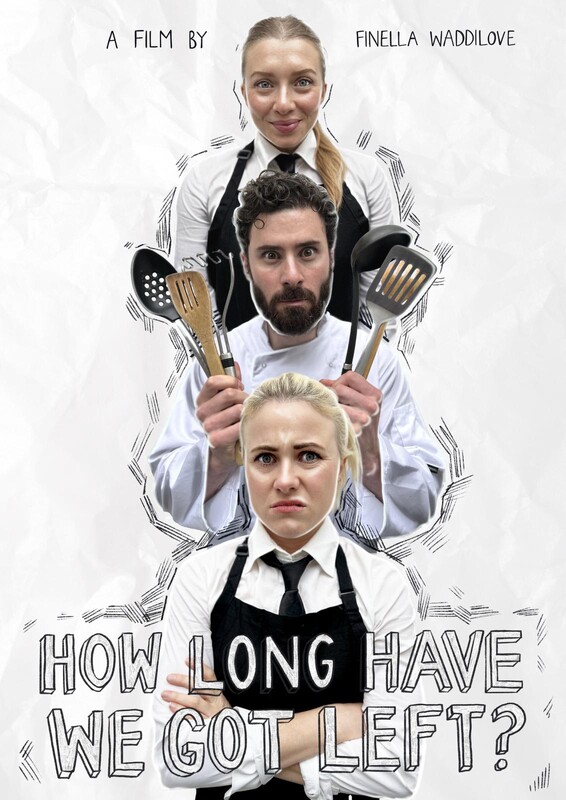
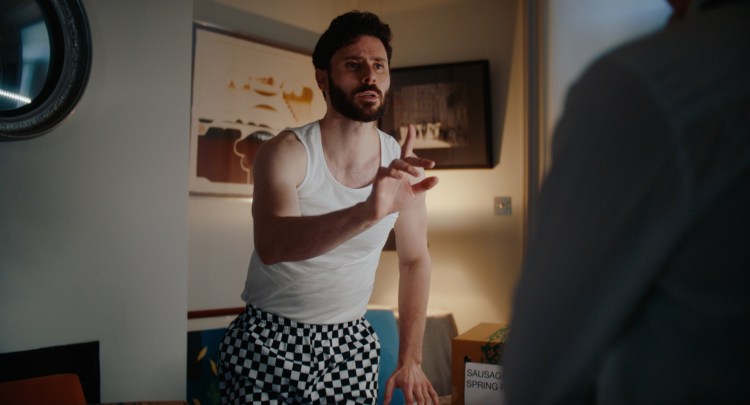
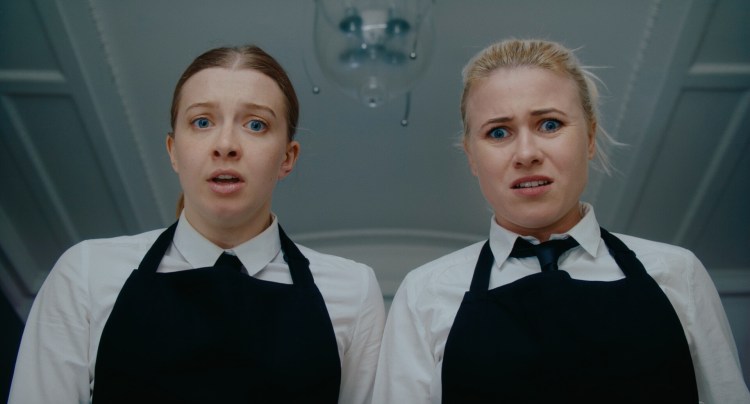
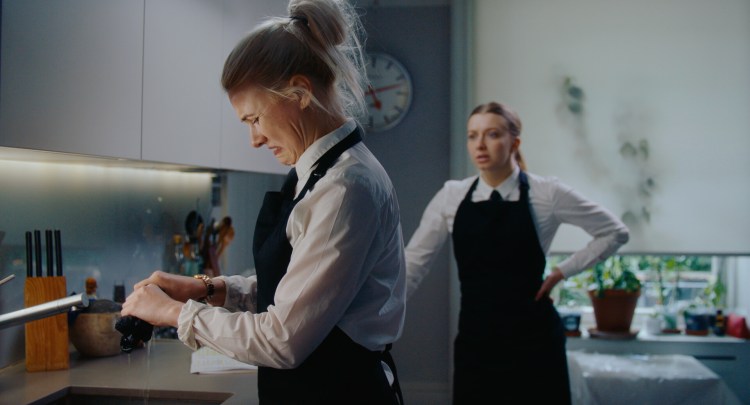
Watching the hilarious short film ‘How Long Have We Got Left’ by Finella Waddilove, I found myself, as I’m sure many others can relate, recalling a time when I trawled through a succession of rather dire jobs. But far from being depressing, it was such a treat to see a film that, thanks to Finella’s excellent comedic writing, makes you cringe, giggle and reflect on your own lived experiences – no small feat. 

The LAMDA trained actor used all her skills and hands-on schooling from her first short ‘Smooth Ride’, to bring her second short film to life. Finella skilfully balances multiple roles behind the camera as well as giving a sterling performance as a frustrated and suffering minion of the catering industry. ‘How Long Have We Got Left’ further employs a collection of clever camera tricks to balance the laughter with the harsh reality of the young waitresses’ situation. The up-and-coming-young filmmaker strengthens her comedy with impressive colouring and toning, profiting from the impressive skill set of her trusted team. The result is a short which was thoroughly enjoyed by audiences at Brighton Rocks Festival this year and we wish Finella and the team a well deserved and successful festival run. 

Was the inspiration for the film taken from personal experience?

I wrote the first draft of ‘How Long Have We Got Left?’ back in 2019. It actually began as a scene, a stream of dialogue which I typed out on my phone merely as an effort to cheer myself up! I was an unemployed actor, a year out of drama school, living in London juggling multiple jobs. One of these occupations was catering, a trade which, although I truly resented, found to be fascinating and often hilarious: a perfect environment for gathering material. Each shift took place in a new, often very spectacular location/venue such as Sloane Square, Green Park and St John’s Wood. The clients would often have grand demands and expectations, so the stakes behind the scenes were always exceptionally high. There was an immense amount of stress pumping through the chefs, managers and senior staff. They were all absolutely overloaded with dense and obscure ‘to-do’ lists, and had to direct tens and tens of caterers.

I found there to be this hilarious paradox in the formal, high-end nature of the events which were attended by the most glamorous of guests and the just-out-of-uni, begrudging staff serving them. Subsequently, the film was inspired by my frequently bizarre experiences of this set-up; the array of personalities I came into contact with, and my efforts to cope with being deeply fed up and terrible at waitressing.

How did you move from that stream of consciousness on your phone into forming the actual script?

I revisited the script in December 2021, two years after its conception. This was a couple of months following the completion of my first comedy short film ‘Smooth Ride’ which I co-created with Helena Westerman, a best friend I met whilst training at LAMDA. After this incredible creative experience, I was so much more equipped with how to write, and also much more led by visuals and style. It took me three months and eleven drafts to reach my final script, I used the time to really sculpt the three characters and define the different dynamics between them all.

I then went through the piece with a fine tooth-comb and story-boarded each scene, detailing which shots I’d like to use, including references to films that had influenced my decision. I then approached the DP I had used on ‘Smooth Ride’, Simona Pranulyte with the script with the visual pitch package and was thrilled when she said she was on board! We then had numerous meetings discussing the cinematography and how best to accentuate the comedic elements; Simona used her wealth of knowledge to expand my initial ideas. It then took around four days to create the shot-list together. I owe so much of the realisation of my vision to the amazing and quite special rapport I have with Simona. In terms of hiring the crew, I was very lucky to have experienced such great chemistry with my crew on ‘Smooth Ride’, so took no hesitation in contacting the same gaffer Connor Adam, who also doubled as the focus puller and sound recordist Lu Guertler who were all game. Having such a strong working relationship already established with this team allowed the filming weekend to run extremely smoothly. This was further enforced by the exceptionally talented cast, made up of my best friend Kathryn Crosby and her partner/my good friend Tom Datnow; it was an all round joyful time!

I got my head down for about six weeks to complete the edit and then partook in extensive one-on-one sessions with both my sound-editor Simon Panayi and composer Harris Grant-Forster in the NFTS sound studios. They both blew me away with their skill sets, and having access to such high-end equipment was incredibly beneficial. Gaffer/Focus Puller Connor Adam was also the film’s colour grader and it was the greatest comfort to me to send the final edit over to him knowing he would create a piece of beauty, which he did! The film’s artist, one of my best friends from school, tied everything together with her incredible graphics, designing the opening/closing credits and the film’s title.

There is such delightful relatability in your writing and themes. Can you talk us through the finessing of the script? At what point did you know it was ready to shoot?

Thank you Sarah, that’s a joy to hear. I really wanted to tap into that universal feeling of looking down the barrel of a shift and seeing an endless vacuum of time. The plot itself was always kept the same from the very first draft. The two main things I focused on developing were the visuals and ensemble.

With the three characters for instance, I focused on defining varied dynamics between them. Although the film is only eleven minutes, I also wanted each person to have their own arc in the story. When I first wrote the piece, the waitresses both found Tom the Chef bizarre. However, when I returned to the script two years later, I thought it would be far more interesting and humorous if they had contrasting reactions. I present the audience with two waitresses who seem very close and on the same wavelength, but when Tom the Chef enters, a rift is caused. This is, in my opinion, funnier as it adds that additional layer – an element of surprise; the clash of K’s infatuation with F’s disapproval was so much fun to play with: both to act, and edit. I loved injecting certain reaction shots and toying with the rhythm of specific line deliveries to accentuate the difference.

There is a delicate and fine line in comedy between parody and straight out taking the piss. You manage this delightfully well. How were you able to achieve that balance, and can you elaborate on references you drew from?

I loved the idea of almost having two different realities within the piece, which I think is quite reflective of my brain; one part is very dry, and experiences everything almost in greyscale, the other is heightened and perceives situations through the lens of an epic movie. Quite often I would feel anxious and existential on these shifts, wondering if my acting career would ever get off the ground (I’m still wondering). I was also just a terrible waitress! Subsequently, if I did something wrong, which was frequent, it would feel like a collection of ingredients, organically sourced from self-loathing, had joined together to create the end of the world! I wanted to reflect this through certain techniques like the slow-mo’s and whip pans – they are such useful tools in representing those extreme feelings. The drums also acted as a sort of panicky motif throughout. 

I was heavily influenced by the cinematography in films by my favourite directors like Sergio Leone, Tarantino and Edgar Wright. Leone is a master of tension, he manages to make the smallest moment absolutely massive and drenched in anticipation; ‘Once Upon a Time in the West’ is one of my all time favourites, and I loved paying homage to the classic with my own big ‘build-up’ moments. The ‘build ups’ in ‘How Long Have We Got Left?’ however, were intentionally driven by the mundane than say a Western shoot-out. 

What did you learn from ‘Smooth Ride’ that helped in the production of ‘How Long Have We Got Left’?

Well…I thought by setting the piece in one room I’d be shaving off a lot of set-up/ moving time. However, I invested in extra kit so we could achieve certain abstract shots. Consequently, the prep for each scene was even longer and more complicated. But I guess, despite still being up against the time, that shows I had grown in confidence as a director and wanted to take more risks with the style of the film. The amount of random challenges that arise when you are filming are unfathomable. In hindsight they’re hilarious, but at the time it’s incredibly stressful. With ‘How Long Have We Got Left?’, we had about two hours left to shoot a massive chunk of the film, and the next-door neighbour began to power-hose their front porch, creating a deafening sound of a spaceship landing. I’d like to think I dealt with freak occurrences like these with a slightly calmer head than I did with ‘Smooth Ride’. With experience, you become equipped with evidence proving there is more often than not a solution. I also received invaluable guidance from the phenomenal crew, especially DP Simona! 

I made ‘Smooth Ride’ with one of my best friends Helena Westerman, and she knew how to tackle the editing beast that is PremierePro. So I had the luxury of learning how to edit through Helena. This skill was utilised as soon as humanly possible, after I’d downloaded all of the files onto my laptop. I’d wake up every day, spring into my chair and edit the film until my eyes went square and I had to leave for my teaching job. 

Your quick-fire snappy sequences at the start are so effective at conveying the pressure and sheer anxiety of working in such situations. Were those all brought together in the edit?

I’m so glad they had that effect! I intentionally wrote that sequence into the script. As mentioned earlier, Sergio Leone’s impact on me as a filmmaker has been monumental. I find the  ‘Once Upon a Time in the West’ opening to be one of the most tantalising and unique in history. The different mini events occurring are just genius – the fly buzzing, water dripping, gate opening – they all create this incredible sound-scape which builds and builds, and a deep sense of foreboding is established from the get-go. This is the atmosphere I wanted to create with the ‘How Long Have We Got Left?’ opening. So I thought about all of the (stress-fuelled) actions I used to do before a shift, and worked on layering them all to reach a crescendo. The combination of Simona’s and Connors’ striking shots, Simon’s sharpening/magnifying of the foliage/clock ticking, Harris’ playful yet nerve-inducing score, and Alice’s quirky animated titles allowed this to all come together: a result of incredible talent and a truly harmonious collaboration. 

Can you tell us more about the cinematography and creating that shiny-yet-grey aesthetic which works so well with the comedy.

Connor is a genius with colour, and as he tripled as the focus puller, gaffer and grader, he was an integral part of creating the film’s aesthetic. We discussed leaning into the more clinical appearance of the hospitality industry, the behind the scenes – the kitchens, the uniforms, the cutlery; I wanted it to be quite crisp and sterile. But then there’s also some warmer moments which I feel help showcase the beautiful house we are in. I wanted the audience to understand that we were working at a very high-end event. As Connor had colour graded and lit ‘Smooth Ride’ so beautifully, I had the utmost trust in him; I didn’t have a look at what he had done until he was about 90% in, and it was absolutely perfect – I had zero notes!  

How do you personally balance working both behind and in front of the camera, while keeping objective about both parts of the process?

It might sound really obvious, but I found the most effective way to keep objective, was to just do a tonne of homework. I had three dense documents/packages which I repeatedly drew on to help me become fully immersed in my vision: the story board, the shot list, and my director’s notes. These were developed across the four months of pre-production. So by the time it came to the shoot, I felt like ‘How Long Have We Got Left?’ was a part of my DNA; I knew what I wanted the audience to feel at each point, and I was aware of where the characters were supposed to be in their individual journeys – this enabled me approach the work objectively. There’s no denying, I’d watch playback of my takes and wince, but you have to ask yourself, ‘Has my character reached the objective of that scene?’ If yes, let’s move on ASAP! Additionally, Kat, Tom and I have an amazing rapport because we are so close, and they are also exceptional actors – so that part was not only made easy, but just so joyful. 

What do you hope for your film?

I hope to get the film into as many festivals as possible with a look to creating more films within the same world – a mini series of snapshotting more of these unusual encounters! 

Interview with Brian Gregory Writer, Director & Producer of ‘Daniel Came Home’

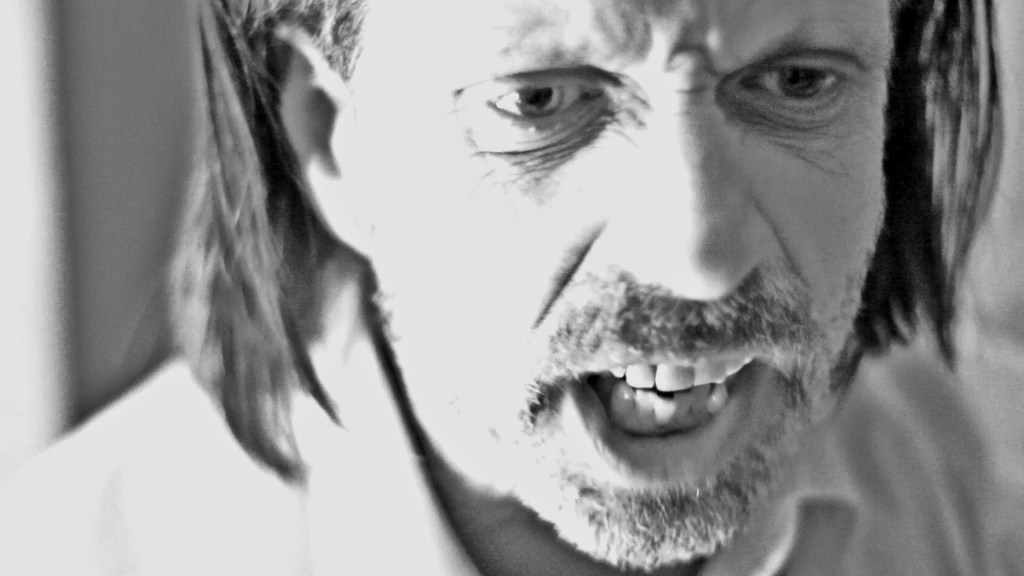
Shot entirely in black & white, ‘Daniel Came Home’ is a haunting and dramatic short brought to life by a considered and knowledgeable filmmaker Brian Gregory. The film, which was the worthy winner of the Best Micro Budget Film Award at this year’s Brighton Rocks Film Festival, features an outstanding performance by David Keyes, supported by newcomer Adam Eveson

Adapted from the filmmaker’s own short story, the all-too-relatable troubled relationship between a father and son is imbibed with new depths of depravity by Brian, who drew upon his own lived experiences and those of people around him. Inspired by experimental and more alternative cinematic pieces, ‘Daniel Came Home’, moves beyond its independent roots by masterfully employing a variety of effective FX and drawing viewers into the frenzied bursts of dialogue that punctuate the carefully-constructed sound design. The audience, pumelled by the vitriolic and obscene commentary from Daniel’s father, are also left to decipher their own meaning from the film, so we highly recommend indulging in ‘Daniel Came Home’ more than once. 

Where did this disconcerting look at a troubled father-son relationship originate from?

‘Daniel Came Home’ was originally a short story I wrote named ‘Daniel’. This ended up being published in a horror anthology,The Fifth BHF Book of Horror Stories, and I had always intended to make a short film of it with two actors in one setting. The idea was initially inspired by Bob Clarke’s ‘Dead of Night’ (1974) and the films of Alan Clarke. Other inspirations were a particularly unpleasant father of a friend of mine, my own father’s army experiences, childhood football memories, disgust at the Invasion of Iraq and Afghanistan, along with the lasting effect of dad’s experiences from the forces such as nuclear tests and indoctrination on both myself and my family. It’s quite a personal film and there is definitely some of myself in the character of Daniel.

How did you find the adaptation of the short story into the film?

I found the transition fairly straightforward as I had a very strong visualisation of the story, setting and characters in my head. It was a matter of taking out what worked solely in print and concentrating on the key dialogue and images, while maintaining the narrative. Plus, in the short film I could take viewers into Daniel’s mind in ways that were not possible in the short story. Obviously, I needed to edit the whole tale down for a suitable film length too. 

How did you then move into the production of the film?

I was keen to work with David Keyes, as I had admired him in many shorts, on TV and even in Hollywood movies, knew that he lived near Brighton and could see that he’d be perfect to play Jack. I had heard that he liked my previous short, ‘Janet Devis’, so I plucked up the courage to send him the script and luckily, he liked it. Adam (Daniel) is a stage actor and after seeing one of his shorts, I knew he’d be perfect as Daniel. Rehearsals showed that the two had chemistry and empathy for each other. With little financial resources, I placed an emphasis on atmosphere and short bursts of dialogue, feeling that the story would work best in stark black and white, with a lot of time spent on sound FX and music choices. My sister is a trained film make-up artist, who has worked on various projects, and she took care of the make up and costumes. I hired another Gregory (no relation-Neil) to score the film with my suggestions. I’d created music with him many times before. Several people took turns as sound recordists, while I filmed and directed, all in one flat initially, later in another. In post, I added many home made sound FX and ended up shooting a fair bit more footage without the actors.

What appealed to you about shooting such a ‘bottle episode’ film with just two characters in a room?

I’ve always enjoyed films that are confined to one location with a minimal amount of characters. I find that the more you are restricted in budget and scale, the more you need to be creative and imaginative in your work. It suited the story too, as the sense of claustrophobia was heightened and we could focus on the father/son dynamic. 

There is a theatrical quality to their performances and also to the writing. Was everything tightly scripted, and how did you work with the actors on their performances?

Yes, while filming, we discussed how ‘Daniel Came Home’ could probably work as a play. My original script had far more dialogue than we ended up using and the lines were quite specific, but I encouraged ad-libbing and improvisation too (particularly for Jack), so David and Adam would not appear too robotic or unnatural in delivery and achieve a more believable flow in their exchanges. The use of only a couple of settings and two main actors adds to the play-like feel. I’d been watching and enjoying The Servant (1963) around the time I was writing and shooting our film (itself a play turned film) and that probably bled into my subconscious. 

David Keyes found it quite tough to deliver some of Jack’s vile lines, as he is totally different to the character in real life and dearly loves his own son. He really had to dig deep and become the polar opposite of who he is. Due to the nature of our toxic father/son scenario, David became quite emotional at some points of filming and we’d have to cut. We spent quite a bit of time getting him into the role in rehearsal and on set, but once he got into the character of Jack, he became him completely and slipped in and out of character effortlessly-which just goes to show what an excellent actor David is, with so many years of experience.  Adam was great too and took direction without any fuss, always full of enthusiasm, and quickly latching onto what I was trying to achieve. Wearing the eye prosthetic was quite uncomfortable after a period of time, but he never complained. He played Daniel exactly as I had envisioned him, a great performance and so empathetic. Some lines were tricky to deliver as we only had Adam and David together for two hours. I often had to speak the other actor’s lines off camera for them to react to. Not easy for either of them.

Sam Connolly, who played young Daniel, took only two takes to get his part wrapped. Pretty impressive for a non-actor! He was chosen primarily for his close physical resemblance to Adam. My sister, Jeanette Gregory, took care of the make up (especially Adam’s eye prosthetic) and narrated the voice of Heather (Daniel’s mother) in post. She also appears fleetingly on screen as Jack’s new girlfriend, Molly. Everyone got on so well and, amazingly, despite the long hours and cramped conditions, there were no arguments. We were all focused on doing our best.

The moment of tenderness between father and son followed by the ethereal dreamlike scene is such a moment of release from the violence and hatred. Why did you want to include this for the audience?

Yes, the tender moments between father and son were deliberately placed where they are to give the audience a release from the tension and bitter exchanges. Daniel, despite everything (and being a sensitive soul), had some love for his father, understanding that violence breeds violence and how his army experiences, Jack’s upbringing, alcoholism and self-hate had turned Jack into the selfish, racist monster that he became. A photo of Jack’s own father, a strict military man, is included at the beginning of that sequence. Similarly, Daniel understands how all these events had led to his own fate. He wants to end the cycle and avenge his mother. This then leads to a surreal trip through Daniel’s mind, back to his childhood home and an ambiguous ending. I am a big fan of 60’s psychedelic cinema and wanted to create fever dream-like visuals and sound, in an attempt to capture Daniel’s own subjective experience, as well as try to realise some interesting imagery.

The sound design (the storm raging outside of the silence moving into the abrasive electronic sounds) is so key to the film. Can you go into more details about the development, recording and weaving into the film?

I think that with such a limited budget of only a few hundred pounds, sound design is crucial to create atmosphere and rise above budget limitations. Plus, I love creating sound FX! I find it very creative and highly enjoyable. In the short story, the storm was clearly supernatural and rages uncontrollably, causing considerable damage to the building. For the film, it’s almost another character, adding an ominous, foreboding atmosphere and representing both Daniel (and his mother’s) anger and resentment. Maybe even mother nature’s revenge! I was quite clear in my mind where the sound FX would be used when writing the script. I carried out various field recordings of the wind and heavy storms and played around with vocals/vocal speeds. I even spent time collecting, then breaking, twigs and crinkling an old wallet to replicate bones breaking for foley sounds. I am not a fan of most audio presets, as, for me, they are used too often and lack character. For the soundtrack, I wanted an analogue score, again no generic presets. I had a temp score which I admire from ‘The Offence’ (1972), which actually fitted perfectly. Neil Gregory then used that as a guide to create his own analogue synth pieces. The music over the more tender moments was made more emotive, lighter and less intense than the temp soundtrack, to be more complimentary for the scene. We actually had a song Neil and I had written, named Father, sung by a session singer, for the end credits but simple sounds of the city and rain worked far better. 
How did the film change in the edit to the final piece we see today?

Ah, the edit! This film spent quite a while in post. I went through two abandoned edits before settling on the finished piece. The first attempt had far too much dialogue and wasn’t gelling, it had no rhythm. The second attempt involved still images with narration, combined with sudden pieces of moving image. A nice idea but, again, it didn’t quite gel. I then took ideas from each version, shot quite a few inserts last year to add to the mix and created the finished film (though the fever dream sequences with Daniel remained pretty much the same). There is a tiny piece of narration left in at the end from the second edit.

Why did you think black and white would work so well and what equipment did you use for the shoot?

I always intended to shoot in black and white. There are several reasons: It suited the very stark, bleak nature of the film; I am a big fan of monochrome, particularly old TV shows, such as The Twilight Zone and several b/w films from all decades; plus, on micro-budget films I think that it can add a more cinematic quality. Filming in black and white also allowed me to have a sudden burst of dramatic colour at the end. My equipment was pretty basic. Two, old Canon 7D and 600d cameras, with a couple of kit lenses- and an effective Canon 17-55mm f/2.8 IS USM lens, which was used for wide angles and atmosphere. A mixture of tripod and some hand-held shooting was utilised. I undertook all the filming and lighting myself, which was pretty exhausting. We recorded the audio on a Sennheiser MKH 416 P48 mic and a Zoom hand-held sound recorder. I had several different sound recordists for this task over the three weekends: Neil Gregory, Matthew Timoney and Sherine Kamel. They all did a great job, so we didn’t need to record any ADR (another advantage of shooting indoors) and all the dialogue was recorded live and on set. I also used this mic for my field foley recordings. The only dolly shot was created by taping a camera to a skateboard and pulling it slowly backwards. That’s micro-budget film-making at its finest!

What do you hope for your film?

I have finished shooting my first horror feature named ‘Witch’ (Brighton and Isle of Wight shoots). It’s a micro-budgeter shot and directed by myself. I’m very pleased with it (just started post) and hope that ‘Daniel Came Home’ may act as a calling card, impress distributors, actors, film fans, etc and gather some interest in it. 

Interview with Liv Boren, Writer, Director & Producer of ‘REVERB’

Liv Boren’s sensitive multi-layered exploration of trauma and grief in her short drama ‘REVERB’ are a clear testament to the filmmaker’s depth of understanding of these themes and an excellent reminder of the myriad of opportunities the big screen offers us. A brother and sister, both wading through torrid emotional waters, experience a shocking and unexpected trauma at what should be a joyful music-fuelled evening, unravelling the younger sister’s fragile protective shell. 

Liv, whose studies and passion for filmmaking were renewed during the pandemic, bravely moved her entire life from the US to the UK in order to complete the project. Working with her husband Chris Dooly, she re-connected with industry acquaintances and friends and ploughed herself into the production of REVERB as part of Jack and Grace Productions. The film delighted audiences at Brighton Rocks this year with its poignant and resonating writing, enhanced by formidable performances by young actors Connie-Kiss Mee & Zac Pile who were expertly directed and guided by Liv. Last but not least, REVERB is also a “love-story to music”, and offers an absorbing and well-curated musical score which echoes through the film with intended fervour. 

How has your career and progression as a filmmaker led you to the creation of ‘REVERB’?

The initial concept came to me as a daydream; a young girl at her first concert, overwhelmed and exhilarated by the experience, then witnesses a tragedy that forces her to grow up before she’s ready. I started writing the scene I had imagined and then a bigger story began to unfold. At that point, my production partner and husband, Chris Dooly, began adding to the story and editing what I had written. Within a month of the initial idea, we decided to make it a short film and shoot it in my childhood neighbourhood in London.

I’ve always loved making videos, as a kid, it was on my Sony DCR handycam in North West London. I chose to study Film & TV at university and realized how much I loved directing. But after moving to NYC and getting a job in marketing, I no longer had the time to make films. I continued to write in my free time but all of my projects kept being put off. When the pandemic hit, I was given a chance to refocus my creative energy on making films and that’s when my partner, Chris Dooly, and I wrote and filmed a short for an online Quarantine Film Festival. We won the festival and that old spark was re-lit. Since 2020, I’ve been building up my production company, Jack and Grace Productions, writing scripts and producing videos (corporate, educational and film) on a freelance basis. ‘REVERB’ was really the culmination of years of passion and dreams and then more years of writing and making connections. Finally in 2021, when the idea came to me, I had the confidence, ability and freedom to make it happen. And now I see ‘REVERB’ as an empowering jumping off point for the next project. 

From idea to completion, it took just over a year, we were living in NY at the time so we knew we had to fly to London and find a London-based crew. We flew over, along with our two dogs, and settled in for a 6 month stint, most of which was spent crowdfunding the project, putting out cast and crew calls and location scouting. We connected with an old friend and our associate producer, Sophie Max, and she was a huge help in connecting us with the London film-scene, which I’ve been away from for quite a few years now. After a few months of reworking the script and bringing together our vision, we flew over our good friend and wonderful artist, Dave Quay, to DP the project. By the time our 4 day shoot came around, we’d brought together a fantastic cast and crew that really made the whole experience smooth and beautiful. We filmed in my best friend’s childhood home, my mum made and served home-cooked meals each day and the whole energy of the set was really special.

Grief and trauma are such heavy and delicate subjects to broach, particularly as seen through the eyes of a child. How was this approached in the writing?

What was really important to me was honouring the depth & complexity of a child’s grief. Darker emotions, like grief, loss and trauma, are often simplified when it comes to kids on film. While writing the script, I didn’t think about two “children going through this,” I thought about two siblings dealing with complex feelings and yet, both driven by love. Casting the right young actors was essential for the authenticity needed to bring this script to life.

It is well known that working with a young cast can potentially pose a myriad of problems, yet your young protagonists are phenomenal. How was casting for the role and what is your approach as a director in guiding your actors?

Our two young actors, Connie and Zac, were fantastic. Honestly, the best actors I’ve ever worked with. We had so much fun. Casting Vivienne was a breeze; we met with Connie and her mom once via zoom and instantly knew she was right for the role. We then began casting for Joseph, we needed someone who could match Connie’s energy and really embody the protective, gentle big brother that Joseph is. We held chemistry tests with a handful of talented young actors. Immediately Connie and Zac had brilliant chemistry; not only did they look great together on screen but they were playful and sweet with one another in a way that came naturally.

I like building real connections with my actors. I want our relationship to exist outside of the film, and for me to be a resource they can come to with questions, concerns or just to chat on break. To build those relationships for ‘REVERB’, we met on zoom as a group a few times before our first shoot day. We used that time to get to know each other, talk about our favorite films, funny stories and do some light rehearsal. It was important to me that both of our young actors felt comfortable on set so we really built a family dynamic during the shoot. It was imperative to me, especially with the subject matter we were dealing with, that the environment was safe and open for everyone working on the film.

I love the camera angles in the gig sequence, concentrating on feet, and the extremely well-executed shots of Vivienne & Joseph. Why did you approach this scene that way?

At the gig, our lead characters are out of their comfort-zone. It’s exciting. It’s crowded. It’s a little bit dangerous. I really wanted to show that with our camera work. The close-ups on their hands and feet reflect the chaos and excitement; building anticipation as the two make their way towards the stage. The camera is alive with the action and the audience is going along for the ride. This is Vivienne’s story and we chose to keep the camera focused on her journey as she enters this new world. Eventually, the camera engages with the artists and the bigger scene and that’s when things start to get out of control. 

Your cinematography and lighting are all very soft, leaning into the authenticity of the story. How did you work with your DP in planning the tonal look of the film?

A favorite quote of mine is “limitations breeds creativity” which sums up many of our production choices. We didn’t have a large selection of lighting equipment going into filming and during our early meetings with Dave Quay, we discussed options for renting more equipment. However, we eventually decided to roll with it, agreeing that the softer lighting would lend to the authenticity of the film and the intimacy of the at-home scenes between Vivienne and Joseph. The majority of lighting inside of the home was practical. It was a fun challenge and Dave was instrumental in bringing to life the beautiful and simple tones we see there.

Music is so integral to the film. How did you decide on the punk-rock vibe, the band to work with, and how to weave this into the script?

This film really is a love-story to music. We had so much fun searching for bands and it was important to me that we found local British musicians and worked with them all directly. My brother happens to be a fantastic London-based musician and his music helped me to pin-point the style I was looking for. We would listen to different artists for hours, reading the script over and over to see if they fit the story we were trying to tell. All of the bands we worked with, Youth Sector, from Brighton, Saloon Dion and Black Bordello were hand-picked and helped bring the vision to life. We were especially excited to not only use Black Bordello’s music but to have Sienna Bordello perform in the film. I wanted our lead musician to be female-presenting, to amplify the experience for Vivienne and deepen the connection between this tragedy and the passing of her mother.

Can you tell us more about Jack and Grace Productions?

Jack & Grace Productions is the production house that Chris and I started in 2020. We had the name and idea to start one for a few years before that, along with a handful of scripts we’d been writing, but it was our first film, ‘Quiet in the City,’ that officially launched it. The names are actually our own middle names, Jack and Grace, and we’ve found that to be more confusing than we’d expected! So we’re currently in the process of a rebrand – stay tuned on that one! We’re also excited to be working on some really cool projects this summer; producing a short film in partnership with Dave Quay in New York, working on a micro-short that I’ll be directing late in the summer and writing our first feature script.

What do you hope for your film?

Whilst the initial concept came to me in a daydream, the final vision brought together my own experiences and trials of childhood, growing up, loss and grief. Experiences that I believe are universal. So, what I hope is that audiences connect with the themes of REVERB and can feel their own experiences reflected on screen. I hope that it’s healing, I hope that our main character’s journey serves as an offering; an exploration of painful topics through a lens of innocence and vulnerability and a demonstration on the power of love.

Interview with Brian Reynolds, Writer & Director of ‘The Nanny’

‘The Nanny’ by Brian Reynolds is a fabulously dark and macabre tale of power, control and the most vile betrayals. Reynolds comes from a theatre background and having achieved success and recognition for his work on short films, he was drawn to write and produce a feature-length film. ‘The Nanny’ brings together the filmmakers’ own lived experiences and a deep-seated love of thrillers where the audience is left conjecturing right up until the final moment. 

‘The Nanny’ relies upon a heavily driven character narrative, and the audience is wholly immersed into the terrible and villainous personalities as we fall mercilessly into the traps and twists laid out by Reynolds. You will find yourself drawn to the support of each brilliantly played character until you suddenly find your allegiances switching with each carefully planned and sharply shot scene. ‘The Nanny’ will be screening at Brighton Rocks on Thursday the 22nd of June at 8:30pm as part of our feature showcases intended to delight and enthral our audiences.

Screening on Thursday the 22nd of June at 8:30pm at ALPHABET as one of our selected feature films of BRIFF23

Where did this delectably dark and twisted idea originate from?

I’ve travelled quite a bit for work and would often be in a position where I was living with clients for extended periods of time. There is a strange uneasiness about living in someone else’s space that never quite goes away. I wanted to combine the tension of that environment with the stress of a job with extreme responsibility. 

What drew you to make a psychological thriller and what references did you draw upon for the film?

I’ve always been a huge fan of thrillers, especially ones where the action is minimal and the moves and countermoves are mental. Writing an engaging psychological thriller is a huge challenge which got me excited. I owe a huge debt to the many thrillers I’ve watched over the years; The Usual Suspects, Momento, The Manchurian Candidate and so many more.  I love films where the denouement leads to a massive “Ohhhhhh!” for the audience.

The twists and turns are so involved, well thought out and developed. How was the script writing process?

This particular script came very quickly. Once I had the idea, the first draft was done in a couple of days. My wife Samantha MacDouglas read it and gave me fantastic notes (she’s an amazing writer and editor) which I implemented for a final draft. I always do a table read for any new script as soon as I can. In the table read we found a couple of plot holes and did another rewrite to solve those. 
Aino is a wonderfully nuanced character whose initial shyness masks her will to survive and outwit the warring couple, leading to her eventual triumph. How did you develop her character and approach the performance with Georgia Gould?

I got to direct Georgia in my play Mono/Poly pre-pandemic and she is an incredible talent. We did a virtual table read of ‘The Nanny’ with most of the cast before we even knew we were going to make the film and Georgia blew everyone away. It was clear she already had a firm grasp on the character. When we got the green light, I offered Georgia the role and happily she accepted.

During pre-production we had a lot of rehearsals and Georgia had detailed questions about both the script and Aino in particular. Through our discussions she built a performance that was beautifully layered. On set we could quickly converse about Aino’s circumstances, objectives, and actions because of all the preparation that Georgia had put into the role.

The location is fabulous – how did you find the right place to film and how long was the shooting all in all?

I had a pretty clear idea in my head of what I was looking for and I researched online both dedicated film locations and short-term rental properties. I looked at over two thousand locations and gradually narrowed it down to three. This location had amazing people managing it who were not just open to having a film there but very supportive from the outset.

We filmed for 17 days over a 21-day period. The entire cast and crew were quarantined so it felt like a really cool summer camp. We then had one day of shooting in the desert north of Los Angeles and one day in the mountains of Northern California.

I love your camerawork and the angles and focus that builds in each scene. Working with your crew, what is your method as a director to achieve your desired look and feel?

I want to give a huge shout-out to the book Master Shots by Christopher Kenworthy. My background is in theater so using the camera to help tell the story was something that I am always looking to improve. I read a ton of books and watched a lot of “how-to” videos, but Master Shots totally empowered me to tell the story I wanted to tell. I kept all three volumes next to me as I was storyboarding and referred to them constantly.

I can never get enough preparation so when we scouted the location, I scanned the entire house and grounds using LiDAR. Then I had a 3d model created that I dropped into a program called ShotPro. From there I could plan every shot and create video storyboards of the scenes within a virtual space.

Whenever I finished storyboarding a scene I would send it to my amazing cinematographer Michael J. Boehler. He and I would discuss the shots, what I was trying to achieve, and then he would offer suggestions to bring my vision to life. He was incredible at getting the movie I could see in my head into the lens, only better.

Once we were on set, Michael was constantly solving problems and coming up with enhancements for the visuals of the film. Travis Dixon, our assistant director, was also crucial in getting outstanding shots and ensuring we had the coverage we needed.

Your sound design and score are brilliantly put together, adding to the themes and building tension. How was this approached?

The first thing was we had an amazing sound person on-set, Rebecca McGlynn got perfect sound in some very difficult situations. She never complained once, no matter how many hills she had to climb or how many tables she crawled under to get the perfect angle for her boom mic.

I always knew that music was going to be a huge part of this film. A friend of mine offered to connect me with Jeff Tinsley who composes incredible music. We invited Jeff to the rough-cut screening and he loved the movie. He came on board as our composer shortly thereafter. Jeff and I sat down for a two-hour meeting about the emotional themes and impact that the music needed to have. It lasted over ten hours. He had an intense passion for understanding the film on a visceral level. Then Jeff went off and performed magic. When he came back he had composed over an hour of original music that still gives me chills every time I hear it. The cherry on top was when I got to sit in on a video conference call where Jeff directed a live orchestra in Budapest for our movie. One of the highlights of my life.

I know how integral the edit is to any film, especially a thriller where the ending is so fast-paced and integral to everything. How long was this part of the process and did the script change at all?

My intention was always to shoot as close to the final edit as possible and for the most part this happened. Travis Dixon was also the editor and he would discuss the edit with me while we were shooting. Since he and I had talked throughout the pre-production and production process, the first rough-cut happened quickly and was pretty close to what I had envisioned. We did quite a few passes to get the timing and pacing as polished as possible, especially during the finale.

Then at the screening of the rough-cut I received some amazing feedback from other filmmakers and realized I could cut almost fifteen minutes from the first act. That was the biggest change from the script and it made the film flow much better. All in all, it took several months to finalize the edit and get to picture lock.

Your North American Premier was on the 28th of May – how did you find the reception and what does it mean to you to see your film on the big screen in front of an audience?

It was everything I dreamed of. It was at a big theater in downtown Los Angeles and it was almost full. At one point the film festival staff wasn’t sure they would have a seat for me! Most of the audience were unknown to me and I was excited for an audience who had no previous connection to experience the film. The reception was overwhelmingly positive. It’s always such a leap into faith as an artist to create anything. For an audience to connect with my work and enjoy the experience was intensely gratifying.

What do you hope for your film?

I’ve wanted to tell stories my entire life so my main goal for ‘The Nanny’ is for people to see it, whether at festivals or through subsequent distribution. From there I hope that people enjoy the journey we take them on and want to hear more stories from our team.

Interview with Writer & Director Craig Ford and Producer Jonny Bunyan of ‘The Witching Hour’

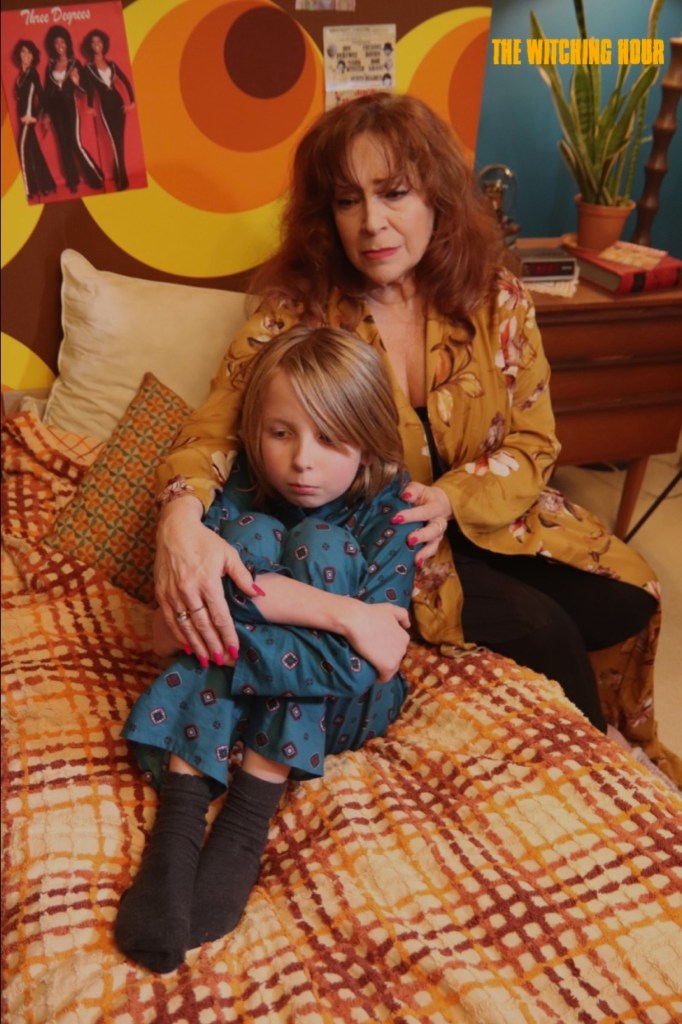
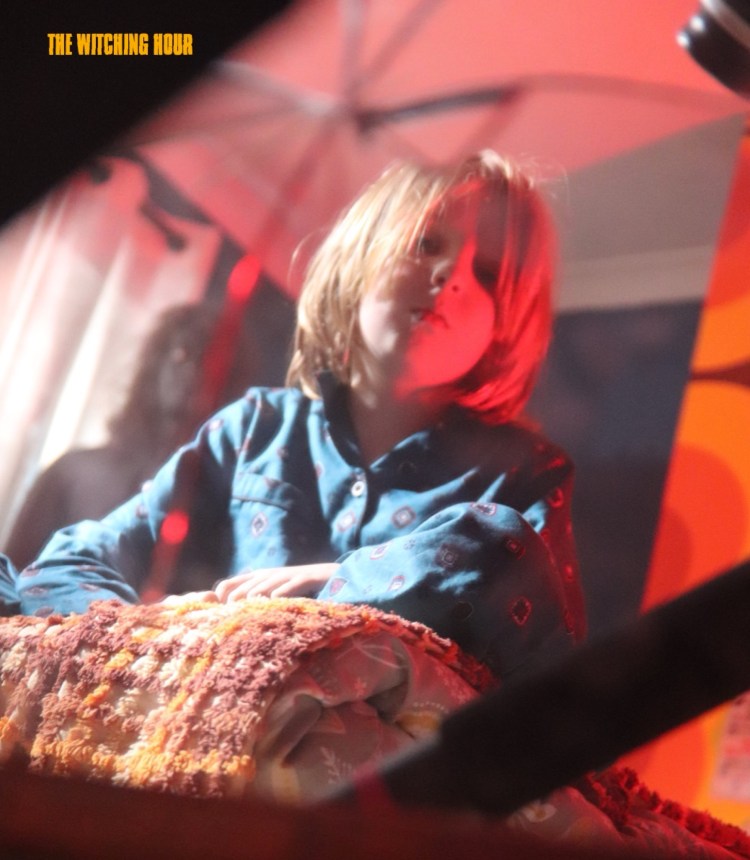
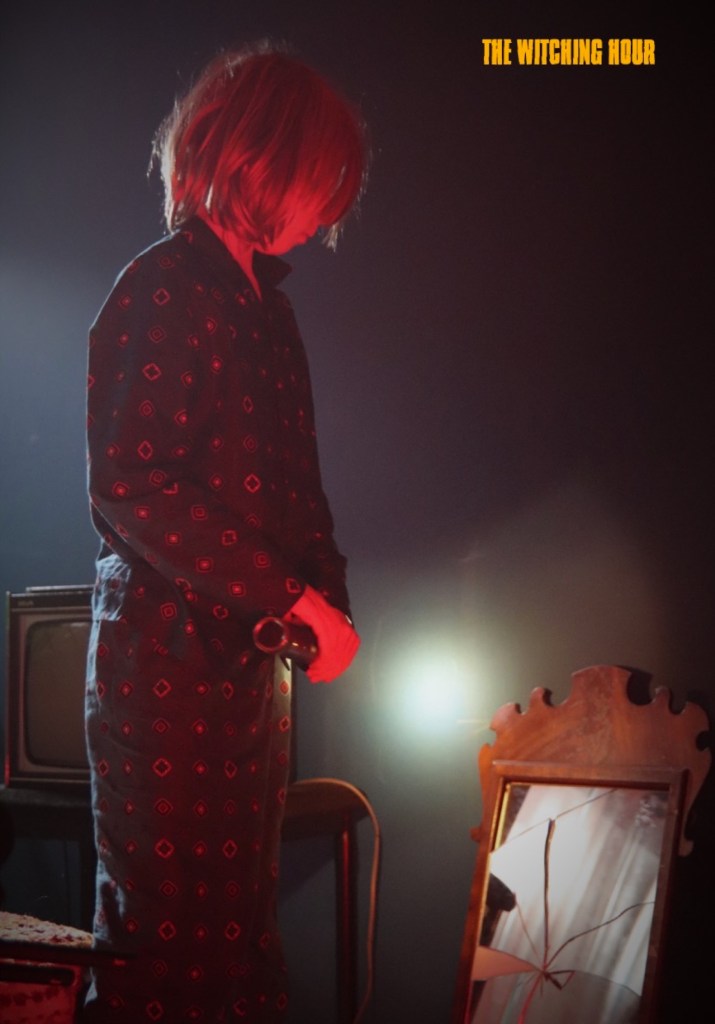
Horror films might not be everyone’s cup of tea but they undoubtedly can and have been used in film as a fabulous vehicle for social commentary. When filmmaker Craig Ford was looking to explore a series of cautionary queer tales, he looked to his beloved horror genre for inspiration. ‘The Witching Hour’ is Craig’s third and final instalment in the ‘Queer Bedtime Stories’ trilogy, although it works perfectly as a standalone short. His young protagonist, played brilliantly by Reubens Baggley, is battling not only with insurmountable grief after losing his dad but is beleaguered by struggles at school and at home, and finds an unsettling solace in bizarre nighttime bedroom apparitions. Craig felt a pull as a filmmaker to tell a different kind of coming out story, one that doesn’t focus on the cliches and tropes which dominate, but instead reflects the honest and real struggles experienced by those in the process of understanding and accepting their sexuality.  

RocksBlogs took the time to catch up with Craig and his producer Jonny Bunyan about the making of the film and explored some of the more technical sides to the production which all contribute to his beautifully nuanced and creepy tale.

‘The Witching Hour’ will screen at Brighton Rocks on Saturday the 25th of June at 9:30pm as part of our horror shorts programme “Beware Ye Who Enter’ at The Actors. 

Where did the idea come from to tell a coming-out story in this manner?

Craig: I watch a lot of queer cinema, especially what’s in the mainstream, and I get really fed up watching the usual coming out stories between two hot 20 something guys. They are usually set at school, university or in a hyper-straight environment and are always pretty sexualised. I understand the basic reasons behind these productions but that’s not how I remembered it. I remember being younger, very confused and feeling like I was the only one going through this, it was all subtle and nuanced for me as a kid. A glance at a male model in the KAYS catalogue that lasted a little too long, kids calling me gay but no one really understanding why or what that meant (looking back I can say with a degree of confidence it was me being as camp as tits that did it). So with this in mind I wanted to capture those very first moments we feel as kids, knowing we are different but not really understanding why. 

What is your particular approach to script writing and developing the story?

Craig: Once I have an idea the first thing I always ask myself is, how can I make this a horror? Horror films were always an escape for me and I naturally want to tell all my stories through that twisted prism. 90% of the time my logical brain will tell me, “you can’t, please stop doing this, move on with your life!” I will consider this, ignore it and move on to mood boards. I always need a bit of help before I start writing the visual language. I’ll pull screen grabs from films I think would work, looks, imagery and costumes. Once I have this I can start imagining a world for the characters. Next, I start building a playlist with scores and music I think would work with my idea. I will then crack on with the first draft using my moodboards and the music as inspiration. 

Jonny: My job as producer is to assist in making the creative story an actual reality when it comes to the logistics in filming. I truly believe in making anything work no matter how small the budget and this was certainly the case when we realised the script focused heavily on the central character’s bedroom. Finding an early 1970s interior home proved very difficult so, with the help of our brilliant production designer Haydn, we transformed my own living room into a 70s kids bedroom. In order to fit in the crew and create a mix of perspectives that were vital for the tone of the film, we built a false wall which we could move forward and back. 

I love the spooky toys. How did you animate them?

Craig: I bloody love creepy old toys! My husband hates an old scandi looking doll I found at a jumble sale and we are convinced it’s haunted so we call it EVIL LIESEL, she’s in the film, keep an eye out for her! The old 70’s Action man had a little switch at the back that you slide to move their eyes. I went hunting in my mum’s attic for mine but he’d been thrown out – SCANDAL! So we went searching on Ebay and then filmed the eye move in with someone  slowly working the eyes from the back. The naughty bear was my little sister’s when she was a baby. It’s a battery operated bear that moves and talks whenever someone moves around it. I remember it freaking me out when she was born so I went on the hunt for it in the attic and to my delight there it was, in an old bag peering out at us. A quick battery change and Naughty Bear was back!

Jonny: In addition to the bear, toys that mysteriously fell off the shelf were assisted by good old fashioned fishing wire. This wire is very thin and in the right light, not visible on camera. It took a good few goes to get it right but as a producer, it was nice to see the art of smoke and mirrors used (as opposed to a trick added in post) to make it as real as possible.

Your sound design is so key to the film you have all of the weird and wonderful horror sounds to build that tension. How was this part all approached?

Craig: We spent about a grand making this film and when you are making a film on a budget, sound should become your best friend. It can make crap battery operated teddy bears look terrifying. In the edit I’ll earmark parts I think need to be elevated with sound or music. Sometimes I’m not sure how, I just know they do, so I will start rewatching horror films making notes on sounds and stingers that I like or I think would work. I also work with an amazing film composer called Luke Johnson who I’ve worked with a couple of times. I send him two cuts of the film, a clean version and a version where I have added in film scores from my playlist, this helps him get a feeling of what I’m after and we then start finessing and layering. 

I have to applaud your young star’s performance. Due to the mature content in the film, how did you work with him so as to pull off  the incredible execution?

Craig: Reubens is fab and believe it or not, this was his first film! This was also my first time working with a child actor. Unfortunately I’m not much of an actors director but there is something quite pure and wonderful about working with kids. They see the script and the film from a less jaded viewpoint which helps to capture a really earnest performance. We spent time rehearsing with him but we didn’t want to over do it and see the better performances happen in the rehearsal. We talked a lot about what makes him sad and during the photo scene we stripped out the crew and spent some time before the camera rolled talking about those sad feelings. 

Jonny: We knew that because the lead role was a young child and his performance would carry the film, we had to find the right actor for the job. We wanted to find the right mix of an actor with some experience but critically, someone who had a raw talent that would naturally come across on screen. Working with a local drama club in Brighton, we auditioned Rubens 3 times and each time we saw the spark and eventually the brilliance of his portrayal of the main character. As it happened, while he had some stage experience this was his first time on screen and so Craig worked with him in a one on one rehearsal process to give him all the help he needed.

I also want to highlight the performance by Harriet Thorpe. The mum is based vaguely on mine, that idea of a snappy single mum doing her best. Weirdly I always had Harreit Thorpe in my head when writing it, she always reminds me of my mum, especially in Brittas Empire. When Jonny asked who my dream role for mum would be I told him Harriet Thorpe and he somehow managed to get her on board! 

You spent a long time on your edit. How has it changed and morphed over those 12 months to get the film to a point you are happy with?

Craig: The original cut of the film was 35 mins. My original idea of a long lingering 70’s style horror had come to bite me in the balls as no festival was prepared to take a 35 min short film. We had a lot of beach scenes between father and son peppered through. I loved these scenes and the performances of both Reubens and Patrick Oldham (who also plays the monster) however, from our first screening to cast, crew and friends the feedback was clear. The beach scenes slowed it down and felt dull. The issue I then had in the edit was that to remove them was to lose certain plot points that I couldn’t lose to tell the story. We tried so many different ways but in the end we used the beach scenes as flashes and used parts of the dialogue as VO.  It’s always hard editing your own work as you feel so emotionally attached to it all, but if you have to hack at it – do it. If you really can’t because you’re still too close to it then walk away for a while. I guarantee that scene or plot point you felt so strongly about keeping will seem so obvious to cut out after a few months of not looking at it. Hence why the edit took so long. I needed some perspective. 

Can you tell us more about the ‘Queer Bedtime story’ series?

Craig: Sure! I’ve been telling cautionary queer horror stories for ten years now, the first was a film about HIV set in the Eighties so we used eighties vampire horror films as our inspiration. The second was about gay married life set in modern day so we wanted to use modern horror like Insidious to tell the story. And the Witching hour will be our final film, a coming out story set in the 70’s using 70’s horror as its inspiration. Maybe in the future we will release them as an anthology feature film, who knows! Oh and, seeing as we live in an age of connected universes, they do all inhabit the same world, so if you want to know what happens to Victor next check out “I Wouldn’t Wish the Eighties” on Prime Video. 

What do you hope for your film?

I really hope it finds its audience. I get so bored watching sexualised coming out stories when realisation starts at such a young age. I hope we have shown a somewhat different approach to that. It is also the last in a series of ‘Queer bedtime stories’ we have been making with the idea to put them together for a bit of an anthology feature. Like a gay tales from the crypt or Creepshow

Video Interview with Brian Reynolds Writer & Director of ‘The Nanny’

Brian Reynolds is a multitalented filmmaker who has made a name for himself with his thought-provoking and emotionally charged films. ‘The Nanny’ follows a wealthy couple hire a young girl from Finland to take care of their newborn. These new parents should be in a state of bliss, so why does it seem like they are trying to kill each other?

The Nanny’ is a psychological thriller about a young woman from Finland who comes to a wealthy couple’s isolated summer home to take care of their infant. The nanny quickly realizes that the couple hate each other and have no affection for their child. As the situation worsens and becomes more dangerous, the nanny must navigate rapidly shifting power dynamics.

The sense of disconnection and isolation generated by living where you work is heightened when you are a valuable employee who is sometimes treated like a member of the family. ‘The Nanny’ is a film that explores how helpless someone actually is even while they are “in charge” of something important as part of their job. Through tension and danger, ‘The Nanny’ examines how perilous a toxic environment can be where a person lives with their employers.

Ahead of the screening of ‘The Nanny’ at Brighton Rocks 2023 we spoke to Brian about his love for psychological thrillers and his incredibly detailed approach to the making. of the film.

Screening on Thursday the 22nd of June at 8:30pm at ALPHABET as one of our selected feature films of BRIFF23

Video Interview with Issy Songer Writer & Director of ‘Safe Space’

Filmmaker Issy Songer is a recent graduate of Brighton Screen and Film School whose film ‘Safe Space’ explores the relatable and delightful variety of school dramas through the perspective of a girls school mirror. From gossip and embarrassing moments, to the unseen struggles of young girls Issy has created a film which explore issues that far surpass the school setting and offers a fresh vantage point of female battlegrounds faced everyday.

“This film simultaneously holds a mirror up to and provides a window into the tumultuous world of the adolescent girl. A supposedly ‘safe space’, the girls toilet in a secondary school is where the real life dramas of young women are acted out across the country, every day. The big themes that run like a golden thread through adolescence are explored with a lightness of touch, which simultaneously invokes a bittersweet nostalgia and a sickening unease as each scene triggers recognition and memories of our own experiences in that supposedly safe space.”

Ahead of the screening of Safe Space at Brighton Rocks 2023 we were able to speak to Issy about the evolution of her writing and production and what she is developing from this hilarious and engaging short.

Screening on Tuesday the 20th of June at 7pm at Fabrica Gallery as part of our Student Film Showcase “New Kids on the Block”

Interview with Hugo Santa Cruz, Writer, Director & Producer of ‘The Fifth Generation’

Hugo Santa Cruz’s production co-op ANTi KiNO is a delightfully refreshing and progressive group that aims unapologetically to promote feature films and documentaries that take aim at the  ethos of those in control of the film industry in their gilded cages. It is no surprise that his latest feature film ‘The Fifth Generation’ embodies the very principles set out in ANTi KiNO, which we wholeheartedly embrace at Rocks Festivals. 

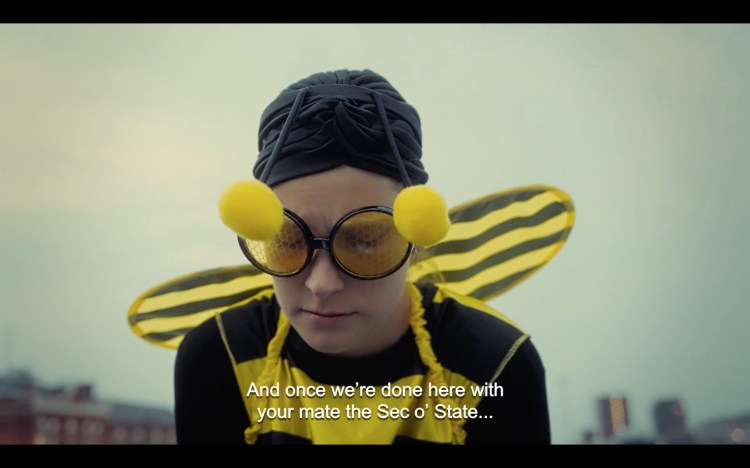
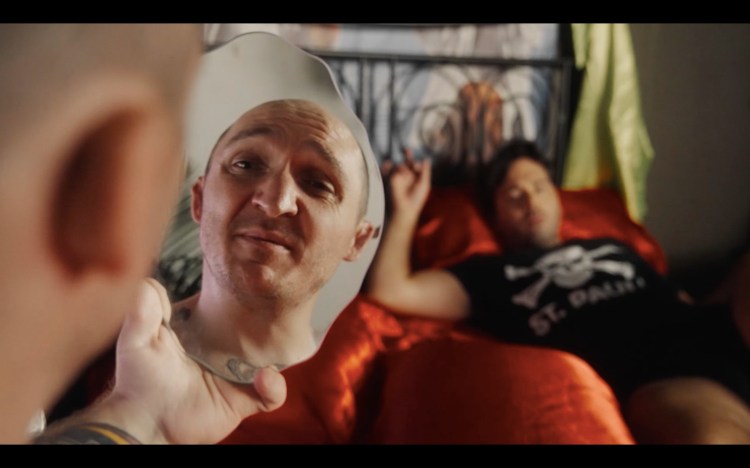
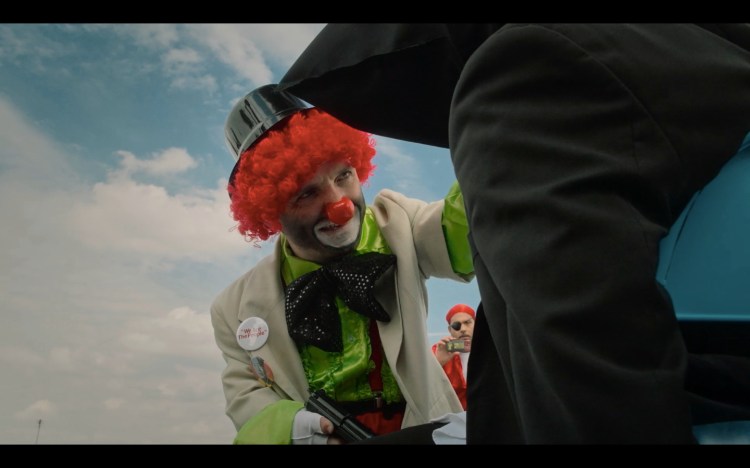
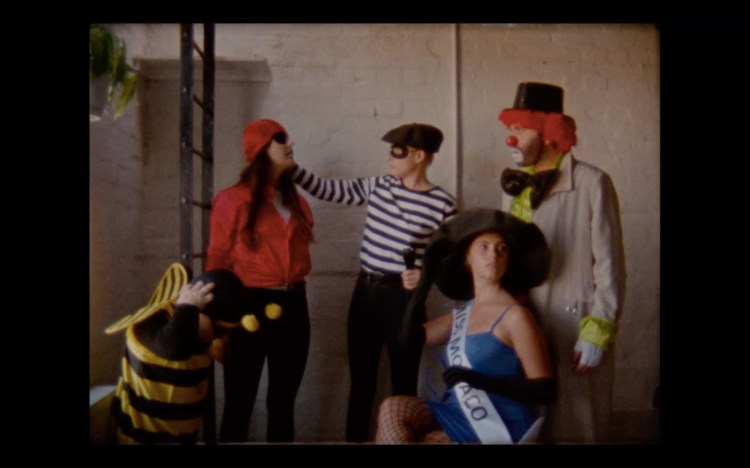
‘The Fifth Generation’ is an experimental dark comedy shot 5 times, over 5 days with 5 lead characters, where each distinctly filmed and carefully laid-out chapter bends the tired old rules and cliches of drama and cinema. The conversation centres upon the acute and ever-present jeopardy of our current climate emergency, as five radicalised environmentalists carry out the kidnapping of a major UK political figure in order to achieve their masterplan. Throughout their misadventures, we bear witness to the hilarious depths and intentions behind their mission. Hugo’s repetition of the events through different languages, genres and shooting styles invites audiences to come to a full-circle comprehension of each character and their motivations, whilst asking how “power, brutality and exploitation mimic the societal ills they so criticise in the run up to their climate action.”

‘The Fifth Generation’ will screen at Brighton Rocks on Friday 23 June at 8:30pm at The Actors as part of our ‘Double Trouble’ Feature Showcase.

Where did the idea for this wonderfully unique motley crew of radicalised anarchists come from?

In truth Miss Monaco is the only real anarchist of the lot; ‘The Fifth Generation’ gang is made up of Bobo the Clown (a Maoist), The Pirate (a St Pauli type antifascist), and then you have the Bank Robber and the Bee who are eco sympathisers, not quite activists but the story suggests that they have been seduced by Miss Monaco in order to take part in the climate action that happens in the film. With that, it is important to note that one way or another they’re all fucking each other senselessly; they’re like eco warrior rabbits! 

The idea came from a script I was writing that takes place during the Spanish Civil War and during my research, I read something that struck a chord. The antifascist troops included such an amalgamation of left-wing ideals that they became impossible to manage. Essentially, the bad guys won because they were better organised – there’s a thought!

Why are you drawn to more experimental and off-the-wall forms of filmmaking?

I’ve been writing screenplays for a while but have only just started directing. I believe I have a solid storytelling muscle so when it comes to the execution – I want to see where things can go. That’s where the experimentation comes in and that also applies to the way in which the films are made. I run a film production co-operative called anti kino (kino means cinema in German). We’re anti everything that is wrong with the film industry: the wastage, the abuse of power, the exploitation…most notably the stifling of creativity.

I make features about characters who challenge the existing socio-political status quo. This not only makes for state-of-the-nation commentary films a la Ken Loach but also for high stakes drama. The films are still very much narrative. The experimentation really has more to do with a will to explore just how far we can stretch the narrative medium with as little money as possible. We may have limited resources but we make up for that with an unlimited creative vision!

What inspirations do you draw from in your filmmaking and in ‘The Fifth Generation’?

I’m a staunch proponent of the academic referencing approach to filmmaking and peppering frames with visual meaning. I also can’t hide the fact that I’ve been sucking Fassbinder dick since we started this ANTi KiNO palaver in 2019, so when it came to making our second feature I thought: let’s go all the way.

Enter ‘The Fifth Generation’, a total rip off of the last 10 minutes of Fassbinder’s ‘The Third Generation’ (1979). A film about a group of Baader Meinhoff type activists who are cleverly conned into kidnapping a wealthy impresario. Yes, you have Hanna Schygulla dressed up as a clown, Udo Kier as Miss Monaco 1979, and there’s also a pirate and a ladybug in the gang but the, ahem…SIMILARITIES end there.

Otherwise, I’m a big fan of Luis Buñuel’s surrealism and love the story of how whilst filming ‘Obscure Object of Desire’ (1977) the production was halted when Carole Bouquet, the actress cast to play the lead role of Conchita, refused to do certain scenes, which led to the casting of the wonderful Angela Molina to complete said scenes. In the final cut you’re therefore seeing two actors inhabit the same role, it generates an emotion and it can be interpreted in so many ways. Is it surrealism? Is it problem solving? Does it work? Yes. 

By the way, there’s a ‘Discreet Charm of The Bourgeoisie’ easter egg in Bobo the Clown’s bedroom. BoBo is a French portmanteau for Bohemian Bourgeois… Semiotics. To top this all up and at risk of sounding like a pompous twat, we owe a huge debt to Bertold Brecht and his Epic Theatre approach, which presents drama in a way that invites the audience to extract a critical, self-reflective reaction to what’s being portrayed on stage as opposed to an emotional one. 

Now if you sort of know what you’re doing and you can come up with something that is cinematic enough, you may get away with the fact that you’re essentially filming a play. I think we do well at that in the third segment of ‘The Fifth Generation’ but we’re really not that clever.

How did you achieve the distinct look and tone of each chapter while also lending a cohesion to the narrative?

When the idea of the rogue climate activists kidnapping the secretary of state for the environment connected with the Fassbinder reference, I sought to explore the themes that introduce the characters behind the costumes. POWER, BRUTALITY, EXPLOITATION… What else should films be about these days? I wanted to show how these characters that are bent on destroying a system (shit-stem) that abuses its power upon them, brutalises, and exploits them are literally doing just that to each other. It is dense and dialogue heavy but hopefully the humour cuts through and there are enough things happening on the screen to keep you watching. 

With each repetition the message becomes clearer, or not! Maybe the repetition gets unbearable. That’s a valid reaction too! A lot of people are bored of hearing about climate change and the film acts as a metaphor for that. It really is up to the audience to decide whether they get why the characters are doing what they’re doing, why they may be right in doing so, but also why they may be wrong!

Your cast are such a treat to watch – how did you look for actors knowing they would all play different roles, have to speak different languages and have to embody each role in their own way?

Aren’t they just? I figured this would be a treat for any actor worth working with and we all had the best of times doing it. I met Leigh Gill backstage at a punk festival a few weeks after writing the thing and when it came to getting a cast together I thought he would be fantastic in it. I got in touch with his agent, he liked the script, and we worked things out so he could be with us just before shooting off to work in the new Steve McQueen film and the sequel to some other weird clown movie. He’s the only actor who doesn’t speak a second language but he makes up for it in acting chops, professionalism, and cool dude vibes. His Bobo the Clown is exactly how I envisioned it. We didn’t have to tweak anything.

The rest of the cast started falling into place as we approached the end of pre-production. We interviewed Chinese, Japanese, Pinoi and Bangladeshi actors and I was most gutted that we couldn’t find a British Nigerian actor who spoke a language other than English. We did an audition with a view to finding a more diverse cast. We had 300+ applications, whittled it down to 10 candidates (who spoke Jamaican Patois, Urdu, Punjabi, Hebrew), then Tommaso Giacomin came in, did his Bobo the Clown, and he was so gangster that we had to beg him to take the part. He plays the Italian Bank Robber in the multilingual segment.

At some point I realised that as cool as having a Japanese Bobo would be, I would be better off making my life easier and casting a Spanish speaking actor with whom I could work on the idiosyncrasies of the Prime Minister scene. I wrote it in Spanish Mexican because it’s the most fun and musical Spanish there is and then I found Alexandra Smith who’s a terrific actor and was up for the challenge.

Shirley Both is the lead in my first film ‘My London Lullaby’, she grew up in Germany so that’s that sorted, then Domino Soko is an up-and-coming Swiss actor who took care of Miss Monaco in French, and Rommel Rasheed who’s heavily involved with the “Actors East” school and theatre in Hackney felt just right for the role of the therapist in Arabic.

As a director, how do you work with your cast on their performances?

I make sure we cast them well, and that’s half the job done, then it’s all about fine tuning. Some things might need more work than others, in the case of Mexican Bobo the Clown Alexandra Smith asked me for a lot of guidance and rightly so, the part was very different to anything she had done before and I was asking a lot from her, but it was magical when we found it and she has become an audience favourite. 

I’m of the Judith Weston school of directing actors where I build a relationship of trust between me and them, keep our conversations private, and my acting notes succinct, and; this is extremely important: I generate an environment that leads to creativity, playfulness, and good vibes. The last thing you want is bad vibes on set, the camera captures that and: lo and behold, next thing you know it you end up with a shit movie!

How did each shooting day differ in terms of approach and the outcome you were looking for?

It was all scheduled and we followed the schedule religiously. Because I know what I’m shooting and how the edit is vaguely going to pan out I don’t lose time with unnecessary coverage and boring the actors with repeated takes, so everything is very dynamic. 

Part of the experiment was to do it in 5 days, which is crazy. For the first three days we worked as fast and loose as it gets, a tiny skeleton crew, stopping only for a one-hour lunch with tea breaks thrown in between set-ups and costume changes. We had a party/photo shoot on day 2. On day 3 we shot the bed scenes and the Super 8. Day 4: therapy (LOL). Day 5: the last segment (no spoilers here friends!) We really got the whole shebang in 5 days. I wish we could have gotten better image quality on the celluloid but that’s also part of the experiment.

Why did you want to mix in Super8 footage with digital?

I wanted to counterpose the all too perfectly crisp 4K images we see in the first segment against the milky texture of the celluloid we see in the second segment. That DOES something to the audience. I’m interested in the experience of the audience – their journey.

Maybe some of that duality has something to do with the theme and the perception of who is doing what to whom. Who is right, who is wrong? I also really wanted to shoot on film and that was the cheapest way we could pull it off.

Postproduction must have been absolutely epic – how much footage did you have and how long did that take?

I don’t overshoot, if there’s anything that’s not working, either with the performance or the technical side of things, we stop, chat, adjust, and shoot until we get it right. The mirror scene for instance took 12 takes or so but there was a lot of technical tweaking involved. I have a theory that there are two types of actors: the ones that get it right in 1 or 2 takes; and the ones that nail it around take 7 or 8. Going beyond 8 takes can happen but it often means that the actor doesn’t know their lines or you’re trying to get something that you haven’t been able to convey to the actor.

As mentioned previously, I rarely do coverage. I prepare my shot lists with specific intention and we shoot what’s in the shot list with the caveat that if we see something we like, we allow for intuition to take over but yeah, the edit really was a psychosis inducing exercise. 

I work with Franz Walsch Jr. (the editor) as close as two men can get. I come from a music production background and so my approach to the edit is very musical. Franz is more…German? That’s a compliment. I stopped counting after week 3 of 18-hour days. I can’t imagine doing that for a living.

What do you want people to take from your film?

Well…CLIMATE PAYBACK of course!

Interview with Kew & Michael Bennett Leroux of ‘StartStop (The Untold Story as told by Mary Applestone a film by Jim Banfield)’

In a world teeming with generic and bland content, nothing puts a smile on my face more than an original and quirky piece of work. Mockumentary ‘StartStop (The Untold Story as told by Mary Applestone a film by Jim Banfield)’ fits this bill perfectly. The writers, directors, producers and all round creative talents Kew and Michael Bennett Leroux have wholeheartedly embraced the virtues of grassroots and low-budget indie filmmaking to produce a fast-paced, highly entertaining and provocative film which I urge you to submit yourself to entirely, allowing the sheer insanity to wash over you like a wave of delight.

After reviewing the film we were able to sit down with the formidable duo and delve into some of the more intricate parts of their filmmaking prowess. ‘StartStop The Untold Story as told by Mary Applestone, a film by Jim Banfield’ will screen at Brighton Rocks on Friday 23 June at 8:30pm at The Actors as part of our ‘Double Trouble’ Feature Showcase.

Where did this fabulously outlandish idea stem from?

Kew: There are a couple of places, but it all started with Michael.

MBL: The genesis is me having the band StartStop and going to Kew and saying, “I want a 5-minute video, to play before our live shows, that declares StartStop is the greatest band in the world.”

Kew: There was this Bob Dylan interview that takes place in a hotel, it’s really funny, and he is just shitting on the reporter. And I was like, “Oh, let’s parody that.”

MBL: That’s the first thing we came up with. I think we did a test shoot of that.

Kew: Wow, yeah, I almost forgot about that. At my old apartment, we busted out the camera. You had the acoustic guitar and my roommate Ferg and you improvised some scenes. 

MBL: So, is StartStop a real band? Yes and no.

Kew: In the Jim Banfield cinematic universe, they are a real, very serious band that had record a deal and are part of Canadian history.

MBL: In real life, it’s one of the bands that my friend Matt and I started. We have played live maybe 2 or 3 times. Well received, but definitely a comedy act. I wanted to play at real venues and at real shows.

Kew: We just kept thinking of other funny ideas, really. We also shot a whole other movie after that first shoot and then went back to StartStop and added more to fill it out, and we came up with the concept. Then we shot the full concert. In the movie, the concert footage shows up and you hear bits and then we cut away, but there exists a whole hour of that concert. We shot that whole thing.

Is Jim Banfield based on anyone real or a real situation?

Kew: In high school, I made a short film called “Al Moore’s ‘The Truth That’s Not So Convenient’.” It was a parody of Al Gore’s “An Inconvenient Truth.” When Michael and I were filling out the script we needed someone to narrate the documentary. I brought up Al Moore, but we very much wanted him to have more of an ego and self-serving personality, like Garth Marenghi from Garth Marenghi’s Dark Place.

MBL: For many years, Larry Fedoruk (Jim Banfield) has been a radio DJ at a very high level across Canada. He has interviewed so many people in the music industry, and spent plenty of time behind the scenes. He understood this character so well. He had this ability to turn on the charm and also to turn on the greasy, just a touch, and lay that on. I know he worked really hard. He took the role very seriously and he came well prepared.

How did you make your old school vintage footage and give it the right aesthetic?

MBL: It has always been really important for us to try different things visually. In our first film as well as our shorts, we challenge ourselves to think creatively in that way. 

Kew: It has also been important to think who’s shooting the movie. That’s actually how we came up with the character of Mary Applestone. The Jim Banfield story as well. Who’s behind the camera? And what did they have access to? And how can we make it a bit? We don’t have a lot of money, so we go with a lot of different cameras, lenses, and adapters for older lenses. We find an aesthetic that we can work with that’s close to what gear the character would have. Then we go to the computer and we try to tweak it to bring it home.

You have some incredible locations including Banfield manor, the gig venues, bars and hotel rooms – how did you find all of your locations on the shoestring budget?

Kew: Oh, I’m friends with Michael.

MBL: As a visual artist, sometimes I can see things differently. I think of location as a character. My friend James, the executive producer, built this giant house and when I saw the house, it made me laugh. I wanted it to be a character in a movie. I had an opportunity to use this location in a way that I would not have any other way. We had full access to this mansion. We took 2 days, and utilized almost every single room. We were very conscious of what each room had to offer. Also, I seem to have a large network of people that have access to perfect locations. The live music venue was a place that I worked at as a poker dealer called The Rockpile. The owner was supportive and offered to rent the place at a very low rate. That was the major portion of our budget. Renting the concert venue for that day, feeding the cast and crew. We had 9 performers, 8 crew members, a 5 camera shoot. We also had an amazing live sound artist, Jake Disman on set.

Kew: He also helped quite a bit with the lighting. We wanted to find someone who did rock shows every weekend. Someone who could play along with us and improvise. 

MBL: For the hotel we went to The Waverley in Toronto, which has since rebranded into an upscale place. Back then though, it was rented by the hour. We all went in together: me, Matt (Power Maus), Holly (young Mary Applestone), and Kew with a camera. During filming we got a knock on the door and the concierge said, “I know you’re filming a movie. I talked to my boss and he said that either you have to go or you have to give us an extra $20 for cleaning.” I said, “Yeah, that’s fine, to follow my dream… here’s $20.” I didn’t realize until later that he thought we were shooting a porno movie.

As you know from my review I am slightly obsessed with Mary Applestone but everyone is so witty. Was everything scripted or do you have a particular approach when producing your films?

Kew: We really like people that improvise dialogue. We don’t use improvising as a form of writing stories. We have all the beats figured out. The big jokes as well. Most of them we have figured out beforehand. Improvising is more to have the actor have their own voice put into it, and then they’re a collaborator. With Gillian, we were feeding her information to regurgitate and asking questions like, “Can you talk about all the different sex positions Power Fist introduced you to.” Then she comes up with stuff like The Russian Elevator and the Beaver Dam. We were letting her go wild, that was a fun one. One of the best shoots I ever did. 

MBL: I try to make the performers feel safe. Let them have fun. With casting, the people that I choose are already perfect for what they are doing. With our style we would find that when everyone was laughing, we knew it was right. Then, when we knew it was right, we would keep going.

KEW: Michael’s very good at finding people, and I’m good at, “Just give me anybody. I’ll find a way to make it work.” I can edit the crap out of it, or we might end up coming with an awesome joke. Like blurring out a character’s face for the whole movie!

MBL: I really trust Kew. What I try and do is make a very safe place for him to be as creative as possible with the fewest limitations.

You must have had so much footage and bits and pieces to weave together in your edit. How was that approached?

MBL: I think we had over 20 cuts to be honest. You just keep at it.

KEW: Editing is one of my favourite parts of the filmmaking process. It’s the only thing that I have been recognized for in Canada. I was nominated for best editor of a short film for the 2019 Hollywood North Film awards. I really love editing a good project. When it’s your own and something you believe in, you really just keep at it. I like to experiment. Try alternate cuts of scenes. Make them longer. Make them shorter. If I think that something new will fix a problem, hell, I like to shoot new shots and put them in, if I’m in a jam. In the end you’re walking a tightrope of trusting your instincts while also trying to put yourself in the audience’s shoes. Objectively looking at how entertaining your movie is and asking, is it working? For the longest time I really wanted there to be more live footage. But, as far as getting the audience enjoying the comedy and the story, it was very important that we cut a lot of the live footage out. I came around and I think it’s better the way it is…. there is over an hour of that concert though. 

MBL: I remember a point where the movie was really good, but it was also mean spirited. We went through and took a couple jokes out. Moved some jokes around and took the nastiness out. Taking that part away from the film and making it lighter, making them cartoon characters and not as mean, I think once we did that we really turned a corner. When we showed a couple of our friends, we came up with a few more ideas, and were able to put a lot of humor and jokes in, right at the end of the process.

KEW: Taking out some of Jim’s mean jokes really made it clear that he is a buffoon. What meanness he does exhibit is a by-product of him genuinely trying to have a good time. One of the changes we made very late in post was Jim’s “Interviewer Shots” with the headshots. Those were shot in different small set ups I made in my apartment. I tried to match the feel of each location where the interview took place. We keep going until we find what the best answer for the project is. The answer is usually, “what’s the funniest way to fix this problem?”

It is very impressive to produce a piece of work like this on such a budget. What can you attribute that success to?

MBL: I would say, kindness and professionalism. Kindly asking people to do something that will only take a little bit of time, will be a lot of fun, and will help me achieve a dream that I’m extremely passionate about. And those people kindly saying, “Yes.” The kindness of people saying yes to me, over and over and staying professional. I’m so grateful for so many kind people. Kew kept polishing and took my notes patiently. Craig Estrella, who also scored the film, entirely mixed the sound twice when we re-edited the film after picture lock. Most of the actors were our friends. I really trusted everyone, and I knew they would be great in the film. The only performer I didn’t choose ended up having their head blurred out.

KEW: Get it done, you know. Just do it. Do it the way that you know how to do it. Have a bag of tricks. Watch behind the scenes commentaries. It doesn’t need to take a lot of money. It doesn’t need to take a lot of people. You just have to have a couple people, like Roger Gorman and Stanley Kubrick did. They made movies the same way.

What do you hope for the film?

MBL: I hope people see it. I hope they laugh. I hope people love StartStop. I hope they love Mary Applestone and love to hate Jim Banfield. I hope I get to play as Power Fist on stage again. I hope we get to make another movie.

KEW: I hope that people can see that we can get the job done. We can make something funny with a story and we can do it again. We could routinely do that. Making stuff takes a long time when you’re doing it on your own. I would love for us to make something for a station or a production company. For someone to see there is value in the fact that we are able to do it on a smaller budget. I hope we get to make another Jim Banfield movie. We’ve got another 1 or 2 really good Jim Banfield stories that we’d love to do. Even a TV show like “Garth Marenghi’s Dark Place” with Larry.

MBL: I would love to be able to build a community where we are making art and everyone involved is having fun, feels supported and is getting paid.

In Review: ‘The Witching Hour’, by Craig Ford

Screening at Brighton Rocks on Saturday the 24th June in our late night programme “Beware Ye Who Enters Here” from 9.30pm at the Actors.

‘The Witching Hour’ by Craig Ford and production company Pardon Our French has adapted the weird and wonderful cinematic world of horror and applied it to the inner turmoil of a young boy. Our protagonist has not only just lost his father, but is dealing with an exhausted mother and relentless petty bullying at school as he battles with his own sexuality and identity. You might say, it sounds like the perfect making of a horror movie!

The third and final short in a series dubbed ‘Queer Bedtime Stories’ opens with the all too familiar and emotive screeching sounds of a violin which characterise so many of our favourite creepy horrors. As we parade around a young boy’s dark bedroom, a ticking sound and crescendo of music might have you ready to jump in your seat, but we learn it is but a piece of furniture which has fallen – there was nothing to be afraid of. Oh…but there is. 

A special mention must be made of the exquisitely detailed and accurate setting of the film. Craig himself grew up on 70s classic horrors and the set for ‘The Witching Hour’ leaves nothing to be desired. We are drawn into our young boy’s world through the four walls of his bedroom sanctuary, which is also the place he is most fearful of. Everything brings us back to a time where being queer and coming out was far more formidable than today. 

Life seems better in the light of day and we are dragged into the heart of a classic and all too relatable interaction between mother and son. Craig cleverly hides us from the mother as they converse through a bedroom door, which forces us into a closeness and intimacy with our young boy. This is needed as we follow him through a series of terrifying scenes where it is revealed who is haunting him. 

Alongside the hideous treatment our young boy receives at the hand of bullies and his own confusion, he is dealing with the life-altering loss of a parent. ‘The Witching Hour’ should be commended for its concurrent heady topics and themes, which it handles delicately and accurately. The flashbacks to happier times with his Dad on the beach not only serve as narrative storytelling devices but allow us to feel his grief alongside everything else he is dealing with. They give us a further comprehension of exactly why our young boy is in such hell.

I would never want to ruin an ending for a viewer but there could be different ways of interpreting those final moments after we finally meet our protagonist’s mother, who is brilliantly portrayed by Harriet Thorpe. We feel convinced her son is hiding something from her, which is all too normal at his young age however as the final scene closes we ask ourselves were the apparitions more than a young boy’s imagination gone wild?

Interview with George Child & Nick Belby of ‘Never Too Young Never Too Old’

Forge Photography & Film Production are an ambitious company whose recent focus on documentary filmmaking has led to the fruition of ‘Never Too Young Never Too Old’. Father and Son duo Mick and George Child wanted to find a way to commemorate the memory of their beloved family member Sid Metcalfe, who they began filming and documenting in 2019.  ‘Never Too Young Never Too Old’ has since evolved and grown into a beautiful and touching tribute to Sid and the other veterans. 

The documentary features the affable Nick Beilby, who runs the York Normandy Veterans Association. Nick’s relationship with these men is incredibly touching, and his connection and understanding of them allows for the recreation of intimate snapshots of a time these men have often chosen not to remember. Film student George Child shines with his skills as first AD and DP, as the documentary flows through these men’s stories and the commemoration of their roles in the war. ‘Never Too Young Never Too Old’ will be showing at Brighton Rocks on the 24th of June at 12pm at The Actors, marking an impressive journey taken by this documentary with director Mick Child at the helm. 

In loving memory of Sid Metcalfe; 30/12/1922 – 11/11/2022 and all of the wonderful friends that we’ll never forget. Dedicated to York Normandy Veterans Organiser; Nick Beilby 2014 – present.

Lest we forget.

The film is so educational and engaging. How much research was put into everything before you started the shoot?

George: When my great grandad passed away on 11th November 2022, in line with his wishes, I wanted to complete the film. Ironically, in many ways, the interview I’d originally started was perfect. I had over an hour’s footage, and I no longer wanted to make the original film as I’d intended, because that had been done. So in discussions with my father and director Mick and Nick Beilby, we set about outlining a story idea for how best to broach what York Normandy Veterans had meant to the individuals both past and present. In discussion, and following initial interviews with people, it soon became apparent that these people were helping each other to come to terms with the atrocities they’d witnessed first hand, and in most cases, lived with for so many years. It was a release for them, peer to peer.

George, as there is such a generational disparity between you and the subject matter, how were you able to broach that through your filmmaking?

George: I started filming with my Great Grandad in 2019 following a school trip to Belgium and France to learn about the two world wars. My Great Grandad had never spoken to me, or in fact anyone else about the war until 2018 when he joined the York Normandy Veterans Group. When I was young we took Great Grandad to the war graves in Merlot Holland, and even then he didn’t mention the war, other than his friend George who’d been killed beside him.

Through my grandad and York Normandy Veterans I was able to write lots of questions that I wanted Great Grandad to answer. When I filmed he was poorly with a bad cold, and he certainly didn’t follow my questions, so I wanted to re-film with him, however covid struck and the restrictions stopped me filming.

Nick, you are a total camera natural! How did you find the whole approach from Mick & Geroge, and how did they guide you in your involvement?

Nick: The filmmakers made it very easy for me as they outlined very clearly what they were looking for and then said just be yourself and talk to my friends as though it were a normal meeting with them, which of course it was. They also asked me to use my own initiative with the questioning which is something that I really liked.

There are some wonderful stories recounted. What interviewing style did both of you adopt in order to garner the most in-depth responses?

Nick: My style is to let the interviewee talk with just the odd prod or interjection from me, and importantly to encourage. They know their subject and have such enthusiasm and feeling for it which makes my job so much easier. I like to think that the interview is more of a discussion between friends with me doing most of the listening.

George: From my perspective, Great Grandad’s discussion on camera failed in terms of me getting the answers I’d originally wanted. However, in between lockdowns, a local museum commissioned a series of films with York Normandy Veterans that emulated my idea. Great Grandad completed four such interviews which covered all of the topics I’d originally planned. Fast forward to Remembrance Day 2022.

What planning and strategy did you put into the shoot in order to get everything you needed?

George: As director of the initial footage with Great Grandad, and now with me acting as DP and AD of this new venture, which included my dad and a huge input from Nick, when interviewing our subjects I wanted to adopt a similar approach. There was no presenter visible in the shots, it was the subject talking to a person off camera. I personally like the informal interview style whilst focussing solely on the subject which leads to a relaxed inclination. 

George, as first AD, what were your key roles in the whole process?

George: I like run-and-gun documentaries because the filmmaker has to think so much on their feet and as the action unfolds. In many ways I had an idea about how our subjects might respond to our line of questioning, but each and every one of them added so much more. And not only on camera. They would suggest locations within their museums or work environments, and exhibits and personal knowledge of the individuals within the York Normandy Veterans group itself as we filmed. As an AD and DP, it was like being in a candy shop. It was B-roll heaven.

Nick, your work with this group is amazing. What does it mean to you to have participated in and to have a film like this being made?

Nick: Some years ago, one of my now departed Veteran friends famously said “when we snuff it, everything will go in a skip and we will be forgotten”. This documentary ensures that the contribution of the York Normandy Veterans to our lives 80 years right up to the present day endures and they will never be forgotten. The film is a wonderful testimony to these people and their comrades and gives future generations the opportunity to understand and recognise how our lives have been shaped by these people and as a result enjoy the life that we do.

For me to have played a small part in these proceedings means so much, it is another opportunity for me to say thank you, how lucky I am to have known these men.

What do you both hope for the film?

Nick: My hope for the film is two fold, most importantly that the filmmakers receive the recognition and acclaim that they truly deserve and that Veterans across the board will see the film and see a little of themselves and beam with pride.

George: I hope that our film teaches and educates future generations of the importance of talking through issues as well as taking the time to listen to others. The mental health of our veterans is really important, whatever war they’ve fought in. There is a high rate of depression and suicide in individuals who find it hard to cope after experiences they have had to endure in a short space of time and most of us will never experience in a lifetime. The veteran groups and associations provide a safe space for our servicemen and women. In these spaces they can open up about the horrors they’ve witnessed without fear of being judged or offending others who may not understand. They can feel valued as individuals and respected by those that take the time to listen. Incredibly, whilst filming, our BTS photographer, a Falklands veteran himself, was able to discuss similar issues he’d experienced with 97 year old Normandy Veteran Ken Cooke. They have become firm friends. It’s unbelievable that these very organisations set up to help tend to be completely reliant on fundraising and donations from the public and we want to shine a light on the work they do. 

Video Interview with Liana Cornell Writer, Director & Producer of ‘REFUGIA – Episode 1′ and James Crawley

Refugia World was founded by actress, activist and philanthropist Liana Cornell. Alongside her passion for supporting grassroots solutions to the climate crisis, Liana has specific interest in animal rights, rainforest conservation and protecting our Oceans.

Liana says, “I am an activist because I have no other choice. I cannot sit by while the world burns slowly. I have no interest in telling my children one day why I did nothing to save the forests, or the mountains, or the seas. I will not go gently when species are being wiped extinct for the greed of consumerism. I believe in a better world and my belief in my belly stokes the passion in my heart. I think we can find compromise without jeopardising our modern evolution. Our collective soul reason for inhabiting the earth is to act as sentinels to the glory of this heavenly planet.”

Before the screening at Brighton Rocks in June we compiled a list of questions for the outstanding activist herself to learn more about the film, the making of it and and what it means to her.

‘Refugia – Episode 1’ will be screening on Wednesday the 21st of June at ALPHAPABET as part of our 6.30pm – 8.30pm programme “Alive and Unafraid” Exploring the World Around Us: Part 1: Documentaries

Interview with Rachel Fowler, Writer & Director of ‘Stillness’

Rachel Fowler is a brave and candid filmmaker whose striking exploration of a largely untouched subject matter, the tragedy of stillbirth, is as heartbreaking as it is uplifting. For the production of her directorial debut, Rachel carried out a hugely admirable amount of research, ensuring an accurate and proper treatment of the subject. She then worked tirelessly to pare down the script only to be left with the bare essentials that drive the storytelling whilst allowing the audience the space and time to breathe it all in. Rachel worked with casting director Heather Basten to assemble a stellar crew who understood the subtlety of her vision,  led by Caitlin FitzGerald whose poise and emotional energy is the perfect fit. Every character is given their own time and space within the film, granting the audience a full perspective on their heart-wrenching emotions.

‘Stillness’ is part of the Brighton Rocks 2023 programme. For further teasers before the screening please read our review on RocksBlog. Rachel urges us to allow her film to open up conversations on stillbirth and reproductive issues, and to remove the stigma – let’s talk. 

What inspired you to turn your talents to behind the camera and make ‘Stillness’?

I wrote ‘Stillness’ as a way of processing my nephew’s death. He was 13 and died of a drug overdose on my daughter’s 9th birthday. I needed to untangle the great joy and great sorrow on the same day and came up with this story. My mother took a photo of my sister over my nephew’s body and I thought about that from my mother’s point of view, someone who sees something and wants to memorialize it, witness it, keep it for the world to see this moment in time. So I chose to make it the photographer’s story, and wanted to take the audience on a very intimate journey of someone who holds space for someone else.

I had a brilliant cinematographer, Eve Cohen. She and I had worked on another project, Mrs. Drake, that Caitlin (the photographer) directed. Eve gave me a crash course in film-making, and guided me throughout. I was also very lucky to have a lot of people who believed in the story and film and me, to be honest, and were there to lift me up and help me through what I didn’t know, especially as a first time filmmaker.

BTS Photos by Simon King

As it is such a huge topic to be dealing with, what specific research did you undertake for the making of the film?

I became an assistant to a photographer through the charity Now I Lay Me Down to Sleep (nilmdts.org), and went on two different shoots with Stuart Hanson, a wonderful photographer from Atlanta.  Both sessions were incredibly different, in terms of specifics of the child and family, but the same in terms of love. So much love in the room, so much heartache at saying goodbye, so much desire to hold the child in the family for as long as possible and remember. I wept through both of them, holding up the light so Stuart could get the best shots. They were two of the most precious, generous, beautiful, heart wrenching times I have ever spent with total strangers.

I also met with Gina Harris (CEO) and Cheryl Haggard (founder) of NILMDTS. They were so wonderful, telling me their stories, inspiration, and regrets. For example, Gina has photos of her first son, but not of her second. Her experience of both is incredibly impactful. I also did a ton of research on stillbirth statistics as well, in the US and the UK. There are now so many wonderful charities and groups supporting women and families, Sands, Tommys, Remember My Baby, Child Bereavement UK, The Worst Girl Gang Ever…just to name a few. It’s inspiring.  

BTS Photos by Simon King

How did you find the process of writing this script in the aftermath of such a personal tragedy?  

It was the best way I could untangle it. So much joy and sorrow on the same day. Ryan’s death is forever associated with Grace’s birthday, though we celebrate Grace’s birthday for a week before and not on the day anymore. Her choice – it’s too hard to share the day with Ryan. I first wrote it as a short story called ‘Stillness In The Morning’. The photographer had a lot more backstory, more interactions with people at the hospital, with her partner. Ultimately, I wanted it to be about the witness to suffering, which is how I felt. Yes, I was suffering, heartbroken, but in a completely different way than my sister was, or my mother was. I felt like I was the witness to so much, and that was the most generous thing I could offer, to hold that space for them, to really see, especially my sister. 

The length of the film is just perfect. How did you decide how much to give us and how much you wanted the audience to infer?

I worked on the script for about a year, constantly combing through, taking away as much as possible. Arthur Miller did this with his first and absolutely perfect play, ‘All My Sons’. He went through it again and again, making sure that every line was necessary. The script went from 20 pages to 5. I was thinking “Mono No Aware”, in Japanese, it’s the beautiful sadness in the passing of lives, objects. Really minimalist, so the audience can be drawn in, draw their own conclusions. Show, not tell.

The edit was really important, Fabrizio Gammardella was just a joy to work with. He is exacting in just the right way, patient and willing to tweak over and over again to make sure we got each moment, each choice: to stay, to go, to move forward, to invite, to exhale, to take the photo…

BTS Photos by Simon King

Casting must have been incredibly sensitive. What were you looking for in your actors and how did you approach them about the delicate content?

Caitlin FitzGerald is a dear friend and frequent collaborator, she and I have known each other for over 15 years, and worked on several projects together. I wrote Rose with her in mind. We saw many wonderful actors, thanks to Heather Basten, our casting director.  I looked for actors who were willing to invest, be open to not knowing, and rather than push for emotion. All of them are so present. I still am so moved when I watch them all.

BTS Photos by Simon King

There is a beauty in the silence for most of the film. Was this always what you wanted?

Yes. It’s the silence of holding oneself tightly, being cautious, gentle. It’s also the silence of stillness, death. We lead really noisy lives, and silence tends to make us feel like something is wrong, out of place, about to happen. I wanted to channel that. This way we hear all the small sounds of anticipation, fear, sadness, heartbreak, hope.

How was the transition for you from camera facing to being behind the action?

I really had to lean into what I know and I know acting, I know emotion, I know storytelling, I know how to get each specific moment from an actor. I then surrounded myself with people who knew more than me and who were willing to lend me their expertise and teach me while on the job. Eve Cohen (who by the way, is the calm, steady, generous presence you want on set) gave me a crash course in filmmaking and framing. We watched ‘The Lives of Others’, one of my all time favourite films, and she broke down the length of the takes, the camera angles, how it was making us feel or perceive character/story. The hardest part of the shoot was everyone was looking to me to make decisions on the fly – something I am not used to –  and I had to be very clear about what I wanted, and trust myself. I learned alot about my own insecurities those two days, and was very grateful for the extremely generous and gifted crew that supported me throughout.

BTS Photos by Simon King

How do you think your film will start conversations and what do you want those to potentially look like?

I hope three conversations will be had. The first being about how we can show up for people in pain, and get comfortable with our discomfort at witnessing that pain. Simone Wiel is a French philosopher, and she said: “Attention is the rarest and purest form of generosity.” In grief, having someone witness our story is vital, because our story matters, our loss matters. The witnessing makes it real and makes us feel less alone.

The second is around stillbirth. We still don’t talk about these sorts of things enough and they are not a rare occurrence. Having open conversations about this and other issues like miscarriage, infertility, reproductive health can help reduce stigma and shame, and bring about change.

The third is about men being emotional and that being a sign of strength. We need that more than ever as our world evolves, and again it’s something we don’t talk about enough.

Interview with Kai Fiáin Writer & Director of ‘Dippers & Oysters’

Kai Fiáin’s spirited queer folktale ‘Dippers & Oysters’ is an imaginative and fresh film which embodies so many of the mantras we hold dear at Brighton Rocks. The Irish screenwriter, director and producer cut their teeth as a filmmaker exploring LGBTQ asylum seekers, globalisation and working class subcultures through documentary. ‘Dippers & Oysters’ marks their recent foray into narrative drama. Kai follows a strong pull to tell stories which reflect on their rich and vibrant Irish heritage, combined with a deep comprehension of working class life and queer stories and how they should be told. ‘Dipper & Oysters’ is a captivating tale of love and connection playing in June aspart of Brighton Rocks 2023, an entrancing watch with an incredible original score and subtle touches of magic realism.

The message in the film is really about trying to find freedom, and escaping the tyranny of labour of the 9-5, Monday to Friday. It’s about finding freedom under capitalism.

Having started your filmmaking in documentaries, what inspired you to write this particular narrative?

The original momentum behind ‘Dippers & Oysters’ was to create a calling card. I was trying to get a feature film made that I had written and I had some interest from a production company who had seen my previous short ‘The Brother’ at LSFF and they wanted to see another example of my work before they agreed to get on board. So, I wrote ‘Dippers & Oysters’ in response to that challenge. They were originally going to produce it with me but then lockdown happened and the production company ended up bailing out of the project.

The film fits well into the subjects that I always find myself drawn to, mainly the landscape of London, multiculturalism, class, women and mythology. There are similarities with this project, my previous short and with the feature that I am working on, so it seemed like the right film to make at the time. It is based on a folktale, it was one of my standards that I would tell if I ever found myself at a storytelling cheli. It’s a story that I’ve told many times as a performance so the bones of the story were very familiar to me. In honesty I never thought I would attempt to make it into a film because magical realism is not an easy thing to pull off and if I had really thought about it, I may have tried to find an easier story, one that didn’t involve trying to get a 4-month-old baby to act as a thief.

The social and cultural strata and ambience of London is so beautifully grasped. Why are you drawn to tell heartfelt and honest tales of real life?

Film seemed like an art form where all these different aspects of who I was could meet.

I would say I am drawn to tell working class stories, which is my real life. I believe working class people should be the ones telling their story. To some extent it’s the desire to see different working class characters on screen that drives me. I was drawn to film after studying for a fine art degree; I found the elitism of the visual arts world violently classist and back then, very difficult to navigate. Having come from an Irish heritage and having been around a lot of storytelling, I ended up going towards film instead. Film seemed like an art form where all these different aspects of who I was could meet. Furthermore, the film industry is unionised, unlike the visual arts industry, and therefore ripe for exploitation and unacknowledged and unpaid labour. London features in all my work in one way or another. It’s my home, I grew up in a multicultural community in West London which was a fantastic and brilliant experience in lots of ways.

Magic realism is one of my favourite narrative strategies in film. Who have you drawn inspiration from and what films do you hold in high regard when making your own projects?

I like my magical realism to be subtle, rather than the appearance of monsters from another realm. I also love a lot of classic British films. So take a British classic like ‘Kes’ for example, although considered a realist drama, it has elements of magical realism in it by the presence of the kestrel, a mythical animal, which clearly represents Billie’s emotional landscape and his desire to escape the limitations of working class life. The fact that the bird is tethered says it all. Another British director who used this genre beautifully was Lynne Ramsay in her genius debut feature ‘The Rat Catcher’ where magical realism was found in the urban slums of Scotland. These classic British movies landed somewhere deep in me and somehow keep inspiring me to make a movie as good as them. Other magical realist movies that I enjoyed over the years were classics like ‘Edward Scissorhands’ and ‘Borders’ but although these are great, they don’t touch me in the way that British movies do.

When I was writing ‘Dippers & Oysters’ I was looking at movies like ‘The Pickpocket’ by Robert Bresson. What I love about that movie is how the thief is set apart from the world: he has an unworldly vibe about him. The thieving was kind of magical and I really tried to bring that into ‘Dippers and Oysters’. It didn’t seem necessary that we see how the thefts take place, you could see a bracelet on a stranger’s wrist in the market, and then later Lorcan gives the same bracelet to Rose. We don’t need to know how she did it. This ties into the magical notions around pickpocketing. It’s like a magic trick – if you know how it’s done the magic is lost.

The music draws all your themes together. How did you come to decide and amalgamate the final score and weave everything together?

The music is essential in the film. I did consider making the film with no dialogue at all, almost like a music video or a musical without the singing and dance routines. I wanted the film to have the kind of rhythm that you feel when you’re walking round the city with headphones on, that feeling of a soundtrack to your day. It sets you apart from the street at the same time as making you more present. I wanted the music to reflect London and in particular the East End where the story was set. I had this idea about doing a kind of grime/ klezmer mash up. Of course, like a lot of my ideas they were far too complicated at first and need to be simplified by the editing process. That seems to be how I work; I must make the mark first so that I can then rub it out. We recorded around seven different bits of music and a lot was cut when it came to the final edit. Dotan Cohen, who composed all the music for the film, bought a lot of ideas and put a band together to record the music. The same band that is busking on the street in the opening scene. That’s one thing I love about film making, it’s doing all those cheeky things like, creating a dream band for the score and then having them appear in the film.

Your cast are all brilliant. What were you looking for when casting and what methods did you employ, given this was your first time directing actors?

I was really looking for a kind of fantasy butch / femme couple. Lorcán was a particularly difficult character to cast and it took me ages to find Suki Willis who plays her. To begin with, I was really determined to try to find a working class actor. However finding a queer working class actor who was comfortable playing a butch lesbian, having her hair cut short and dressing like a boy for this small production was amazingly hard to find. Suki Willis is a great physical actor and got the physical butch swagger down really well.

I first heard this story when I was living on an Irish traveller site years ago and I wanted to honour that experience through the character of Rose. She is based on a chain-smoking traveller who used to look after my kids when they were little. I tried to show that cultural reference of where this story had come from in the interior set design of Lorcán and Rose’s home. Sarah Robinson who plays Rebecca was an absolute gem, she originally auditioned for the role of Lorcán but I asked her if she would consider the role of Rebecca who is a better thief than Lorcán and her equal in every way. I thought Sarah really brought substance to the character; she also added a lot to the dialogue as I really encourage improvisation with the script.

What have you learnt in the making of ‘Dippers & Oysters’ and how are you using that knowledge to move into future productions?

In terms of the shoot, I’m going to be honest. It was chaos. I was a complete novice when it came to directing actors and on top of that, I was producing it all and running around making sure everyone was alright and being fed etc.I was keen for the dialogue scenes to be as natural as possible and so I got the actors improvising and adapting the written dialogue to language that they would naturally use which felt like the right way to go. I think if I had had more time, confidence and support, I would have really liked to have played with this more. I would have liked to focus my attention more on directing than producing. There are some scenes that I am proud of and there are others that just didn’t work and had to be cut completely from the final edit. All in all, we were shooting for 7 days. The most challenging scene was the market scene, as I really had no idea how to direct a crowd. Plus it was still covid time and every one was up tight and anxious. We had no licence to be filming in the market so it was all a bit intense. But I do love the scene where they are practising pick pocketing and flirting and circling around Rose (the older woman).

I’m still processing what I have learnt from making ‘Dippers’. I’m not gonna lie, this was an ambitious film to make. Magical realism on a tiny budget with a relatively inexperienced crew was never gonna be an easy thing to pull off. One thing that I have really learnt is that I want and need to work with people who are more experienced than me. So that I can learn from them, and If I’m going to direct another film, I only want to be the director, not the producer, the gaffer, the camera assistant and all the other roles I had to do in addition to directing whilst making ‘Dippers’. So, my goal now is to gain more experience directing. It’s the role in film making in which I am most interested and I have a lot to say. I want to really understand the director/actor relationship and how to bring out the best in actors. There is something quite magical about the ability to act well. I think the relationship between actor and director is key to that, I’m fascinated by it; it’s a mystery to me and I want to understand it.

I’ve recently ‘gone home’ to Ireland and I’m working on a feature film, a trans story set half in London and half in Ireland. I’m still at the writing stage but soon I will be on the hunt for a producer who understands and is as excited about the project as I am.

What do you hope for your film?

I’m hoping that it will do a couple of years on the festival circuit, of course I’m hoping its accepted into as many festivals as possible. I hope people enjoy it. A lot of queer films really focus on dealing with self-hate, of trying to be accepted as queer people and the trauma associated with that. I understand why, but I always want to make queer films that have zero self-hate and zero trauma. ‘Dippers’ is just storytelling at the end of the day. It’s an attempt to get back to the true nature of film making which is visual storytelling. Other than that, I will be using it as a calling card as I’m still trying to get that feature made.

The message in the film is really about trying to find freedom, and escaping the tyranny of labour of the 9-5, Monday to Friday. It’s about finding freedom under capitalism. I like that there is zero moralising about the fact they are stealing. I think some folks have an issue with that but in truth you can’t watch ‘Dippers & Oysters’ and think that it has any bearing on reality. It’s about escaping reality.

In Review – ‘Stillness’ by Rachel Fowler

It is reported that there are 9 stillbirths every day in the UK. ‘Stillness’ follows the journey of a photographer who strives to support a new family as they struggle with their loss. The following article contains content which might be difficult for some to read and watch.

‘Stillness’ is an admirably brave and powerful directorial debut by filmmaker Rachel Fowler that draws on her own personal experience with grief and pain and explores the rarely broached topic of the acute loss of stillbirth. As the process helped Rachel deal with her own complex and deep-seated sadness and from the recent loss of her young nephew, she hopes the film can do the same for audiences, help to promote openness and start a much needed conversation. 

The film opens to constant and almost soothing mutterings that are instantly recognisable as a hospital, a background that frames two pained faces. After a brief but knowing look of understanding between the two, we are taken down endless corridors, muted greys and fire escape doors to a room where grief is physically palpable and we discover the photographer’s purpose.

The cast of ‘Stillness’ are all stellar in their unique and nuanced performances, but Caitlin FitzGerald deserves standalone praise for the depth and unfathomable empathy she brings to the role. We understand without being explicitly told that there is more to her own story, why this act is important to her and what she is offering to this couple. Rachel’s writing is subtle yet packs a punch; she is able to say so much without intense dialogue and as the camera moves around the room and both the mother and father are given the time and space to express their own feelings during what must be the worst time of their lives.

Beyond the subject matter, ‘Stillness’ is an apt title  given the film’s meticulous edit that lets us hear every breath of our characters. We can hear their tears and the choking up of their emotions.. Rachel made an excellent  choice in having no score until the final moment when we leave the room and a song gently comes in to follow our photographer walking back through the corridors and doors to her safe space and the arms of her partner. 

Cold and grey cinematography and no tricks or trades of the industry – this is pure filmmaking at its best. Rachel’s background as an actor and knowledge of the inner workings of film and the processes behind the scenes shines through to make this an utterly compelling short film, highlighting an unbelievably difficult and strong subject in a way that  people can engage with . ‘Stillness’ has been produced by production house Five Fifty Five, and will be screening this year at Brighton Rocks 2023, 20 – 25 June. 

Video Interview with Alan Richard Halls Writer and Director of ‘Who the F**k is Jacky Bumpers?’ & Chip Carey Actor and Producer

In a dark, grimy corner of a bar somewhere in LA, three old Barflies get to bickering about one salty, charming, two faced swindler from the past… So pull up a barstool, get a drink and find out just “who the F**k is Jacky Bumpers?” in this candy coloured Super8mm film.

Before the screening at Brighton Rocks in June we sat down with the team to learn more about their hilarious and captivating film.