
‘Loyal’ is a heartwarming comedy that transforms the simple concept of coffee shop loyalty cards into an exploration of community, connection, and cultural diversity in modern London. Directed by Sara Chia-Jewell and Antonis Papamichael, this charming short film captures the essence of suburban diaspora life and reflects the vibrant multicultural tapestry of the North London neighbourhoods it was inspired by. Through a blend of naturalistic storytelling and heightened comedic moments, including memorable and hilarious slow-motion sequences, ‘Loyal’ creates a unique cinematic language that earns its emotional beats. Commissioned by Talkies Community Cinema and supported by local businesses who believed in the project’s message, ‘Loyal’ stands as a testament to community filmmaking. It’s a celebration of the everyday heroes in our neighbourhoods – the baristas, shop owners, and familiar faces who make our daily routines feel like home.
Screening on Friday the 20th of June at 6:30pm as part of the 8th edition of Brighton Rocks International Film Festival as part of our Comedy Rocks II programme.
Love a directorial duo and your backgrounds in life coming together. How did you join forces and tell us about your filmmaking relationship?
During the quiet months of lockdown, we spontaneously collaborated together on an animation called ‘Cycling with Molly’. We didn’t really have any plans for it, we were just having fun. It was a wonderful surprise when it went on to festivals, winning prizes including the Aardman Academy Prize at Encounters Film Festival. We enjoyed working together, we continued making short form content, and brought each other onto projects we were working on individually. We naturally developed a shorthand, as well as refining our voice and humour when operating as a duo. We’d been waiting for an opportunity to make a live action short film together, which is where ‘Loyal’ comes in.
They were all busy, filled with the local migrant community, which made us feel at home, as it reminded us of our own upbringings.
From the spark of the idea in North London, tell me about the development of the script to this brilliant comedy?
We had been encouraged to pitch for Talkies Community Cinema – they commission scripts based in North London. So, we took a trip to get ideas!
Sara Chia-Jewell: Coming out of Bounds Green station, we saw many local independent cafes. We grabbed coffees and were offered loyalty cards. We started riffing on situations that could happen with loyalty cards. High on caffeine.
Antonis Papamichael: For example, what if loyalty is sabotaging a competitor’s coffee shop? Or, what if the barista is so committed to giving you your free coffee, that they follow you at night to the point of becoming a stalker.
SCJ: Which would have been a funny horror film. As we kept walking, we kept passing local cafes in Palmers Green. They were all busy, filled with the local migrant community, which made us feel at home, as it reminded us of our own upbringings.
AP: We came to realise that a positive message about community was important to us.
SCJ: As well as wanting to reflect the diversity of London, specifically in a comedy, as we don’t often see that.
AP: So we had the ingredients.
SCJ: We bought a cookbook.
AP: Found a kitchen.
SCJ: It was a clean kitchen.
AP: And made it into a script.
Talkies Community Cinema do such great work. How did you find working with them and how did they support the film?
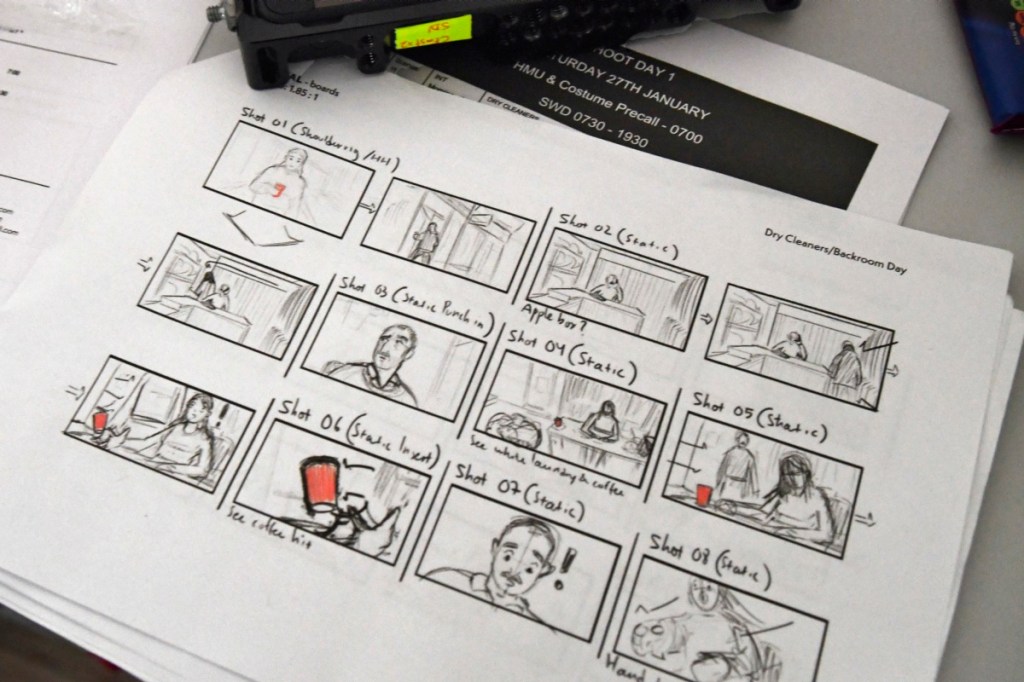
Behind the face of Talkies you will find a group of passionate film lovers who are the sweetest. They are active members in their communities, and as such were able to help us during production. They introduced us to potential locations, including Arbeit Studios, where we ended up shooting part of the film. A shout out to our Production Designer, Mona Camille, who transformed an empty room into a dry cleaners! Talkies also connected us with local rehearsal spaces, sourced local runners for shoot days, they were basically an open door always willing to help.
Because of the story and the multi-culture of North London what were you looking for in your casting?
Our cast was straight up influenced by business owners we met in North London. Bilal, played by Adil Akram, was influenced by an owner of a dry cleaner whom we met while doing an early location scout. As for Eleni, played by Eve Polycarpou, we knew she would have to be Greek/Cypriot as that is a large percentage of the community there.
AP: It was also exciting for me to include my Greek Cypriot heritage in the film.
SCJ: As for Arlo, I used to live in North London, and wanted someone mixed race to be reflected.
For Bilal, in our first audition tape, we requested them to improvise moving in slow motion. When we received Adil’s tape, it was a perfect match with the comedic tone we were after. For Eleni, we were looking for a motherly essence, and when we received Eve’s tape, we loved her quirky energy and what that brought to the character.
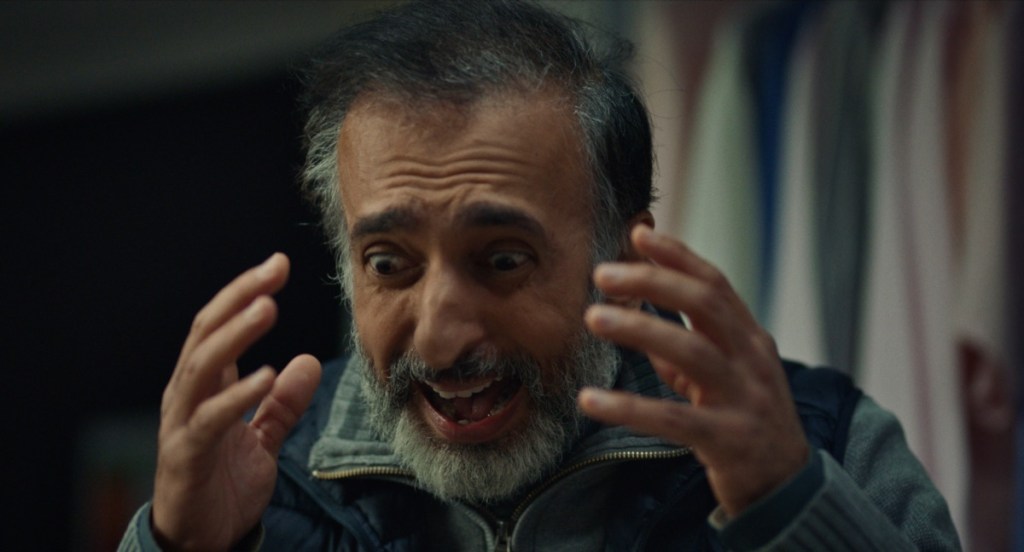

I was so taken by the moment you pan into both of their faces, silent, guilt and just let us sit with the discomfort of it. How did you know when the comedy and tragedy of it was just enough?
We wanted it to be a long moment – because that’s how those awkward moments feel like in real life! They feel like forever.
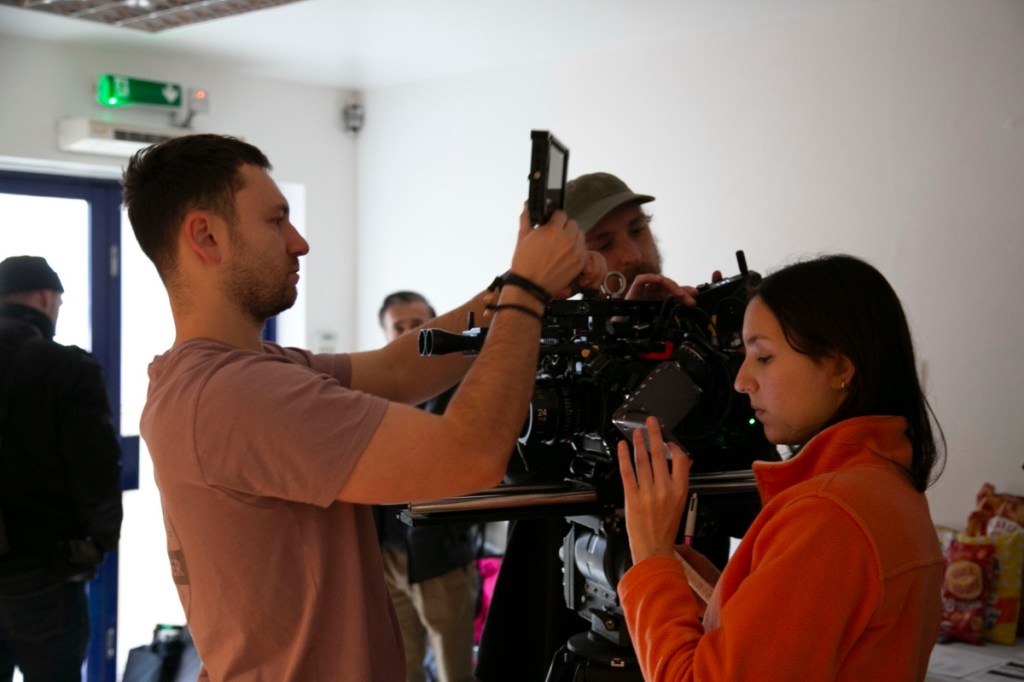
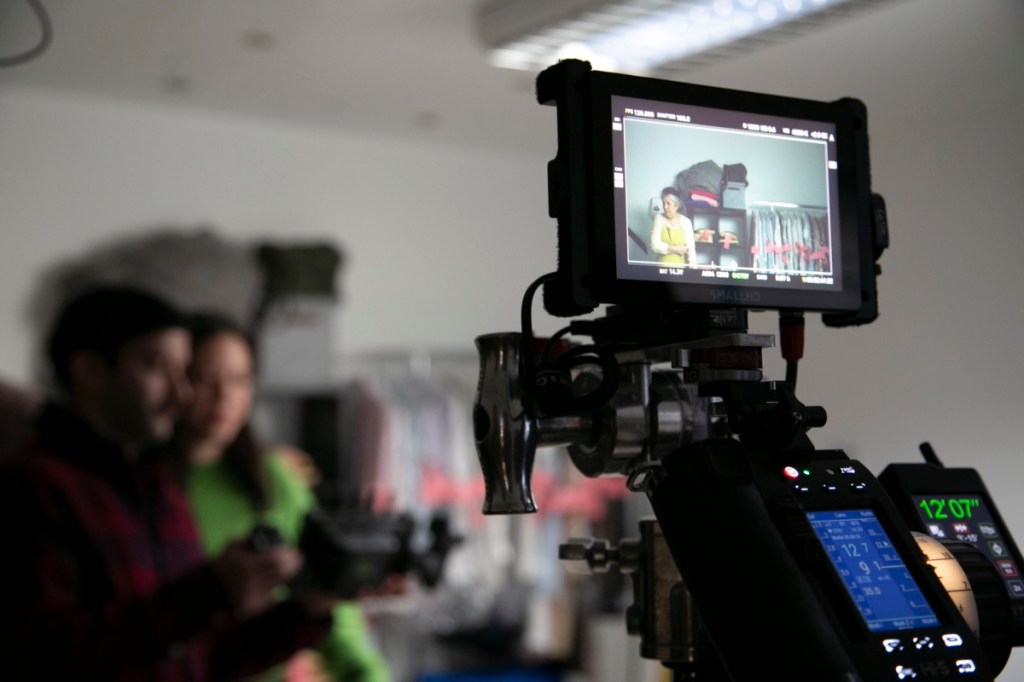
Those zooms are filmed in-camera by the way! Our DoP, Jack Worrall, managed to find an amazing 24-290mm lens – which drove our insurance up, but it was worth it! How beautiful are those shots?! They were in our minds early on, written into the script. We wanted it to be a long moment – because that’s how those awkward moments feel like in real life! They feel like forever. We played with the speed of the zooms during prep. We wanted to push the boundaries of that – how far can we stretch this moment of discomfort for the audience? When editing, we got lost in the back and forth ourselves – which was the point we knew we were on the right track. We want the audience to get lost in the zooms, and hopefully the humour of this is earned from previously setting up a naturalistic pacing at the beginning of the film.
The soundscape of this moment is also a huge element. Our Sound Designer, Rebeca Alvaro, created a silence that held awkwardness and tension. We played a lot with the placements of bird cackles – which are sounds from real birds in that area, by the way!
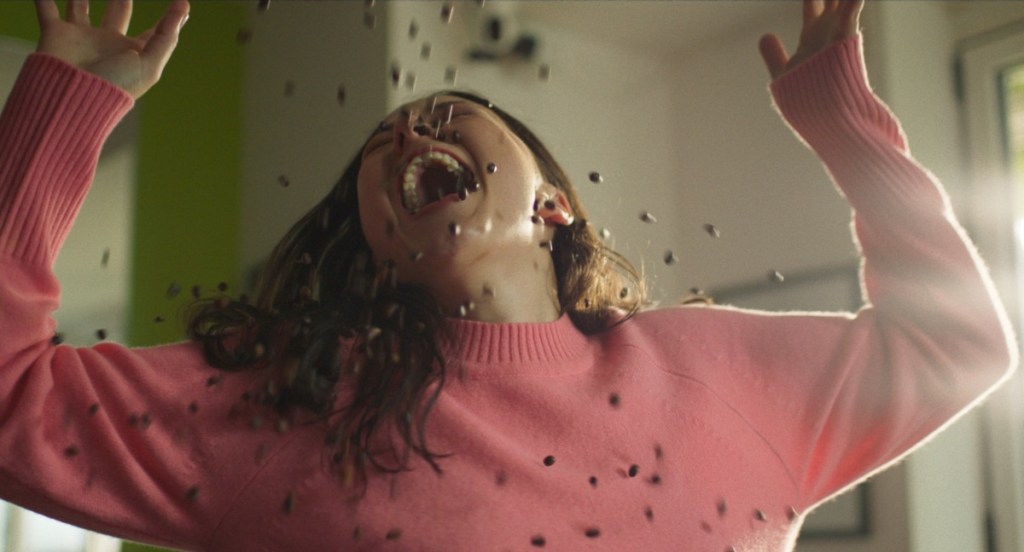
You employ slow motion in a couple of scenes and have some great montages. Tell us about using this as a vehicle for the comedy.
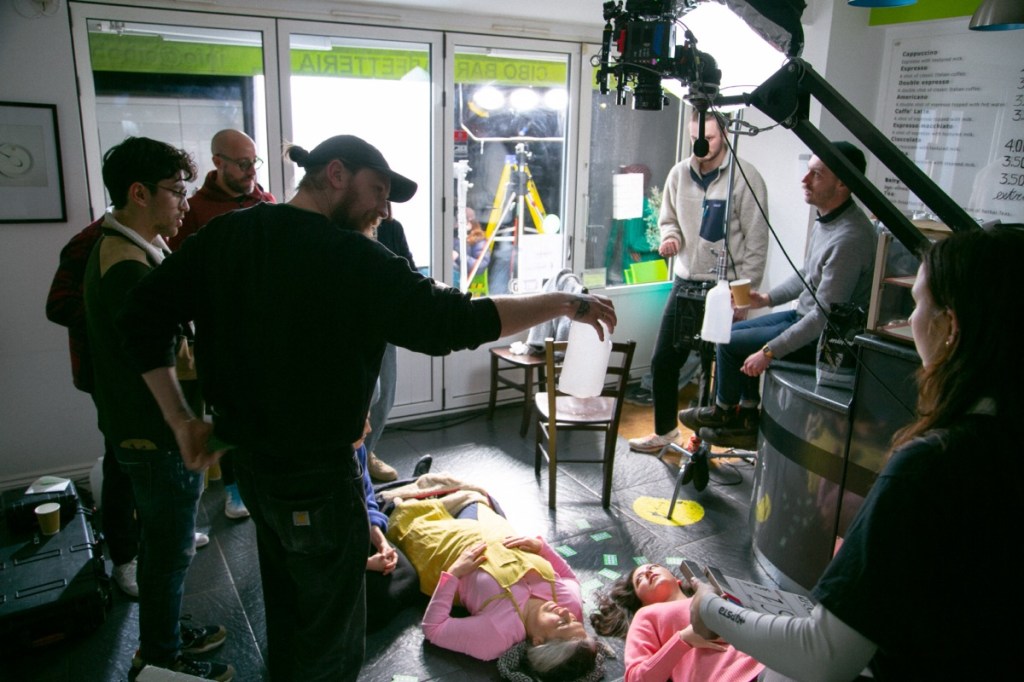
For the cafe montage, there’s a humour to how we exaggerate things in our minds. We often romanticise events, which we wanted to push to surreal levels. We changed our lighting, and our costume designer, Haden Holme, brought in hues of pink, to accentuate the absurdness of it all.
For the dry cleaner montage, our references were Van Damme films where we see the same kick from different angles, and cheesy 90’s action movies. Think ‘The Bodyguard’ where Kevin Costner jumps in front of Whitney Houston as he saves her from the bullet. Or, when a hero runs to defuse a bomb, there’s 10 seconds left but five minutes of screen time, in essence it’s playing with our perception of time. And while they were made in earnest back then, watching those scenes today, with the development of cinematic language, we find it funny in its absurdity. Both montages required a lot of playing around in edit, shout out to our editor Emily Chao for working with us to figure out how many times a cup can fly in the air. At the end of the day, we just went with choices that made us laugh.


Your approach to funding, going to local businesses and harnessing that community side of the film is brilliant! What advice would you give filmmakers looking at a similar approach?
A lot of local businesses were willing to work with us, we think, because we were genuinely interested in them as people, especially when reflecting the community in the script. We allowed them as much insight into the filmmaking process as they wanted. All locations, vendors, and in-kind community supporters had read the script, we welcomed them to attend shoot days, and ensured they were comfortable with actions that would occur on their property or with their items. Their involvement kept them engaged and happy to help. I think as filmmakers, sometimes we’re so used to being on set and making films, but to a majority outside the industry, it’s all quite cool and exciting.
Having the patience and time to introduce people to the art of filmmaking is part of the joy of communal work. You do have to put yourself out there, find the people who can help, and ask for the help you need. We found that most people want to help, as long as you’re responsible with their trust.

What do you hope for your film?
We just want people to see it. We want to make people laugh. Feel uplifted by the message and go hug their local barista. And of course as filmmakers, we hope it leads to us having the opportunity to make more films! MOVIES! MOVIES! MOVIES!
 Rocks Festivals Blog