

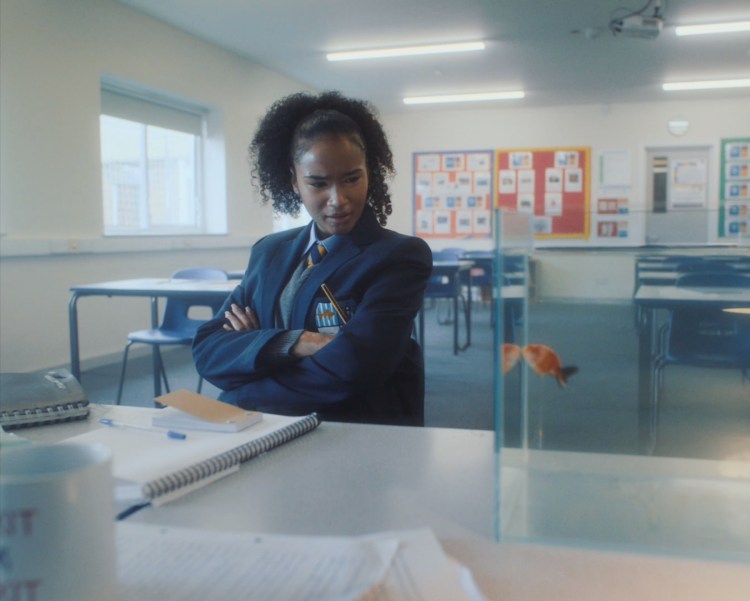
What makes a short film extraordinary is its authentic foundation. Calico centers on Lorrie, a teenager with vitiligo navigating the challenging waters of school life and self-love with a delightful little helping hand from a most unlikely source. The duo spent years in pre production finding the right actor, interviewing teenagers with vitiligo and incorporating real experiences into the script which culminated in casting Malaysia Newland, who despite having no acting experience, brings a raw and captivating truth to the role. The film refuses to be confined by a single medium, blending live action with CG elements, graphic novel stills, flick book animations, and traditional animation to create an entertaining and profound short film which demands to be loved. Calico represents a significant milestone for representation in cinema, featuring a protagonist rarely seen in media whose battles transform the common experience of being looked at or othered into an empowering statement of pride and self-acceptance. In an industry still struggling with diversity, Calico demonstrates how authentic representation requires not just knowledge and experience in filmmaking but a genuine understanding of lived experiences translated to the screen.
Screening as part of Brighton Rocks on Saturday June 21st in “LETS ROCK II” at 11am our brand new relaxed screening – designed to be more accessible and comfortable for people with sensory sensitivities, autism, learning disabilities, or other conditions that may make a traditional cinema experience challenging.
Calico is a brilliant, original and engaging short. I want to know what inspired this particular story.
Jake Mavity: This has been a long process. In a way, this story began when I was a shy 13-year-old kid with vitiligo, who felt extremely uncomfortable in his body. Sports at school were particularly exposing, and this insight was a brilliant building block for developing Calico’s protagonist, Lorrie, who is vulnerable yet determined.
Sarah Mavity: Although vitiligo is a specific condition, the feeling of being ‘othered’ at school is very common and we wanted to tap into that insight to make a specific story about something quite universal.
JM: Before we embarked on writing the script, we chatted with the amazing Coralie Rose at Road Casting. Lorrie, the lead role, is insanely specific; they have to be a brilliant actor and have to genuinely have vitiligo. So a big ask, casting-wise. Coralie was confident, but felt that it would need a lot of time. And she was proved right – as the casting process ended up taking 5 years.
SM: Whilst writing, we started to travel round the country auditioning loads of brilliant teenagers with vitiligo. It was incredibly inspiring and their own observations were often important tools in shaping the script. As the script is quite fantastical, we felt the emotional arc needed to be completely genuine. It was a privilege to hear and learn from all these amazing teenagers’ experiences.
JM: I have to be honest; there were points where I felt we’d never find Lorrie. Then one day Road Casting presented Malaysia Newland and instinctively, we knew she was the one. Malaysia didn’t have any acting experience but is smart as a tack and a very empathetic person so I was 100% certain that with a bit of coaching there was a fantastic actor inside of her waiting to blossom. We rehearsed and rehearsed and after 6 intense months, we were ready to shoot.
I love your tenacity and taking that 5 years to find the right Lorrie! How did the script change and develop over this time and after speaking to and auditioning so many teenagers?
We met so many teenagers and young adults, all from totally different backgrounds and from all over the UK, so their experiences were diverse and unique. Some had been very affected by their Vitiligo, whilst others were more accepting. But all had endured at least some level of isolation or bullying at school and insensitive behaviour from the public. To give these moments authenticity, we lifted lines from the interviews to inform the script itself. The main cast’s dialogue is shaped by the real-world encounters of the teenagers we met and their lived experience.
It’s only once she meets Calico that the camera comes off its legs and each frame has a more fre-spirited energy.
How did the particular subject matter reflect your filmmaking approach?
JM: As our target audience is teenagers, Calico is deliberately rebellious in its approach, as we felt we had a duty to our viewership to tell the story in an unconventional and mischievous way. We open the film with locked-off, graphic titles as we wanted to establish the innate conformity of schools. It’s not just the uniforms but also the identical lockers, desks and showers. There is something militaristic about many school settings, which is very restrictive when a key function of school is to help teenagers develop and grow. Rather than hero’ing Lorrie immediately, we consciously start with her small and isolated in the back of each frame to increase the feeling of Lorrie’s paralysis. It’s only once she meets Calico that the camera comes off its legs and each frame has a more fre-spirited energy. She literally grows larger as the story progresses to match her emotional development.
SM: We explore not only the effects of vitiligo on self-image but also the feeling of vulnerability that teenagers feel more widely. School is a place of stress for many teens and Lorrie’s (and the goldfish’s) feelings of helplessness and loneliness reflect this. The majority of the film is shot at 1:1 as not only does this aspect ratio mimic the shape of a fish tank but it also creates a tense, trapped feeling. When Lorrie and the fish break free of school, the frame opens up too in order to visualise this sudden expansion of Lorrie’s horizons.
JM: And by using live action paired the fantastical CG elements, graphic novel stills, a flick book and Harry’s fab animations, we depict Lorrie’s reality as an amorphous, tapestry-like blend of realism and abstraction that (we hope) mirrors the multi-faceted teenager experience. Wow, that’s a pretentious director sentence if I ever heard one!
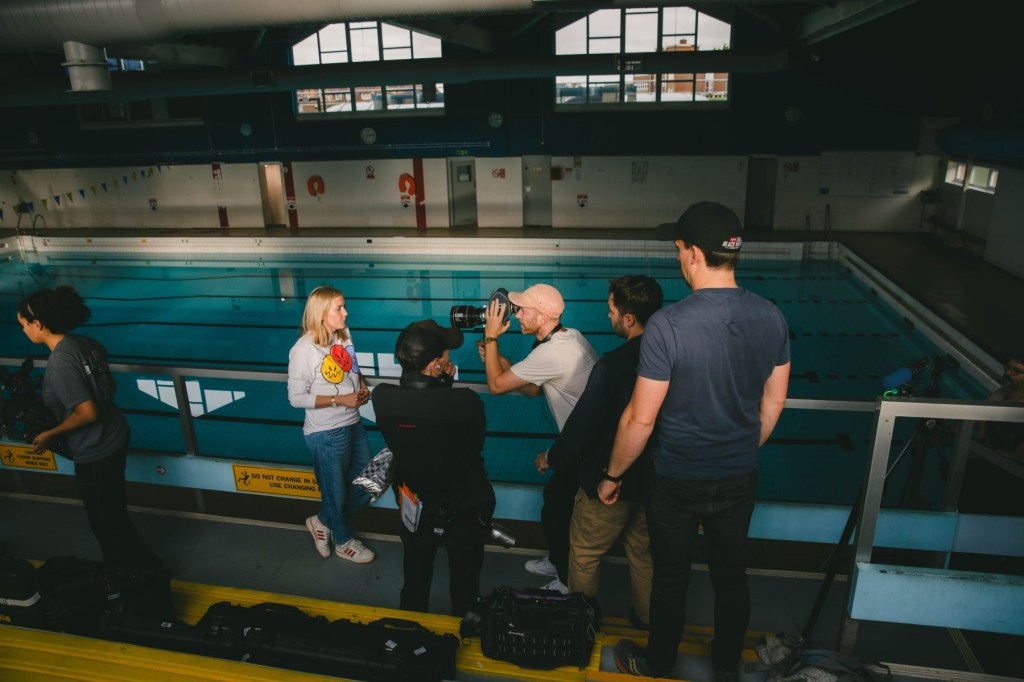
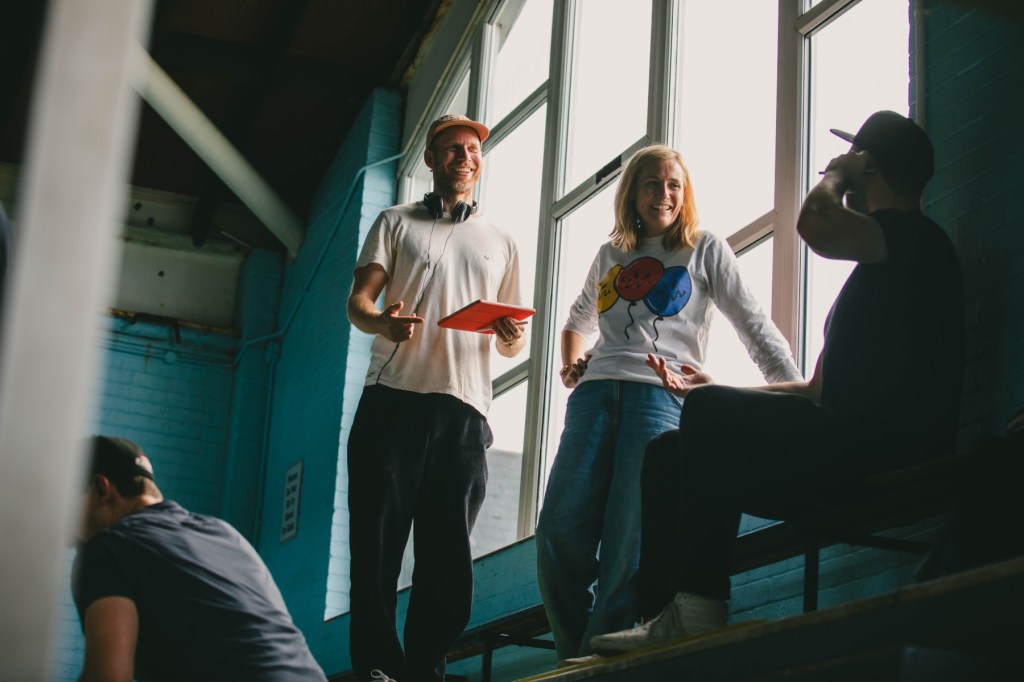
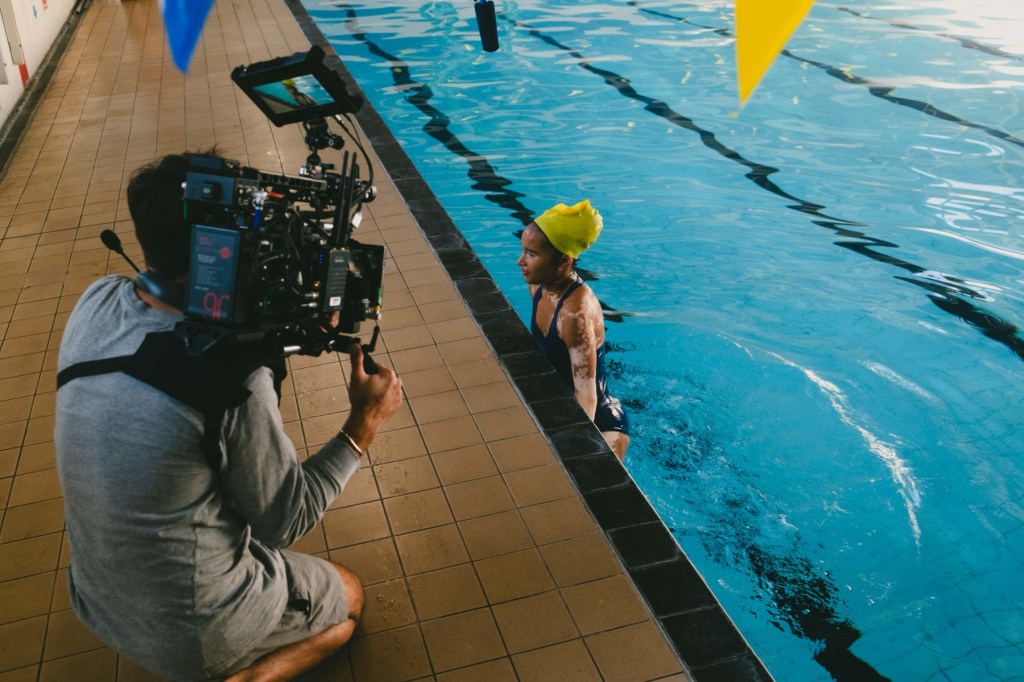
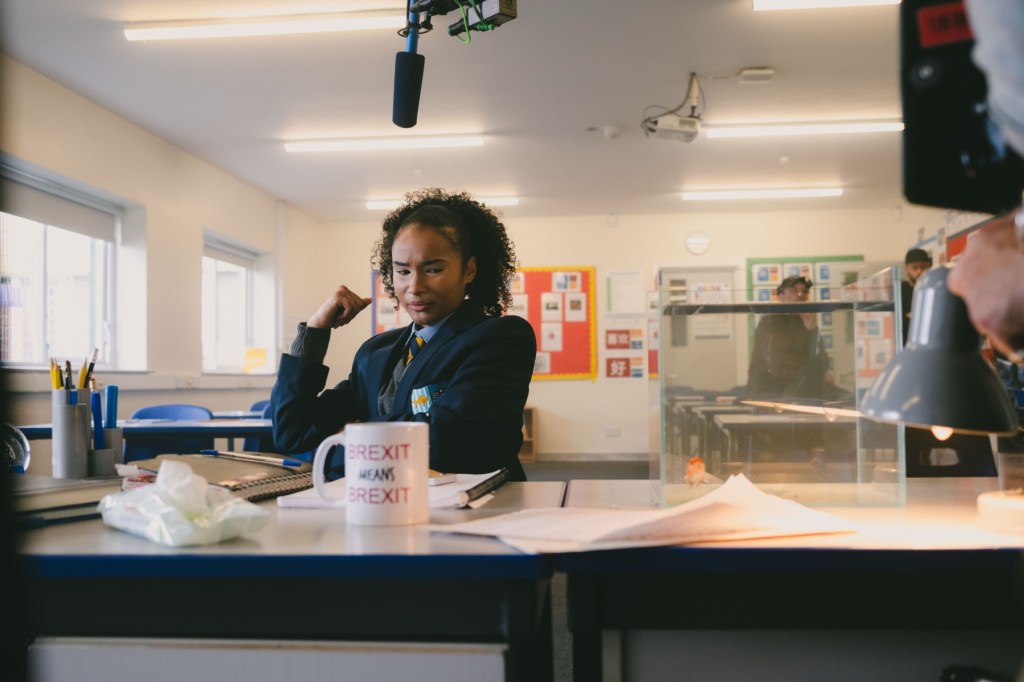

Tell us about bringing out Malaysia’s performance, especially as she was going to be spending large swathes talking to herself, which is formidable even for a seasoned actor.
It was a huge ask for Malaysia and she was successful mainly because she worked incredibly hard. Charlie Kemp, who is a fantastic comedian and improv artist, came on board as an acting coach, and the three of us workshopped for hours each week (sometimes in person and sometimes over Zoom). As Malaysia had no previous acting experience, it was a case of slowly building her confidence up, day by day and week by week, plus setting her acting homework in between our rehearsals too. She really did work insanely hard. Charlie played the Calico role on the shoot days too which was brilliant as it meant not only did Malaysia have a foil for her performance, but there was also another familiar face on set.
I’m a firm believer in a film being born 3 times in its writing, shooting and editing, and this was a good example of that!
The script is packed with these poignant comedic elements which poked fun at the adults and pinpointed their misunderstanding and disengagement with a lot of youth. Can you talk more about developing these and making sure you didn’t go too far?
In truth, we did push it too far and we had to re-record some of the audio in the edit to soften some of Miss. Hammond’s lines! As discussed, a lot of the dialogue was influenced by lived-experience, so either things people had said to me or to the teenagers we interviewed. But Miss. Hammond’s character was originally harsher on Lorrie and we felt in the edit that actually it has strayed too far from being a generational perspective difference into something more cruel. I’m a firm believer in a film being born 3 times in its writing, shooting and editing, and this was a good example of that!
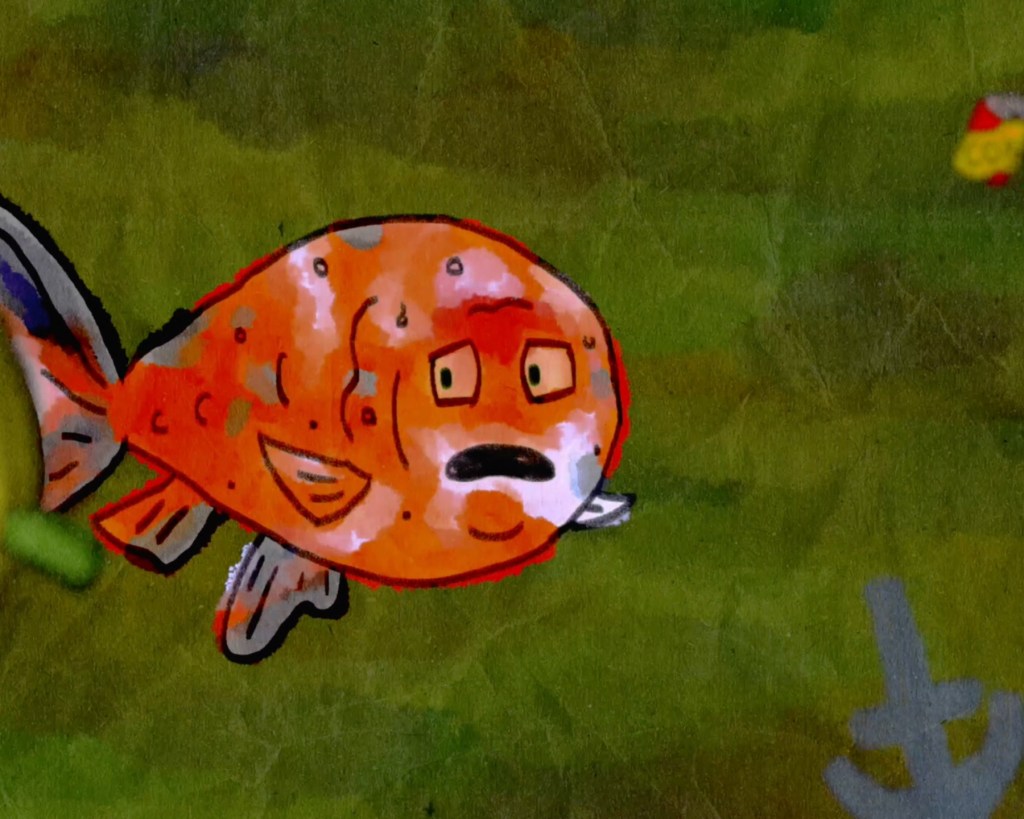

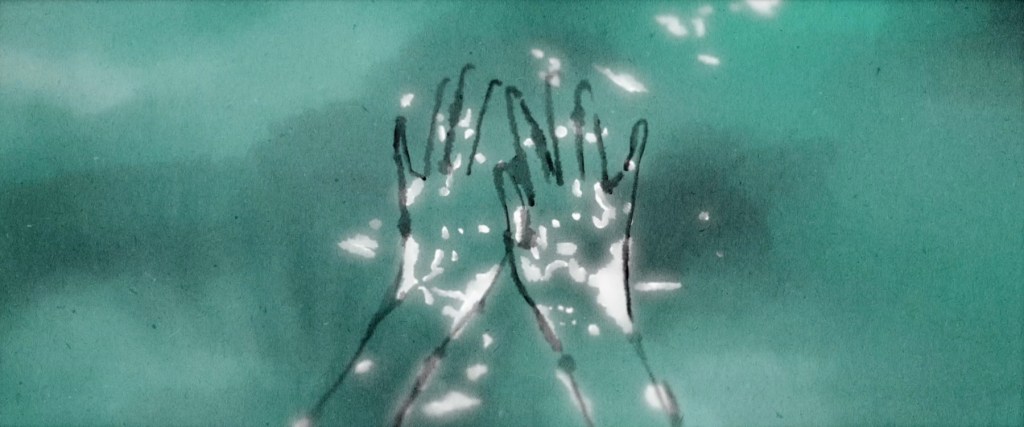
How did you work with Harry Plowden on the animation, as there are so many different directions you could have taken?
I met Harry at a mentoring event and I was blown away by his talent. His animations all have so much life and wit. By giving the animations a handmade and textured feel, they contrasted with the school’s clinical environment. And the animations all have a bubbling energy that reflects Lorrie’s own vivid imagination and her need for freedom.
Jamali Maddix voices Calico with such a vibrant energy. When did he come on board and how did you shape his personality at the fish?
Jamali didn’t come on board until we had quite a developed cut. We had imagined his acerbic tone working brilliantly as Calico and were delighted when he read the script and agreed to do it. There was quite a lot of back and forth in the sound booth to develop and enhance Calico’s dialogue. Jamali was full of ideas, and it was a real pleasure refining Calico basically on the fly, before we went into post to animate the fish’s mouth.

I love all the detail you provided about your camerawork and letting us into her head. Did anything change in post-production and working on the edit?
Elyse Raphael was our fab editor and she crafted the story beautifully. We’d bounce ideas around, adding extra animations that I crudely mocked up or cutting out entire scenes to try to push the story as hard as possible. There was obviously a lot of dialogue changes, and Harry also provided one more animation of Lorrie’s vitiligo on her arms in the reservoir scene, as we felt the story needed another emotional beat to emphasise her struggle then acceptance with her body.
The music is so engaging. Who did you work with on the sound design?
Thomas E. Brown composed Calico’s music, alongside tracks by Baque Luar and MJ Cole. Tom was constantly re-recording and experimenting with the music, to create something full of playful magic but with honesty and gravitas too. No easy feat!

You break the fourth wall right at the end which made me feel like I was privy to the inner world you had built and is one of my most beloved narrative devices.
We start the film with Lorrie small and powerless in the back of a dark frame to show where she is emotionally. And it was important to illustrate how she had grown by the film’s end and the best way to do this was with a heroic shot of her totally owning the frame. And as vitiligo sufferers also feel ‘looked at’, I wanted to counter this with the last shot of her defiantly looking at us, the audience with confidence and pride.
What do you hope for your film?
SM: We wanted Calico to ignite discussion about self-image and representation especially amongst young people who are most affected by low confidence, bullying and loneliness. We have just recently been approached by a charity platform which connect films to schools as a teaching aid. It has yet to be formally announced, but we are beyond delighted that the film will reach young people in this way.
 Rocks Festivals Blog