

Shot entirely in and around his beloved Hastings, Benjamin Verrall’s Shouting at the Sea is a love letter to the town he grew up in and the beauty of friendship. After years spent apart, Joe and Katherine reunite and, with the sea as their witness, heal old wounds and reconnect as adults. The cinematography is intimate, with a handheld aesthetic drawing the audience into their innermost lives and showcasing the town’s timeless charm and weathered beauty.
Hastings Rocks is thrilled to welcome this beautiful and soulful film, a joint production with Toffee Hammer, back home to the very place that inspired it. Shouting at the Sea screens on Friday at 7pm at the Printworks in our programme Tales from the Land by the Sea. Don’t miss this chance to see it and to meet the filmmakers who made it…
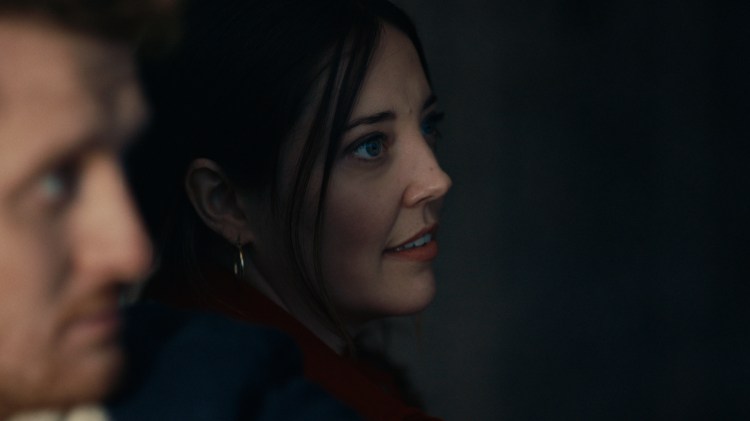
Where did this beautiful little gem of friendship come from?
I was keen to make a short film with the team at Toffee Hammer at the end of 2023, we had a little money in the bank, and a small window of opportunity when we weren’t busy with commissioned work. So we gave ourselves a deadline – and got to work. I had the title Shouting at the Sea in my mind for over 15 years, imagining that such a cathartic act would make for a great ending for a film. Everyone we spoke to in Hastings immediately understood the inspiration for the title: shouting at the sea is something most people who grow up in seaside towns can relate to. However, it was just a title and an ending until I started to develop the story with Amelia, Ruth and Kate.
It is very much a story of friendship, and the script was developed through friendship. It so happens that the writing team at Toffee Hammer all grew up in different seaside towns, so we each had a point of reference and memories to share. We regularly write together on commissioned projects, so we already had a great way of working, but it was a different experience on a drama without constraints. Finding an authentic story involved vulnerability in sharing personal anecdotes and memories. The film is a collective biography of sorts, and it is stronger for it. Joe and Katherine evolved into very real characters for us – and the love we have for them is hopefully evident in the final film.
We’re driven by human connection, storytelling, and practical creativity – these are the things that inspire us, no matter the project.
Tell us more about Toffee Hammer and where you sit as an agency in a very busy and hectic space?
We’re driven by human connection, storytelling, and practical creativity – these are the things that inspire us, no matter the project. We love collaborating with other artists and makers, which keeps our work fresh and sparks our curiosity. Most of our commissioned work is in communication and learning, where we’ve built a reputation for encouraging clients to push the boundaries of their imagination. We’ve worked with Yetis, Cardboard Robots, Puppets, Giant Flies – you name it – all with the goal of cutting through the noise to deliver something memorable and useful.
Our self-initiated projects, like filmmaking, are our creative playground – a chance to tell stories that mean something for us, experiment, explore new ideas, and stretch what’s possible. There is cross-pollination between our own projects and client-work as we are always learning.
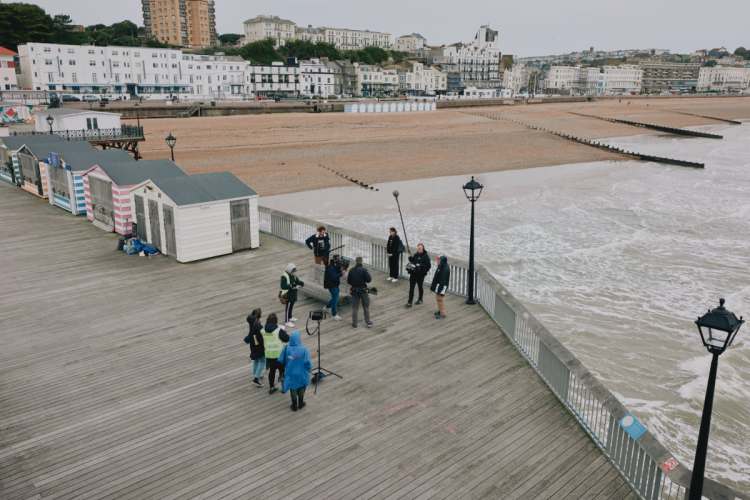
Writing in a team can pose challenges alongside the obvious advantages. Tell us about your experience and how the script formed together until you all knew it was at the right place?
Writing the script for Shouting at the Sea was a collaborative process that evolved through layers of discovery and refinement. The first draft was a collaboration between me and my wife Amelia (co-producer), inspired by our experiences of growing up in seaside towns and my own specific memories of Hastings – the empty beaches, the faded grandeur of the town, the transient population. But when we returned to Hastings with the full Toffee Hammer team, it was clear how much the town had changed and some practical things prevented us filming where I had imagined some of the scenes too. That visit was invaluable, not only for grounding the story in its present-day reality but also for bringing fresh perspectives. Working with the rest of the team added more authenticity and depth to the characters.
Of course, the writing didn’t stop when the script was finished. In post-production, we ended up cutting material that turned out to be unnecessary. The actors’ performances carried so much emotional weight and subtext that entire lines of exposition became redundant. It’s a humbling part of the process, realising how much storytelling happens in a glance or a silence. By the end, the script became less about what was written and more about what was felt – and that’s when we knew it was in the right place.

You can see and feel that collaboration with the actors through their captivating performances. How did you approach casting?
Both actors immediately lifted the characters off the page and made them real.
Big drama often unfolds in quiet moments, and the screenplay required us to find actors who could reveal their inner selves in the spaces between dialogue. Films are unique in capturing subtle emotions through close-ups and intensifying the viewer’s connection to the characters. The casting process was therefore centered around finding actors who could deliver naturalistic dialogue and convey deep emotions with impeccable authenticity. Harry Michell was chosen for his ability to blend humour and tragedy, and Maddie Rice showed us such a wistful, thoughtful, yet funny take on Katherine. Both actors immediately lifted the characters off the page and made them real. We spent time together to rehearse and talk through the characters, before we went on location – their chemistry was evident from their first table read.
Through rehearsals, they each brought something unexpected – subtle nuances that made them feel real and lived-in. As a director, I like to give actors space before and after the written scene to improvise – which, again, just helped the feeling of dropping in and out of conversation. Actors breathe life into the words, often in ways you could never anticipate. I wanted to make the final film live up to Maddie and Harry’s performances and often this meant holding on reactions during the edit, as these added so much nuance and subtext. Both Maddie and Harry are brilliant writers and this definitely contributed to their understanding and interpretation of the script.
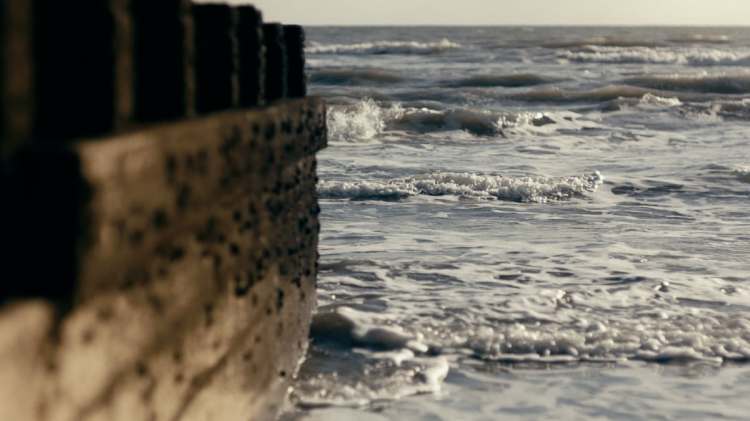
The sea, that overlay and the drawing of everything together feels so cathartic. How did you know to strike the right balance between that and the narrative?
The sea has its own music – there’s a rhythm to the waves, this deep, rolling sound that holds everything together. And then there’s that unmistakable percussion of waves pulling back stones on a shingle beach. For people who live by the sea, that sound becomes part of who they are. It shapes them, just like the sea shapes the land. Being near the sea can make you feel small, but in a good way. It’s humbling, a reminder of this bigger world out there, of forces so much larger than us. It was here long before we were, and it will still be here long after we’re gone. In that way, it’s almost like a memento mori – a reminder of how temporary we are. But it’s not morbid; it’s grounding. It puts everything into perspective. I wanted the sea to feel ever-present in the story, like a steady rhythm in the background. It ties everything together without taking over. Honestly, it was like the sea decided where it belonged – we just had to listen.
You have a lot of locations both inside and outside. How did you plan the shoot with local production support Jamie De’Ath to make sure you had all of the coverage you needed? How many days of shooting did you have?
We planned the shoot around the idea of covering two locations each day, which felt ambitious but doable – and then crossed our fingers for good weather! Amazingly, luck was on our side: it poured with rain on the days we were filming interiors and stayed crisp and calm when we were outside. I’d love to take credit, but it was definitely a fluke.
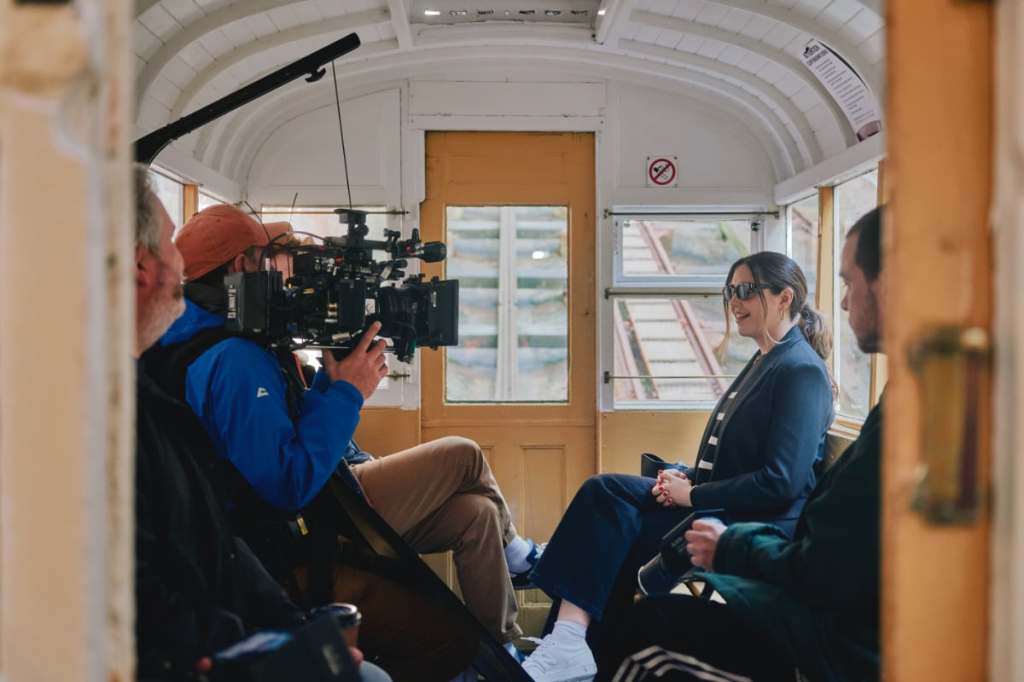
The Toffee Hammer team worked closely with location owners and Stella Landau from 1066 Country Film Office to get all the permissions sorted, but having Jamie De’Ath on the ground in Hastings was invaluable. He was there to figure out logistics and make everything run smoothly. Jamie also pulled together an incredible team of production support, all full of enthusiasm. They made filming in the town so much easier – opening doors for us, literally in some cases. For example, The Albion kindly let us shelter inside outside of opening hours, as our camera assistant knew the owner. Moments like that made all the difference, and it really felt like the community rallied around to help us bring the project to life.
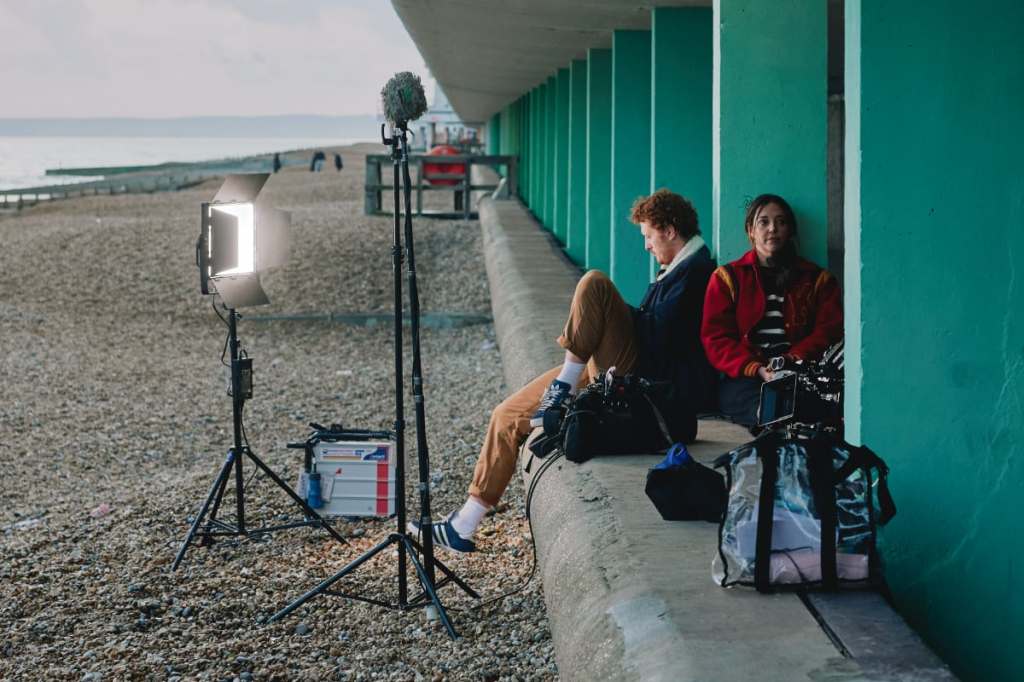

Working as a team throughout, how did you approach post-production and the editing?
As the core team all edit, it made sense for us to take on different scenes individually before putting the film together. This meant each scene was treated like a film in its own right, with an internal rhythm and pacing. It also kept our eyes fresh for fine-tuning the full assembly. We edited with dialogue tracks only, allowing our sound designer, Thomas Dalton, to create a soundscape that enhances the drama without ever being intrusive. Richie Johnsen’s original music for the film is sensitive to the performances of the actors, enhancing the emotional impact of each scene whilst never leading the audience.
By making learning an integral part of post-production, we created space for experimentation and fresh perspectives.
The split edit and the film’s shifting pace helped to reflect the characters’ evolving emotions throughout their day. The approach reinforced the value of collaboration and the importance of trusting each other’s creative instincts. I’m keenly aware of how easy it is to fall into familiar patterns or be constrained by convention. By making learning an integral part of post-production, we created space for experimentation and fresh perspectives. This not only elevated the final film but also ensured that everyone grew creatively. The best part was that we all watched the “full” film for the first time together before I took on the fine cut. This way, we critiqued it as a whole rather than getting stuck on individual scenes. It’s definitely an unconventional way of working, but breaking habits, seeing things with new eyes, and letting go of ego helped us create something we’re all really proud of.

Towns like this, with their transient populations, create a very particular kind of connection, the friendships formed here feel intense, fleeting, but also unforgettable.
The coverage of Hastings, particularly of the sea, is stunning. Considering the origins of the film I imagine these always going to be ingrained into the film..?
It was really important to me to return to Hastings and capture it on film, not just as a backdrop but as a character. Hastings is such a unique place. It’s a town with so much personality – melancholic yet full of life – and I wanted that to come through in the film. There’s something about Hastings out of season that feels timeless and deeply atmospheric. The quiet streets and empty beaches carry a sense of calm, almost like the town is pausing to breathe. Towns like this, with their transient populations, create a very particular kind of connection, the friendships formed here feel intense, fleeting, but also unforgettable. I wanted to capture that dynamic in the film – the way these places shape people and their relationships, leaving a lasting impression even as time moves on.
What do you hope for your film?
In many ways, the film has already been everything we hoped. We’ve had the privilege of playing at several festivals, which has been an incredible opportunity to connect with like-minded filmmakers, gain deeper insights into the industry, and watch some truly inspiring short films. But the very best part has been seeing the impact the film has had on people – it’s deeply rewarding to know that our work has resonated with audiences. Of course, we’d love for more people to see the film – and see the festival run as an opportunity to get reviews that help us find an audience when we release it online. Having played at the Oscar Qualifying Hollyshorts this year, it’s impossible not to dream big!
 Rocks Festivals Blog