
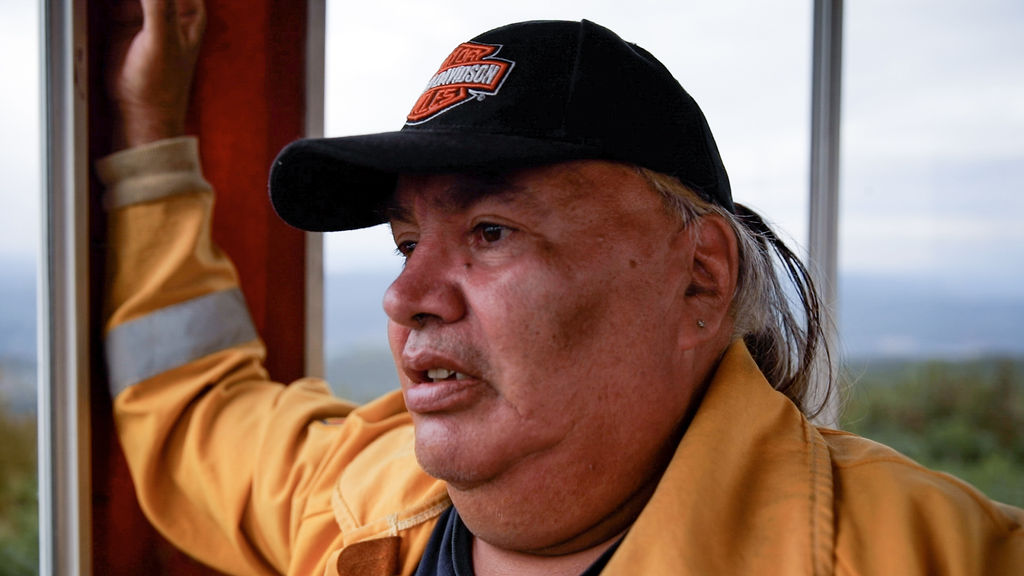
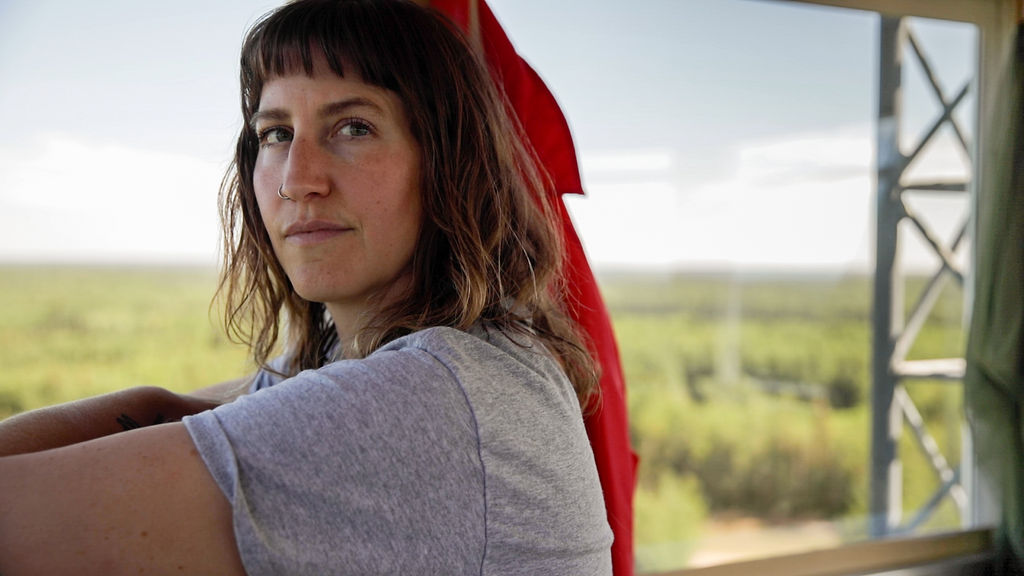
After working as a cook in a wildfire fighting camp in Northern Alberta, Yukon based filmmaker Tova Krentzman, found herself drawn to the “unsung heroes” who are so integral to protecting people and forests from devastating wildfires and put her talents and passion into the making of her documentary highlighting their incredible work. ‘Fire Tower’ offers us an outstandingly stunning and emotional insight into the brave and proud lookouts who keep a keen eye focussed on the Rocky Mountains in Northern Canada for the first threat of fire. Not only does her film document the sheer vastness of the landscape these lookouts protect, but offers us a unique insight into their lives and motivations behind their dedication to their roles. Tova, alongside documenting the cinematic splendour of the wilderness, has a passion for telling authentic stories about people and ‘Fire Tower’ invites us to concentrate on the lookouts’ relationships with loneliness and solitude and how that factors into their choices behind spending such vast periods of time alone in the towers.
‘Fire Tower’ will be screening on Sunday the 30th at 12pm at Manchester Street Arts Club as part of the 7th edition of Brighton Rocks International Film Festival and Tova will be in attendance to discuss the making of her powerful and moving film.
How did you approach all of these phenomenal people who have chosen to share their stories as lookouts and then thread together the narrative?
In the Yukon, we are a small population and fewer lookouts. I spoke with their supervisors and they asked the lookouts if they would be interested in speaking with me and being filmed, it was somewhat simple. Alberta is a larger system and bureaucracy and took time to find the person to okay this project. I had met one of the lookouts the summer I worked in a wildfire fighting camp and we became friends, stayed in touch. I had visited his tower that summer and I was grateful to spend time with them. We camped beside their tower and cabin and cooked food with them while getting to know them. We asked specific questions but also gave them a chance to consider what was important for them to share. After shooting, the challenge in documentary filmmaking is how to weave a narrative. That took a lot of time viewing the material both myself and my editor and trying various ideas. It was a long process with much revisiting, storyboarding…reworking.



Did you always know you wanted to explore loneliness and the benefits we often forget in our fast paced society?
I do have a little obsession with the subject of loneliness, solitude and connection. I spent time myself working months hundreds of miles offshore on ships where I would stand watch on the bridge and I could relate to the aspect of solitude but immense connection with the natural surroundings that almost forces a certain perspective of connection and a liberating sense of one’s smallness in the bigger picture. Our worries and problems are also then minimized in the grandeur scheme. I live in the Yukon where there is a lot of space and natural wilderness and my time away is usually multi day trips into the wilderness and mountains.
What did the support of the funding mean to the production of the film?
Funding was imperative to pay for travelling to the lookouts, helping purchase or rent equipment, paying professionals for their work, especially post production which can get expensive. Without funding, it would be almost impossible to make the film unless you have a lot of money on your own. I won a pitch contest at our local film festival in the Yukon which offered me some rental equipment as well as a broadcast license which enabled me to apply for further funding which was helpful. Though it was a small scale project, I did want to give it the attention I felt it deserved by having a great sound designer/composer, colour correction, and a great editor. The lookouts are the unsung heroes in a way and I wanted their story to be impactful.

I’m blown away by the beauty of everything you’re filming as well as the lives in the tower. What equipment did you have? Did you have to be nimble?
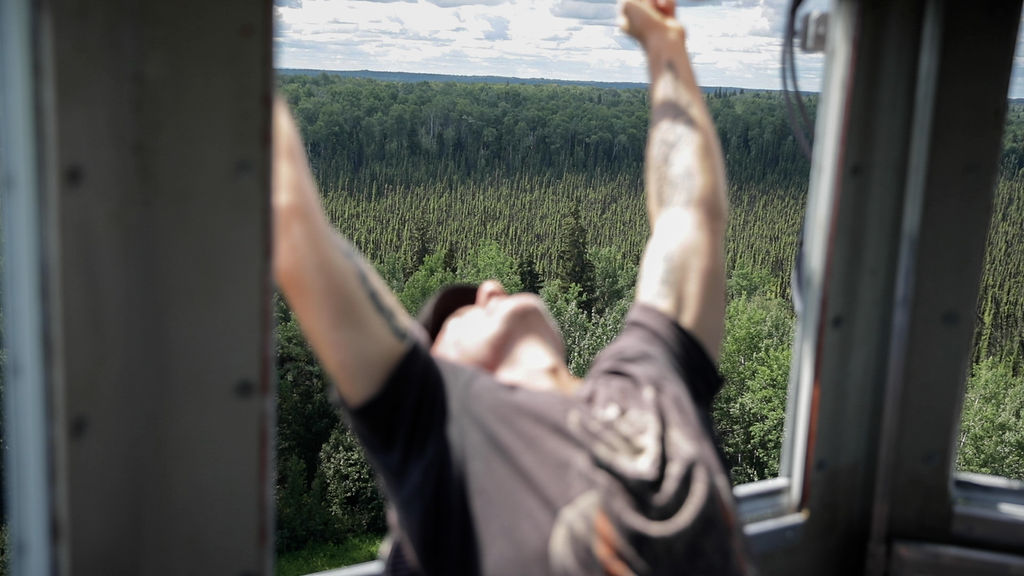
This was a low budget, run-and gun sort of approach. Two people, my cinematographer and myself as producer, director, sound recording, aerial cinematography (drone) and additional ground cinematography. Two women in a jeep with gear and a generator to charge batteries, laptops etc. as we were camping in remote areas, uploading footage daily in the field. We were able to set up a tripod for some interviews but because we had to climb a hundred foot tower and send the camera up a cable, we used a DSLR with some high quality lenses for much of the footage as well as a gimbal. The drone was important for this film as well in order to give perspective of the solitude in the vast landscapes and to access the tower without being inside the very small cupula. There were definitely times, if we were both in the cupula, her on camera and me directing questions and conversation with sound equipment crouched underneath the firefinder. Using a wireless lav mic was crucial as well since we could have the lookouts mic’d up while we were down below enabling me to record radio conversations and general audio without us being around at all.
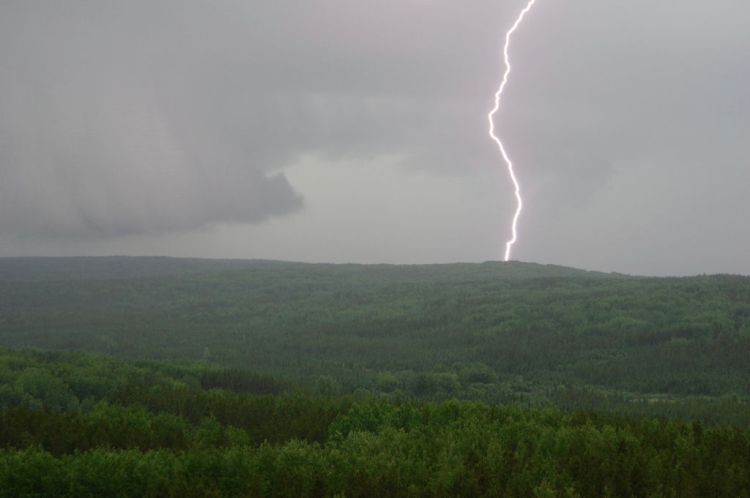
Where did you obtain the footage of those terrifying wildfires and archival footage?
I was able to get some footage from the BC Wildfire and Alberta Wildland department. In addition, there was footage from the lookouts themselves. Almost all the wildlife footage is from the lookouts over the months and years they spend out there. The lightning happened late one night while we were camped out so we were lucky to have that opportunity.
I love all of the drone visuals, talk to us about capturing this wilderness?
Canada has such vast beauty, I was just showing what is there. The Yukon is almost the same size as Spain but with a population of approximately 45,000 people (the main city whitehorse 30,253 after which, the next cities population are 1600, 790, 590, etc. There is so much incredible nature. Alberta hosts the rocky mountains and large boreal forests as well (Alberta is slightly larger than France with 4 million people).

I felt I could have watched much more, how long were you filming, how much footage did you have, and then decide on the final edited 47 minutes?
The access to the lookouts was limited as they are regulated by the government. There were active wildfires in both the Yukon and Alberta and they were keeping track of our whereabouts. As the lookouts were working, we couldn’t distract them and worked around their schedules. You also have to consider that the lookouts enjoy their solitude. As much as they enjoyed our company, they were glad to return their time alone and we did not want to overstay our welcome. They were so generous with us, sharing their space, time, stories and experiences. I am grateful we had the chance to spend time with them and become good friends with some of them. That’s one of the best things about making documentaries, having the opportunity to get to know these amazing individuals.
Climate change should be at the forefront of everyone’s mind these days. How did you decide how to get that integral message across which is done gently and in the right measure?
I think climate change is on peoples’ minds and the fires that have been occurring at unprecedented rates have everyone’s attention these days. I wanted it to be observed subtly because the reality is not…while still focusing on the lookouts and what they have to offer.
 Rocks Festivals Blog