

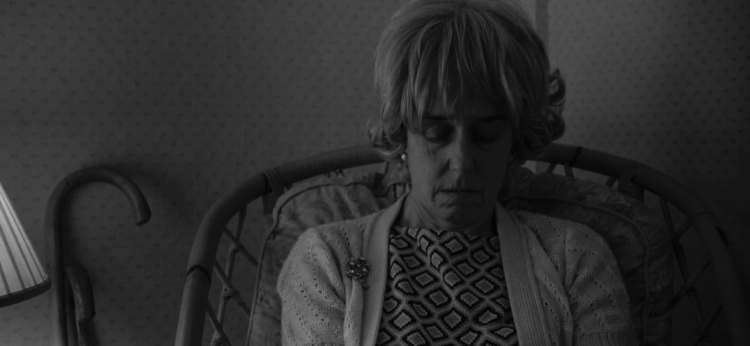
‘The Other Woman’ was made as part of filmmaker Cameron Lee Horace’s final university project, inspired by a script by Miles Gibson. This vintage-infused dramatic short film takes us on a journey into the past as Maisie, a woman who refused to submit to some of the more stringent and perhaps normal dating practices of her time, reminisces on her various dalliances – the good, the bad and the downright cheeky! ‘The Other Woman’ highlights the sad fact that as age can trap us in disintegrating bodies, the mind remains sharp as a tact. Is a truly refreshing look at a woman who refused to be held down which, whilst it makes for good storytelling, has left her more alone than she anticipated. Sophie Colquhoun, a regular in ITV ‘Plebs’ and E4 ‘Royals’, is captivating in the central role. An immense care has clearly been taken in every part of the production, resulting in a fresh and impressive film by emerging young filmmaker Cameron Lee Horace.
Screening as part of Brighton Rocks on Sunday the 30th at 2pm at our festival hub Manchester Street Arts Club as part of our ‘Youth Rocks’ programme.
As we explore Maisie’s past life we learn more about ourselves, how our choices may impact our future, or our cravings to feel a true sense of worth and love are manifested through childhood and crafted into our adult lives.
How did you develop the script with Miles Gibson to create such a strong female perspective?
I always wanted to make a film that had strong female characters. I am inspired by female actors and performers such as Saoirse Ronan, Florence Pugh and Anya Taylor Joy. I also seem to work well and gel with women, so for me it makes the directing side easier as the working relationships I build and how I like to act mostly energetic on set seems to connect well with female actors I have worked with. All around, I wanted to make a film that was like 90% female cast and make a film that wasn’t the norm.
Over the years I have connected mostly with women as friends. At school and in work I have found it much easier to be friends with women. Despite this I have mostly close male friends in my life but I have always bonded well in a female friendship so I took this from the experience of knowing and being friends with lots of women over the years. Miles Gibson is such a strong writer and a talented author. His books such as ‘The Sandman’ are incredible reads and his work is truly underrated. I asked Miles if I could adapt something for a short film and he gave me a selection of materials he had thought were lost and I read a few. I liked one story but when I read ‘Maisie Can you Hear Me’? I was instantly immersed and I knew that was the one. One regret I have is not calling the film by its original story name. I toyed with it at the time but chose ‘The Other Woman’ from a line of dialogue taken from the original work. But there are hundreds of films called ‘The Other Woman’ and now I wish I had been more original with the title.
I know that you had some stumbling blocks in the production of the film. Could you tell me about these?
It took a long time but it was a fun process. I started this when I was a 20 year old undergraduate student and finished the film at the end of 2022 and here it is out on the festival circuit going around loads of cities and even internationally in Ireland. I am so pleased I took that step back from it and decided we needed to release the film properly when covid lifted. We re-entered the editing stage at the end of 2022, after originally cutting a 22 minute film in colour and it did not work so I made the decision to remove 2 major scenes from the film entirely and then re-grade to black and white and it has worked really well for us.
Do you think the film benefited from taking a break from the editing process?
Yes indeed. The original cut was far too long. Then covid came and festivals went online. I took time away and looked at it with fresh eyes. I came back with the idea that major scenes had to be cut away. I wasn’t so sentimental about scenes we had shot and just knew what I needed to do to make a better film. I saw what did not work, the jokes that fell flat on screen and in the edit and the bits that were too lengthy. I also knew the film did not work in colour anymore and I had to go black and white. I wish I had stuck to my original intention and shot the film in black and white.
Maisie was someone that had lived a life, and a wild one at that. She has many stories to tell and the film needed to reflect that in the colour grade and in the lighting.
Why do you think black and white worked better for the film?
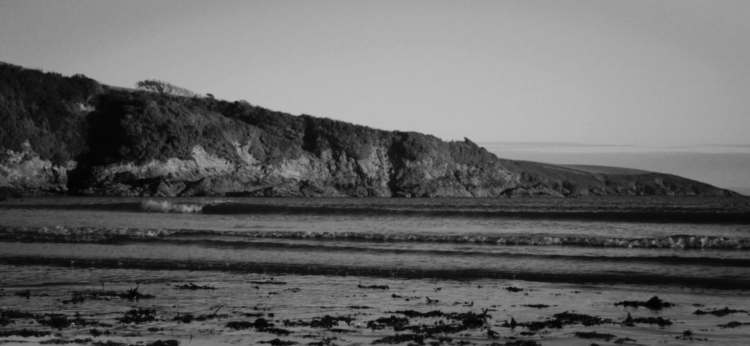
I wanted to go down the ‘Brooklyn’ (2015) vibe with the colour palette so I chose colour but in the end the mad patterns on the wallpaper and the odd contrasting themes irked me. I then considered Frances Ha and making it a statement piece. There were technical issues with the grade, so I employed a new artist and they fixed a lot of it and provided me with a colour grade. But we ran out of money so I took his master and graded it to black and white myself in Resolve. I have no idea what I was doing but it was a happy accident. I enjoyed adding in the film grain and I wanted to make it nostalgic looking, as to me this was supposed to feel warm like a memory and recollection of life. It also needed to look like it was a life well worn and lived in. Maisie was someone that had lived a life, and a wild one at that. She has many stories to tell and the film needed to reflect that in the colour grade and in the lighting. I darkened all the exposure in the post and tried to make it look a bit more edgy and moody. I am inspired by Greta Gerwig so the idea of making a film reflecting memory through the grade and working with emotions was really what led me on this.

What did you learn as a writer and director working with a very experienced actor?
I learnt pretty quickly that Sophie was a seasoned professional. I led a series of meetings in pre-production with her and we discussed the script, the character, motivations and emotions as I usually would but Sophie brought on a new level of understanding to what I have experienced before. She totally got it and she took it away and brought so much to the table. She even wrote and adapted some scenes herself and added to my writing. On set, Sophie kept herself to herself a lot of the time and was obviously deep in character and learning the next scenes. When we came to shoot a scene it was 99% line perfect every time. It gave me the opportunity to take things down different avenues, try different emotions. We were really working well together. We were running behind for several hours, the lighting and set ups took so long to complete and the makeup also took a considerable amount of time as Claudia, who played elderly Maisie actually had really long black hair and was 30 years younger than Elderly Maisie. Bethan was a fantastic makeup and hair artist and every day she would take about an hour to tie up all Claudia’s Hair, style her wig and apply the ageing makeup. During this time Sophie would rehearse with me and the cast and block scenes and when we got the camera rolling we pretty much hit it in a few takes. Working with someone like Sophie was so inspiring to me, she managed to pull back the delay by meeting all the scenes perfectly so we went from hours behind to finishing on time. I love actors and they amaze me how they can transform into these characters that are from your imagination and bring them to life and I learnt a lot about myself as a director and a writer too. I felt inexperienced and I built my confidence on the shoot. I made mistakes and luckily my team and assistant director Richard were there to help me out when I found myself overwhelmed.
Costume design plays an important part in our flashbacks and the presentation of Maisie. Can you talk about these elements?
I sourced all of the costumes with my Mum from charity shops and when clearing out my Great Grandmother’s house after she passed away. I make mood boards and have always been interested in the 1950s and 1940s periods so I feel somehow connected to it. I watched the film ‘Brooklyn’ so many times. I watched it for inspiration for fabrics, costume ideas and hair designs. Bethan was responsible for bringing in the ideas for makeup and hair. I gave her my ideas and she came onboard from a technical standpoint. She is a wig maker and worked with wigs, ageing makeup and did the lipstick and makeup to match the tone of the era.
The swathes of music fit aptly with the film’s themes of memory and nostalgia. How did you work with Guy Naden on the score?
The assistant director Richard had a friend who was a musician and was looking to write a score for a short film. He works as a chef by day and a composer for fun so I got in touch and we talked about the film and the music. I sent him the opening titles and end credits music for ‘Brooklyn’ and asked Guy if he could make something inspired by that but bring his own spin on it. He went away and wrote the music and sent demo’s. He played the piano, guitar and multiple instruments and synths himself as a solo artist and all the music is 100% original.
How have you found the experience of taking the film out on the festival circuit?
Wonderful. I am so proud to have made this film. It was slow at the start. We were getting rejections, and a lot of them. I was looking at film festivals to submit to and found The Fastnet Film Festival on FilmFreeway and I read into it and really liked the ethos of the whole thing so I spent my £20 and sent off my film there. I waited for several months and found I got selected. That was the first festival. I was at Falmouth University at the time on my Master’s and luckily the head of our Film and TV department covered a lot of the expenses for me to travel and stay in Ireland and I absolutely loved the experience of Fastnet. I was treated so nicely from the moment I got there. The organisers Helen and Hillary are absolutely wonderful people. They take such pride in their festival and the filmmakers. I have been at festivals before and Fastnet is like no other. I fell in love with Schull and I cried to leave. It was so lovely. We also screened our film in Newcastle at the BIFA Qualifying North East International and had a canny time there should I say and then for Soho London Independent Film Festival I did an interview there with them in a press junket type set up. I had three cameras on me in a studio and sat on a sofa talking about the film. I hadn’t done anything like that before so it was all new and scary, but I loved the experience.

What do you hope for your film?
This is just a small project in the future steps of my career. I just turned 24 so I hope to think I have a long time ahead of me to hone this craft. Originally I wanted to only direct movies but now what I want is to move into television and hopefully find a 2nd unit director credit on a drama. I just want to work and experience things. The film has been a wonderful experience and the fact it has had relative success out on the circuit is amazing. I got the chance to shadow the director Sarmad Masud on the BBC drama ‘Boarders’ back in August from networking. Whatever happens the film can’t be taken away from me and I hope to still keep plugging away. I love the short film space and have several short film scripts I would love to make if I could fund them but I don’t want to stay around in shorts for much longer and my goal is to graduate into the 2nd unit or other directing ranks within a drama serial. I was very upset recently as I was potentially in the running to be an assistant director of a theatre production in Dublin, well as much as I thought I might just be getting a chance. I had the dates and asked if I was available and I was so excited to hopefully get this role but alas I just found out someone else had been chosen over me. But I will keep chugging away and hopefully something one time will stick long enough. I am not going away. I am like an annoying rash so as soon as they realise that maybe I will get something just to shut me up.
 Rocks Festivals Blog