

Director Martyn Lee’s ‘Weave’, written by Nigel Wilkes and Jaz Craddock-Jones, is a stunningly emotive and powerful British short film. Through the central exploration of black hair and what it represents, we are taken on a journey of family, love, loss and struggles with mental health but also history, power, celebration and pride. Weave was produced by ENON Films, in partnership with ADIRA, Sheffield’s leading black mental health organisation who work tirelessly to support black people with mental health issues. This short was funded by the charitable foundation Lankelly Chase. ‘Weave’ is about a young girl’s independence and fight for her identity, as well as a delicate and heartbreaking look at the damage that prejudice and entrenched racism can have.
‘Weave’ will be screening as part of Brighton Rocks Festival on Saturday, 29th of June. Tickets, and the full festival programme are now available.

My vision for ‘Weave’ was to bridge the gap between entertaining and educating the broader society of issues that happen on a daily basis to the African Caribbean community.
‘Weave’ poignantly embodies a beautifully lived-in sense of family and community, with aptly chosen locations and comforting visual composition in each and every carefully considered location. The atmosphere that has been built, immediately makes us feel at home with the characters, their stories and lives. There is a keen sense of sadness and tragedy; but this doesn’t feel foreboding, but rather something we need to discover and understand in order to see the full picture. It is immediately obvious that great care has been put into casting and creating the lives of these characters beyond the small glances we see on screen.


That aforementioned sadness and tragedy is hinted at from the very start. ‘Weave’ does an astute job of separating the adults and the secrets they hide from the children, who have an innate sense of knowing when something is being hidden from them. Furtive looks and secret phone calls are all cleverly framed, adopting camerawork and angles that very much put us in our young girl’s point of view. She is both looking up at and to the adults, trying to enter into their world to find answers.
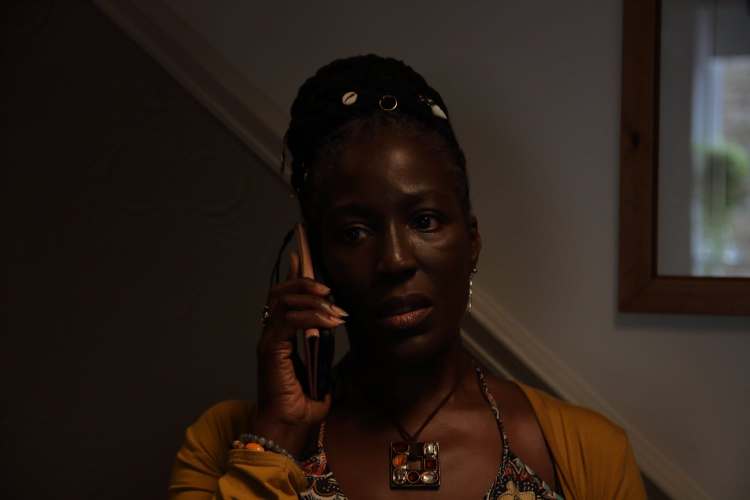
I want to pay heed to the representation of strong women. Our young protagonist has lost her mother, but there are women around her, across generations, to support her while her well-intentioned father struggles to persuade her into supposedly protecting herself by hiding her natural afro. The support and togetherness of women should never be overlooked and ‘Weave’ does an exceptional job at reminding us of that.

The world today is much more comfortable and adept at talking about mental health issues, but there is still stigma around every corner and not enough help and support. ‘Weave’ is made in collaboration with bodies whose essential work provides awareness and help to those struggling and this is so integral to the narrative and the power of film. We can relate countless heartbreak stories through so many different mediums, but combining what is powerful and an integral to a better future for so many.
 Rocks Festivals Blog