

The 48 Hour Film Project, the world’s largest filmmaking event where camera, production, editing and creative skills are tested to the maximum as participants sign themselves up to make a movie in a weekend. Brighton based Rachel Pearson and Anton Armour-Gautier decided to plunge themselves into the veritable deep end as part of the local competition strand and completed Rachel’s directorial debut within the stringent constraints, and the result is truly admirable. ‘Looking Back’, made with Neon Slate, probes the all too familiar wounds caused by parental trauma and through the journey they have committed to screen we see two individuals, seemingly fated to meet on the side of the road, attempt to set themselves free from the pain which holds them back.
‘Looking Back’ will be screening as part of BRIFF24 on Tuesday the 25th as part of our BEST OF BRIGHTON showcase from 6pm at Manchester Street Arts Club.
A troubled young man receives news that triggers a desperate road trip to deliver a message he believe will bring him closure. He encounters a stranger on the road who shows him an alternative path to peace.
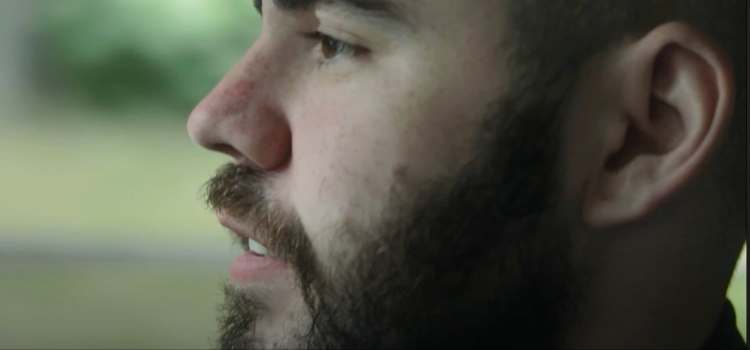
Tell us about the conception of ‘Looking Back’.
Rachel Pearson: We made the film for the 48 hour film competition so we were given certain limitations, most notably the lack of time. We picked out the genre of road movie at random and I wanted to use that genre as a vehicle to drive through a character’s experience in as real time as possible. I was keen to choose a theme that was universal, something everyone has experienced and so with the idea of a physical journey mimicking an emotional one, with key stages throughout, the theme we landed on was grief. We worked through the known stages of grief in order to map the characters journey and the progression of the story, shock, denial, bargaining, anger and, finally, acceptance.
We made sure we spent our limited pre-production time by mapping out the stages of grief to the beats in our story. Matching the writing process, aligned lines, shots, performances, characters, costume, music, with each of those stages. I’m a filmmaker that draws deeply from the well of my own lived experience and to be honest, it’s rare that no one ever has had a difficult experience with a parent in one way or another, so we made sure the 3 of us had open conversations about what suppressed emotions and trauma can look like and how we’d all feel if we were in the situation of this young man Ethan. We found in post that music and pace were really vital for eliciting the feelings of those final stages of grief.
For those who don’t know, tell us more about the 48 hour film competition and why you chose to enter?
Rachel Person: I chose to enter because it was the guarantee of getting a film made in a short amount of time. I work full time and so filmmaking has to fit around the 9-5 and being a parent so this short burst of deadline focused filmmaking was a great way to feel like I was accomplishing some filmmaking in the year.
Anton Armour-Gautier: The 48-hour film competition is pretty much what it says on the tin. You have 48 hours to write, shoot and edit a short film to be entered into a prestigious film competition. Each team draws a genre at random from the mystery box. You’re then given some pretty specific guidelines for the competition. Each film has to include the same character that has the same occupation. At some point in your film, your characters must show a specific prop and utter a specific line of dialogue.
I chose to enter the 48-hour film challenge to give my grandad a smile. He had just been diagnosed with an illness that was rapidly deteriorating his ability to breath. My grandad has always been incredibly supportive of my filmmaking. Thankfully he was able to see the film a few days before he passed.

What advantages do you think such a rapid turnaround offered you as creatives early in their filmmaking journeys?
Rachel: It forced me to work on instinct, to make decisions fast and stick by them. That in turn gave me a lot of confidence in my instincts. Those are really powerful, necessary skills to have as a filmmaker because time is money. I think it was a great way to understand what was really necessary in a story as well. I like complicated, messy stories but there was no time to do anything like that with the run time and the weekend time limit so it helped me to understand how to craft a story that was simple but still, hopefully, affecting.
Anton: Working with such a short time frame gave me a new perspective on filmmaking. I would consider myself a bit of a perfectionist which often holds me back from trying to achieve certain things. When you only have 48 hours, you have to learn to let go of your pursuit for perfection and roll with the punches.

We were not thrilled about picking the genre at first but actually became pretty excited when we talked about the fact that the physical journey is really the vehicle (pun intended) for an emotional journey.
How did the not so desirable choice of road movie spark your creativity?
Rachel: For me, a road movie is a movie about a journey, not just a physical one. In fact the physical journey taken is rarely the most interesting part of the genre, it’s about the journey of a character from an emotional starting point and how the course of the physical journey brings them moments of emotional change. We were not thrilled about picking the genre at first but actually became pretty excited when we talked about the fact that the physical journey is really the vehicle (pun intended) for an emotional journey. That realisation really blew everything up for us in terms of what kind of story we could tell. We had three people in the crew and two of us were acting as well so all fitting in a car wasn’t as logistically hard as it would have been if we’d had a huge team.
Anton: We had no intention of drawing a road movie from the mystery box. In fact, we had joked moments before the draw that it would be one of the worst options to pick but I think we made the best of the cards we were dealt.

Talk us through those stages of grief and fitting them into a compelling narrative which you knew would grip the audience?
Rachel: Going back to that idea of a physical journey impacting the emotional one helped us think about breaking each section down in terms of tone and to give the character of Ethan stages to work through. Listing the stages of grief, denial, anger, bargaining, depression, acceptance and working them through the story made sense to us. But rather than really blast each one up obviously, we tried to keep them subtle so they didnt come across too crudely. Denial was Ethan hesitating to leave the house after the phone call, anger was the most obvious emotion that came through next but it mingled with bargaining as he practises what he’s going to say to his father and we see a flurry of all of those again when my character Leah challenges him. The panic attack is the start of his acceptance and we really wanted that physical reaction to him burying his pain and masking with rage. Our bodies know what’s up with our minds and will react without our permission to extreme trauma and emotions, it’s why we burn out if we work too hard, bodies and minds are so strongly linked so that physical response to what he was bargaining with also covers depression. Acceptance is such a wonderfully positive way to end his story but again we didn’t want it to be too obvious as to what he decided to do at the end, to avoid being too ‘eggy’! Grief and the stages of it are a universal human experience and so we knew the audience would recognise those subconsciously if they were referenced subtly throughout the story.
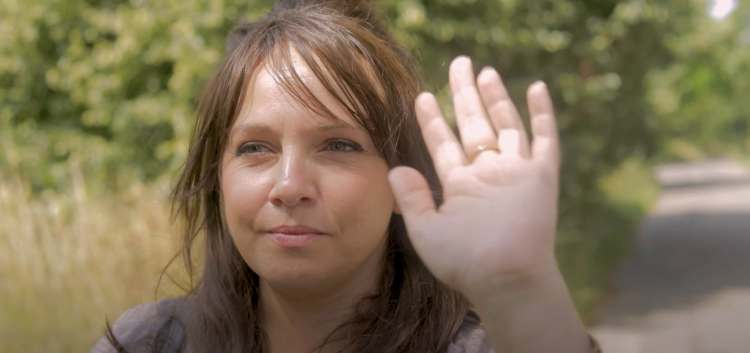
Were you always going to perform in the film and how did you find the right person to act against?
Rachel: Ah well, thanks to the road movie genre we pulled we could only fit a certain number of crew and actors in the car so it was actually a necessity in the end! Thankfully my role really was a functional one to motivate and highlight Ethan’s journey. The three of us had worked together on a little web series for a few years and were very comfortable and familiar working together and some of Lukes strengths as an actor lent themselves very well to his character’s story. It’s quite liberating not having time to do auditions or questions casting too much and just having to work with what you have!
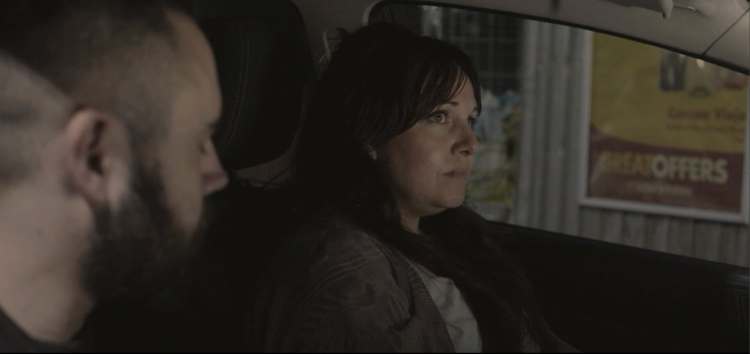
Getting a stable shot was hard so we decided to lean into the hand-held feel with the rest of the shots.
Filming in and around cars can be tricky making sure you have the correct lighting etc. How did you set up your shoot?
Rachel: It was a nightmare if I’m honest. It was a partially cloudy, windy day which meant the light was constantly changing and so continuity and colour grading were both very painful. It was also the first time any of us had filmed in a moving vehicle, let alone Luke who had to act, remember lines written the night before and drive! Getting a stable shot was hard so we decided to lean into the hand-held feel with the rest of the shots. We had battery powered tube lights for some of the night shots but that made it dangerous to drive so we had to mimic that in parts. We found streetlights really effective for the panic attack sequence as they offered pools of light in the darkness which felt right thematically.
Anton: With such stringent time constraints, lots of sacrifices had to be made. We tried to take as much advantage of the natural lighting the daylight provided and when natural lighting was not an option, we had to rely on street lighting and mobile phone touches. Not only did this help us save time but space as well.
How did you so viscerally create the feeling of a panic attack?
Rachel: This part was the most important part to get right as it’s the climatic point of the film, the turning point. It’s Ethan being challenged to make a change or continue on his destructive, hateful, regretful path. We’d all had panic attacks before, how you lose your ability to breathe properly, it feels like you’re dying and losing control. It’s very scary and surreal. Because of that we wanted to play with time skips like they were jagged breaths, make voices sound echoey and a bit muffled like Ethan was in such a state his ears weren’t working properly. I had found the music for this sequence and loved how it felt dramatic but warm and emotional and thought it would fit well. I was actually most nervous about seeing how it worked in post because it meant a lot to me to get it right and hit that heightened emotional climax. I very clearly remember sitting down to watch what Anton had done with the footage and the track (after having zero sleep!). Luke and Anton sat behind me tensely watching and when the sequence finished I turned around to them and burst into tears. I was so blown away by what Anton had done with it, it was exactly as I had in my head. We were all sleep deprived and on a big adrenaline comedown by that point!
Anton: The panic attack scene was interesting. Before filming, we had all discussed our experiences with anxiety and openly talked about how it had made us feel in those moments. I myself have experienced it and as the camera op and editor, I really tried to convey my experiences through camera work and editing. The quality of acting that both Luke and Rachel showed, also really helped sell the scene.

What did you learn in the filmmaking process that you are bringing into future work?
Rachel: I learned so much but mostly the ability to work on instinct both as a director and actor. I think that ability entirely depends on your understanding and compassion for the story you’re aiming to tell. If you have a deep understanding of what you’re saying and why, and a compassion for your characters then your instincts on set are going to be trustworthy. I learned a lot about myself as a filmmaker of course, I think I am one who needs to be closely linked throughout the story building process, writing, or at least collaborating on writing. There’s so much more to learn and I learn best by doing so, it’s on to the next project and the 2024 48 Hour Film Project to keep the lessons flowing!
I’ve worked with Anton a lot so he won’t mind me saying this but it was great to watch him not have time. He’s a perfectionist which is no bad thing, but we do joke he’s the ‘15 take wonder’ because, again understandably, he loves having options in post. However, it’s simply not possible when there is a very real and looming deadline to ensure we have something to show at The Duke of Yorks Cinema! He’s got great instincts and vision as a DoP and removing options actually gave him more structure and forced more creativity instead of taking it away. As Orson Welles said, ‘The enemy of art is the absence of limitations’!
Finally, what do you hope for your film?
It was my dream to have a film I made shown at my favourite place in the world, The Duke of Yorks cinema, and that’s what happened. But beyond that I hope it validates people who choose not to engage with people who have hurt them, as much as people who do choose to in order to find their own healing and move beyond holding onto emotions and hurt that can shape us. I hope people find some comfort in watching it.
 Rocks Festivals Blog