

‘Soulmate’, written and directed by Richard Fenwick offers us a tantalising glimpse into a not-so-distant future where technology has advanced to the, frankly terrifying, point of AI developing consciousness. ‘Soulmate’ is based within a familiar category existing alongside genre-arthouse classics such as ‘2001: A Space Odyssey’ and ‘Ex Machina‘ which delve into the menacing threat posed by non-human life. However, award-winning filmmaker Fenwick, chose to focus on the softer and more tender side of our battle with encroaching technology and instead asks what happens when love blossoms where it shouldn’t?
Screening at the upcoming Hastings Rocks Festival taking place over the 12th – 14th of April this is a film bound to intrigue and entice audiences.

Anna, a lonely computer coder, has been nurturing an illegal romance with an AI in a computer simulation for the past six months. When her company uncovers the affair, she’s forced into a desperate battle to save her precious relationship.
Fenwick’s sci-fi romance lulls us into a false sense of security as it opens with light streaming through curtains, birds singing and swathes of emotive classical music and we are introduced to a young couple, deeply in love. However, within no time we are abruptly sequestered into a dystopian, dark and foreboding reality. Technology reigns and the sonic landscape screeches. Gone is the diegetic birdsong, replaced by the foreboding hum of computers. At this point, we don’t entirely understand where our lonely coder Anna, played by Mandeep Dhillon, had been with her lover. Is it a memory? Is it a dream or a fantasy? Wherever it is, it is a life infinitely better than scrolling on her device in a clinical room being lorded over by management who can’t even be bothered to stop and talk to her.

As the narrative rapidly unfolds we come to understand her predicament and realise the danger she has put herself in, and we are irresistibly drawn into the urgent battle she faces to hide her dalliances. The two worlds depicted are deftly separated and juxtaposed by sharp decisions in cinematography. When in the lover’s world, colours are soft, gentle and light, reflecting their happiness and joy together, even when Anna fruitlessly sees no other way out. On the other hand, the real world Anna lives in is harsh – dark, concrete and wholly unappealing. The only light is a stark beam from her mobile phone, reflecting unflatteringly onto her face.

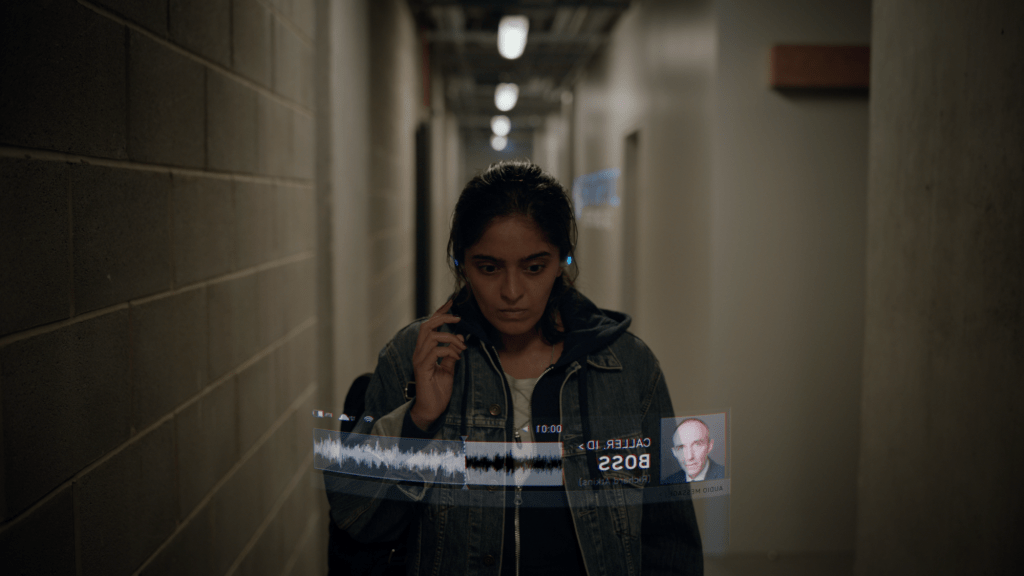
On this subject, I am acutely aware and impressed by Fenwick’s representation of phones and screens. All too often these interfaces look clunky and cheap, but it is clear that time and consideration has been put into all of these elements, allowing them to maintain their constant level of threat and fully absorb us into the world created. Strong decisions were also made in how our sentient AI, played by Joe Dempsie, should look. He is real but there is a shimmer of otherness in his demeanour. It is the close attention to small details in this film that makes it such a superior production.


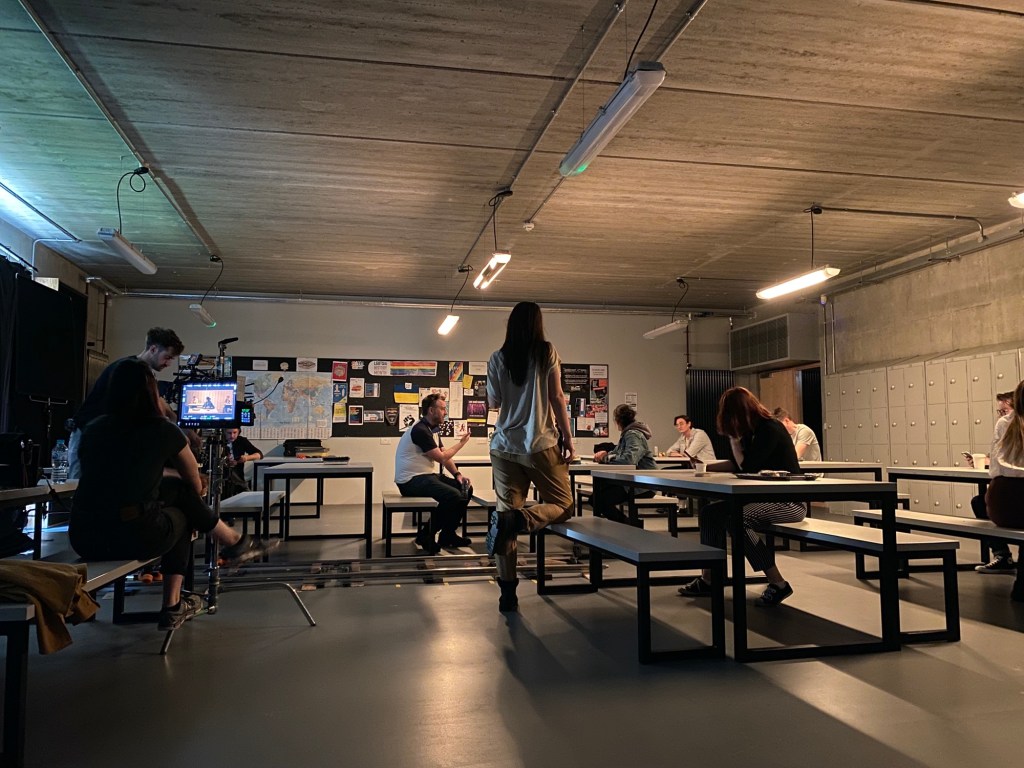
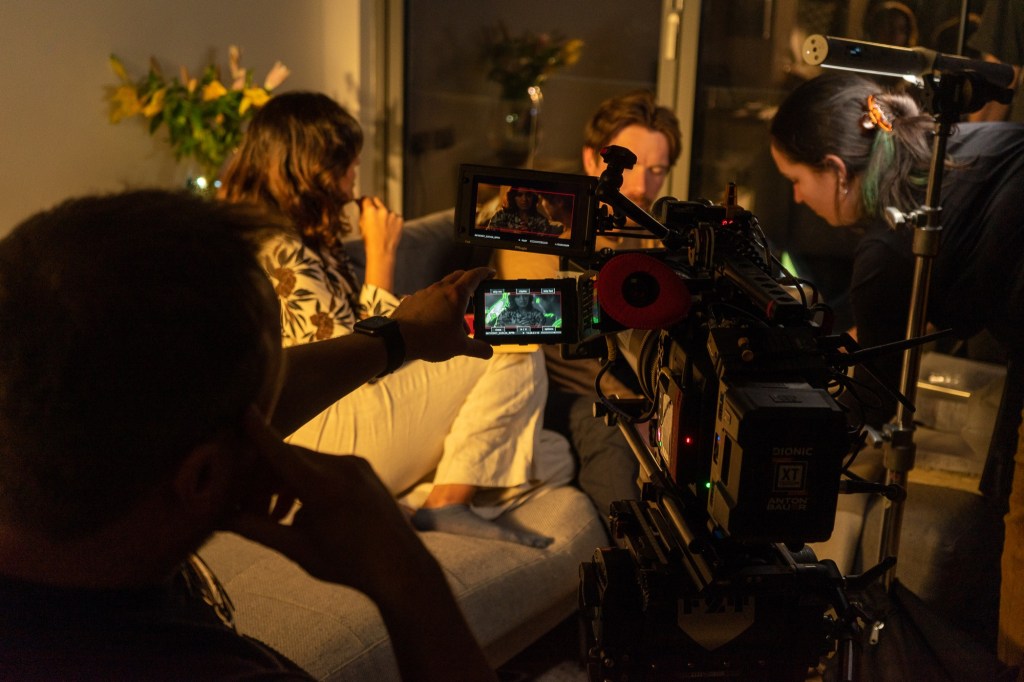
‘Soulmate’ does a remarkable job in its 15-minute runtime of creating a world which I want to know more about. Are there more couples breaching this divide? What are the consequences? Will our couple rediscover each other? ‘Soulmate’ came to be as Fenwick was working on a feature based in the same world, and I personally cannot wait to see more of it.
 Rocks Festivals Blog