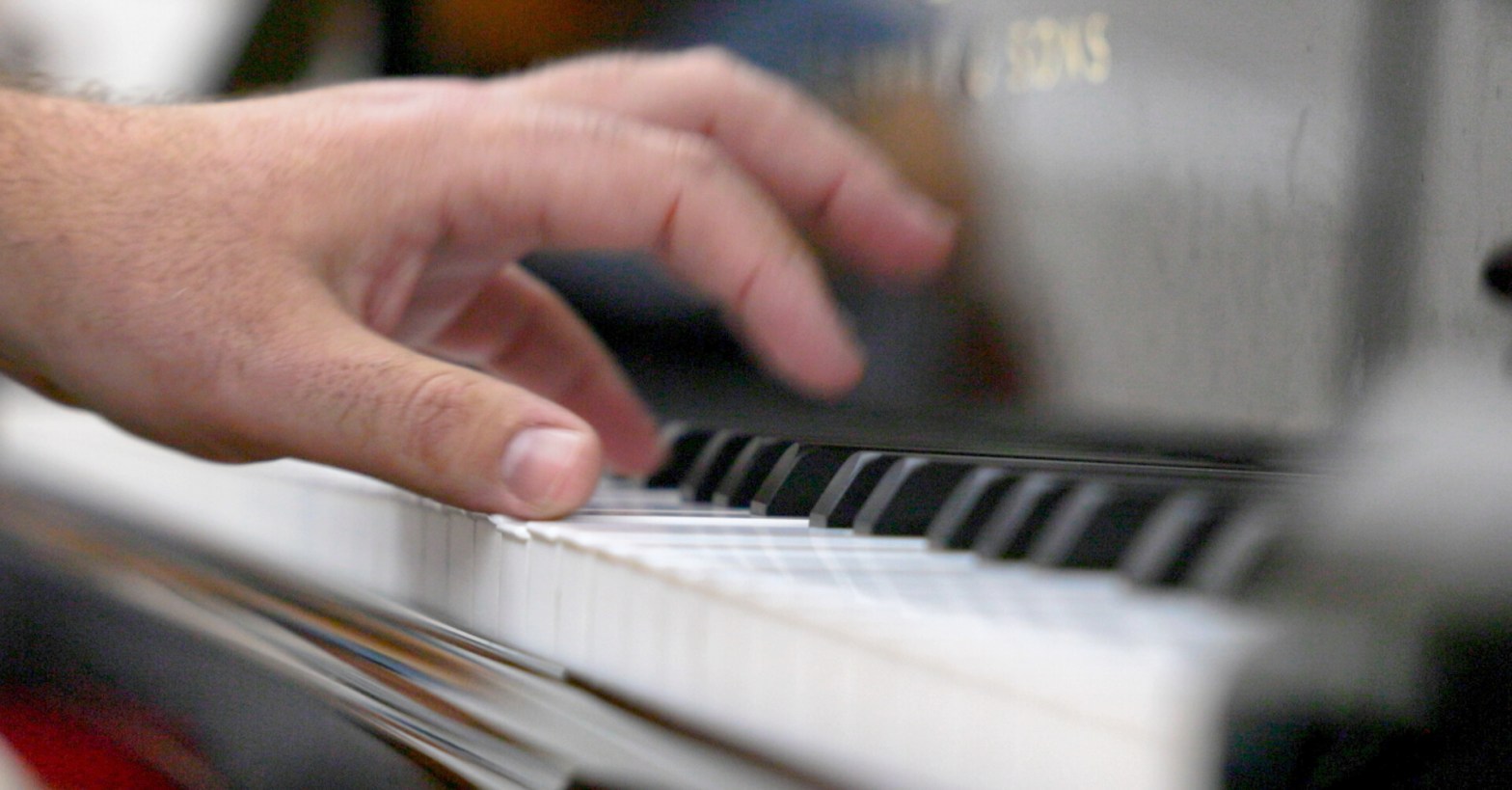
‘Pasture and Storm’ is a musical project conceived by composer and musician Sadie Harrison, celebrating the unique talents and musical abilities of left-hand-only pianists. Filmmaker Chris Frazer Smith’s documentary of the same name takes us on a cadenced journey through the power of music, diversity and inclusion – pillars of Sadie’s work.
Chris, already an acclaimed photographer and now filmmaker, recorded rehearsals, insightful interviews and carefully-staged performances over an intense 7-day period. He then worked tirelessly for 10 months to bring the whole process to the screen, pairing scenes with stunning aerial photography to charming and inspirational effect. The documentary has a particular focus on virtuoso pianist Nicholas McCarthy, his path to date and collaboration with Sadie. The film ends in a crescendo of musical joy in a live final concert of Sadie’s work. Through taking an intimate look at this project and celebrating the inspirational lives of Sadie and Nicholas, Chris Frazer Smith has created a beautiful and triumphant film. We invited him to RocksBlog to talk about the journey he undertook on this largely solo filmmaking process.
Triumph over adversity through the power of music entwining skill and historical music nuances overcoming diversity, disability, inclusivity and inclusion.
How did you come to be working on this project and plan the production of the film?
The original brief was very open ended with virtually no budget. Sadie had no real expectations and was focused on filming rehearsals and the final concert. As soon as I spoke to her and became aware of her collaboration with Nicholas Mccarthy I realised that there was a great opportunity to make something really special. So, I sat down and based the shooting schedule on their rehearsals, album recording and that final one off concert with a chronological concept that aimed to get under the skin and shine a well deserved light on Sadie and Nicholas.
I knew planning and scouting locations for shooting and a great slice of visual anticipation were key alongside interviewing both of them as early on in their 10 month schedule as possible. Due to budgetary constraints, I wrote, story boarded, shot, sound recorded and edited the entire project by myself. Whilst a challenge, this gave me an opportunity to test new kit for principal photography and build upon my sound recording expertise. Testing a new mirrorless DSLR and new sound equipment were paramount to what became a very much run and gun shoot for the most part.

How did you weave together the confluences of Sadie and Nicholas’ stories into the final film?
This was tricky – I hoped that interviewing them both early on would bring out stories and conversation that I could weave into the film. Knowing that the film would be a chronological journey meant that I created my questions based around the journey they were on with the concert as our finale. I wanted to know more about them as people, their backgrounds both in and out of music and how this had influenced them as musicians, composers and performers. My short film ‘Tommy The Portrait Of A Sculptor’ taught me a great deal about many things, what to focus on in camera, sound and interviews and what not to spend time capturing.

Documentarians have a skill at drawing out stories and wonderful content from their subjects. What is your approach as an interviewer?
Listening and not interrupting is the key for me. I write my questions based on my rough storyboard and shot list but also researching the characters and their association specialism or super power. Getting people really relaxed is crucial, not interviewing them with a time constriction ideally, but also not going on for hours, and certainly not letting them read the questions in advance of filming. I like to plan my questions roughly in advance of any filming, then get stuck in and start shooting to establish a relationship then fine time the introduction of questions after a certain amount of filming, it might be a days filming and then proceed to the interview, it could also be many more days before I am ready to sit down and shoot an interview. You learn so much about a person once you start filming; listening to them on set, hearing their language and getting a greater understanding of not only their specialism but also them as a person. Initial questions can also be fine tuned during the process so the interviewee is passionate about their answers and hopefully are faced with a set of questions that might not have been put to them previously.
How has your background in photography affected your techniques as a director and your understanding of images?
My commercial background as a photographer is shooting people, mainly for advertising campaigns as well as editorial, design and music biz world. I have shot for agencies all over the world and have experience on larger scale productions, collaborating with a plethora of talented people and know what is paramount to a smooth shoot and successful outcome. Art buyers, creative directors and art directors seem to give me a great deal of freedom when it comes to location finding, casting, wardrobe and props which derives from my years of experience and I know how to approach both larger and smaller scale productions. Having developed a reputation for perfect composition “running and gunning” means you have no time to be indecisive when filming or shooting and you have to be ready, prepared and have a plan B all of which feeds into film production and the uncertainties within. I am not a big fan of filters, when I am grading my stills or motion work I want to see natural colours and contrast with as much of a cinematic look as possible. Shooting ads or editorial work makes you see composition very clearly and knowing how to frame a person in an environment adds so much to the narrative of the shot, stills or motion.

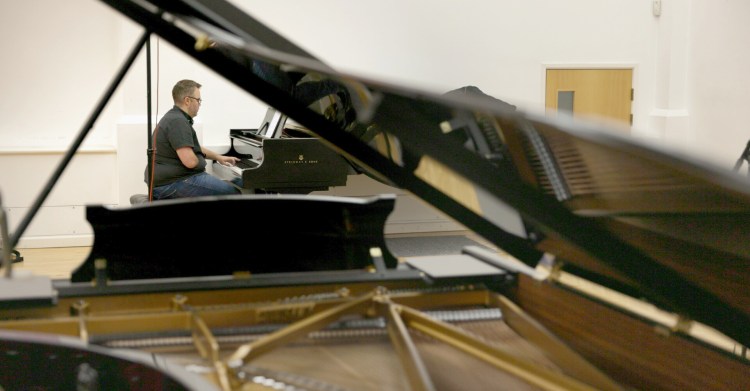
Can you talk about some of your setups when filming the rehearsal scenes? What were you looking to capture?
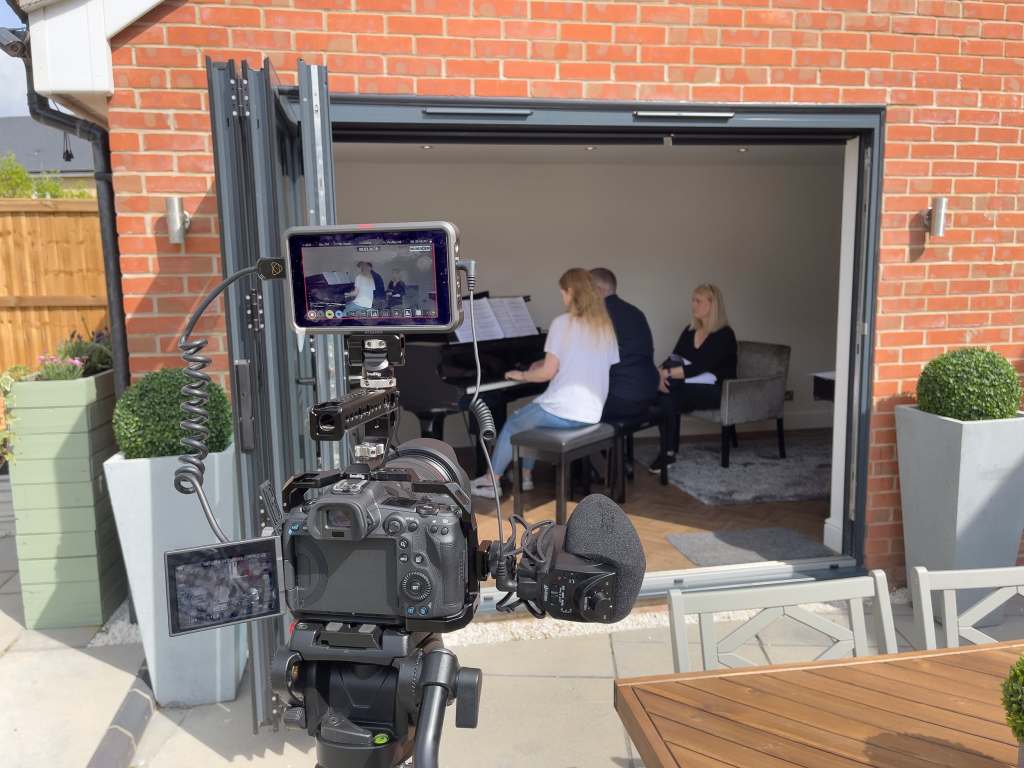
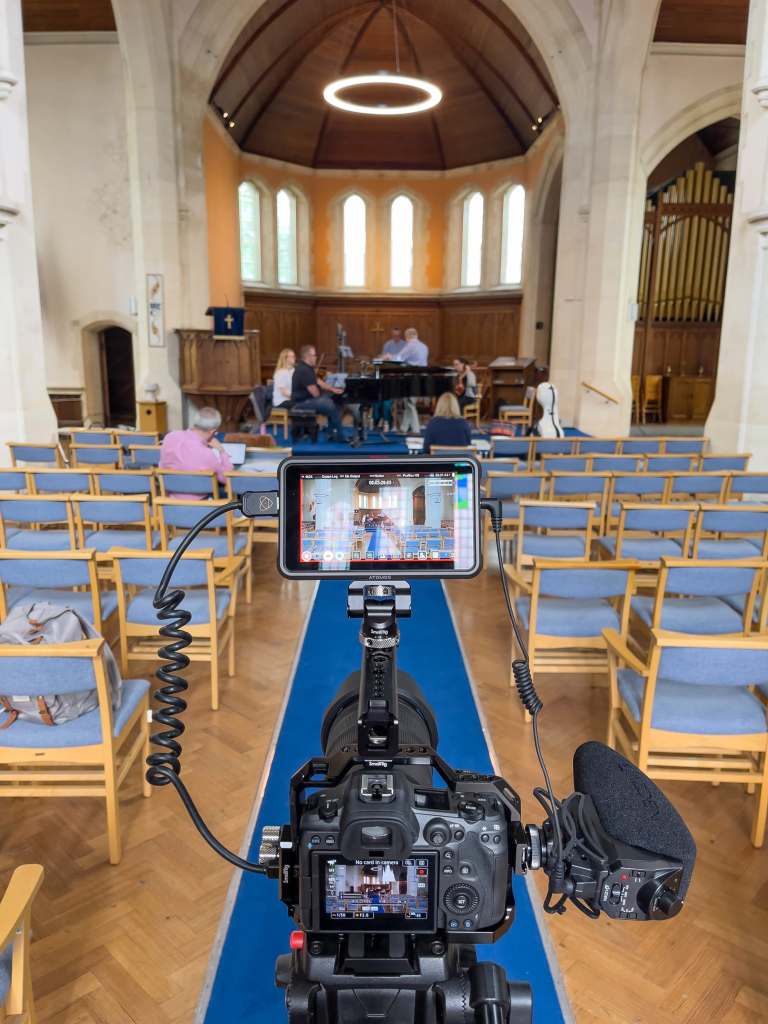
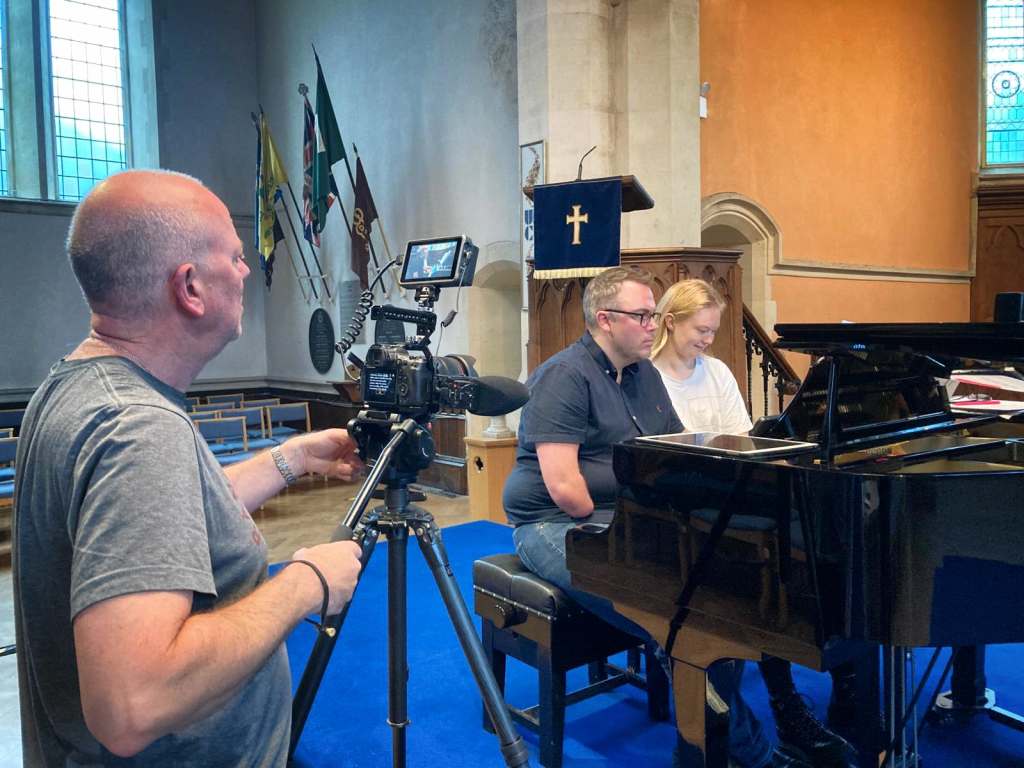
My world as a stills photographer has had me shooting vast, wide locations to really tight almost macro work both outdoors, indoors and in a controlled studio environment. I wanted the audience to be a part of the players and not just to be sitting back watching them rehearse and play. The cinematography had to be a part of this experience for the audience. I wanted to establish all the locations from the human point of view, the camera mainly locked off letting the wide, mid and high shots draw you in as well as aerial shots acting as chapter markers as the film unfolds. I wanted title sections to establish the locations and the aerial shots were perfect for this combined with my love of landscape photography. Knowing that I had very little time to film any of the scenes on just one camera I shot, moved, came in tight, went wide so I had enough footage to keep the edit visually exciting. As they say, the devil is in the detail and the tight shots with a very shallow focus are the detail for me. Shooting on a mirrorless Canon, the R5 and a fast zoom lens gave me this freedom and shooting into an Atomos monitor meant I was trusting my focus, depth of field and exposure and could move the camera quickly, compose and record quickly as well as capture the sound which I recorded at the same time on simple Zoom field recorder.

I love the injection of your aerial shots. At what point did you plan on including these and what do you feel they add to the film?
I had always intended to do so. I wanted a visual surprise from the outset to act as chapter markers and also tell the viewer where we were now geographically. In my head, when I hear music I sense it drifting up and the aerial shots gave me this in edit as well as a way of slipping sounds or conversation under the shots before we come back down to earth at a new location. The aerial shots also add to the narrative, as an environmental portrait photographer, I believe the location is as important as the person being portrayed.

How did you decide on the equipment you were using?
This was tricky, I had learnt so much making ‘Tommy The Portrait Of A Sculptor’ on a Canon DSLR, an older drone and some really cheap sound equipment. Filming first class musicians meant I really had to get the sound right, there was no budget for crew. At the same time the sound design had to reflect what it would be like hearing the music in these locations so the sound had to be evocative of the space; a practice room, a church or a large concert hall. I had very little choice and after researching all sorts of kit, I bought what I hoped would work and spoke to a good friend who shared his own valuable advice with me.
The entire film is shot with natural available light apart from the initial rehearsals and interview scenes where I used a Nanlite and softbox. Again, my experience as a photographer meant I had no worries about lighting having lit a studio and on location for years with every conceivable light out. The key to all of the kit was filming 4k into the Atomos monitor and trusting the gorgeous 24-70mm RF lens which are so sharp and any blooming and bokeh at fast apertures is just perfect. Again I tested well in advance of any filming; testing photography, sound and editing full res out of Final Cut Pro X. Everything was shot at 24fps so I soon established a workflow that was manageable knowing I was going to be the editor too.
The editing process is such a principal part of the filmmaking process. How much footage did you have and can you talk us through this part?
There was a lot of footage but at the same time a manageable amount in light of filming all the scenes live with no additional takes apart from the interview shoots. My storyboarding and script meant that as the filming unfolded I was able to get into editing room and start cutting certain scenes over the ten months the project ran for, bearing in mind that I only filmed on seven days to get all the footage, I had no choice, they rehearsed, recorded, performed and I was there to capture as much as possible on the one camera. It wasn’t until I had all the footage in the can that I could assemble a rough edit before the refining process began. I then started to show family and friends to get their feedback, which is such an important part of the process as they represent the audience. Towards the end of the edit I was lucky enough to have a BAFTA winning documentary filmmaker and great friend, Justine Kershaw, tweak the edit and script and help tighten up the edit and interviews at certain points which was a great learning curve for me and made the film even stronger. You definitely get to a point where you just can’t see the wood for the trees and having others step in, comment and make suggestions is integral.
What did you learn in the making of this film?
Firstly, I learnt just how much I love making documentaries which is something I already knew, having picked up a camera at a very young age and falling in love with photography and cinema. That aside I learnt a lot of new technical skills and my confidence as a director grew hugely throughout the making of this and several other short docs including ‘Tommy The Portrait Of A Sculptor’ – which did really well at festivals both here and further afield. I know from my experience teaching that you are constantly learning, we work in both technical and creative places and if either gets ignored then you end up in trouble. I was really happy to be able to solve the challenges presented by sound recording and manage the project on my own. In future projects and budget-willing, I would much prefer to collaborate with a small tight crew, a first assistant, a sound recordist and an editor. I have no issue with my abilities directing and as DOP but I know from experience that having a great team around you is just the best, and their input can make a positive difference. A budget for a 2nd camera and operator would be heaven but having virtually no budget makes you think long and hard, less can be more, it makes you pull all of your resources and skills, asking friends and family “what do you think” is important, you may not agree but think long and hard on their suggestions. It makes you work on what is important, have a plan B, test, test, test, not to be afraid to make mistakes, assume nothing and watch as many weather forecasts as possible!

What do you hope for your film?
To tell a great story which I hope resonates with as many people as possible. Nicholas McCarthy is an inspiration and his passion and ability to play at the level he does is simply breathtaking. Every creative journey is a learning curve on many fronts and I want to make more documentaries exploring as much as possible. This is my third documentary and as I mentioned, it would be wonderful to work on the next in collaboration with a small team. I hope ‘Pasture & Storm’ performs well at festivals so I can share the story and promote my abilities as an emerging filmmaker.
 Rocks Festivals Blog