
Stories about motherhood have been a staple of cinema since its origins and vary from pithy little comedies to demonising horrors. British-Moroccan writer and filmmaker Elias Suhail has taken his own lived experience of the struggles mothers face as the origins for his stunningly poignant short film ‘Beneath a Mother’s Feet’, which we are thrilled to discover more about on the blog today. Elias’ directorial debut is a vivid and heartbreaking tale of resilience and strength. Even though it’s a male-written and directed story, he authentically extols the power and virtues of women and the insurmountable strength that lies within them. Drawing upon the allegory and power of Moroccan superstition and traditions with lusciously shot, surreal scenes and the chaos of the teeming streets of Casablanca, the focus of ‘Beneath a Mother’s Feet’ centres on a struggling young mother and the heartbreaking tale Elias has built.
Inspired by my mother’s story as a young single mother in Morocco, the film explores her emotional journey and strength.
Weaving such a deep, emotional journey in a short film format is a challenge that you manage deftly. Can you go into more detail about the writing of such an emotional script?
The idea for ‘Beneath a Mother’s Feet’ began during the pandemic, a time of deep reflection. Inspired by my mother’s story as a young single mother in Morocco, the film explores her emotional journey and strength. She left her children to seek a better life but faced a seemingly never ending cycle of challenges and changes, including a move to the UK and becoming a single mother again. This film honours her and all women facing similar struggles.
When I initially started to write the screenplay, I constructed the film as a series of vignettes in the life of our central protagonist over the course of 36 hours. With very little dialogue in the film, each vignette became a canvas where I thought carefully about how to convey the inner world of our protagonist and the conflict she is experiencing. The challenge was to express complex emotions and tell a deep, emotional journey within the constraints of a short film format. The ability to communicate her emotions effectively hinged significantly on the performance of Nisrine Adam, our main actress. Her talent lies in her uncanny ability to convey a multitude of emotions whilst doing so little on the surface – her expressions, the subtleties in her movements, all contributed immensely to bringing depth to the character.
The visual language of the film was designed to be rich and layered, allowing the audience to experience the protagonist’s emotional journey through more than just dialogue.
Moreover, I wanted to use symbolism and metaphor to enhance the storytelling. The visual language of the film was designed to be rich and layered, allowing the audience to experience the protagonist’s emotional journey through more than just dialogue. Objects, settings, and even the colour palette were meticulously chosen to represent different aspects of her internal struggle and transformation. In writing such an emotional script, I found that less was often more. The spaces between the lines, the unspoken moments, held as much power, if not more, than the spoken words. This approach required a delicate balance – ensuring the story was coherent and impactful, while leaving enough room for the audience to engage and fill in the gaps with their interpretation. The goal was to create an emotionally resonant experience that stays with the viewer long after the film ends.

You are telling a very female-centric story and do so with nuance. How did you properly ensure the authenticity of the tale?
Thank you for recognising the nuance in the story. Indeed, the authenticity of the narrative in my screenplay is something I’ve strived for with great care, especially as it centres on a female experience. The story was loosely inspired by my mother’s experiences, but more than that, it was shaped by a deep sense of empathy and an effort to transcend gender barriers in understanding human emotions and struggles. As a father, I found myself trying to imagine the pain and the dilemmas my mother might have faced, the kind of emotional and physical sacrifices that come with motherhood. This wasn’t just about understanding a woman’s experience; it was about trying to place myself in her shoes, empathising with the situation of having to make heart-wrenching decisions, and recognising the sacrifices involved in leaving behind something or someone dear.
My observations of my own wife after the birth of our children also influenced the narrative. I saw how her body underwent changes, becoming not just her own but also a nurturing source for our children. This observation was a powerful reminder of the unique challenges women face, especially in their roles as mothers – a role that is sometimes embraced willingly and other times thrust upon them. The physical and emotional pain of motherhood, and the complexities of these experiences, were elements I deeply considered while writing the screenplay.
I believe empathy is not about complete understanding — as a man, I will never fully understand the experience of a woman or a mother. But it is about the willingness to feel with someone, to try and see the world from their perspective, and to reflect this understanding in storytelling. My aim was to tell a story that was not just inspired by personal connections but also one that resonates universally, through the lens of empathy, recognising our shared humanity regardless of gender.
Ultimately, the film is an invitation for viewers to engage with a story that, while rooted in specific cultural experiences, speaks to universal themes of time, loss, and struggle.
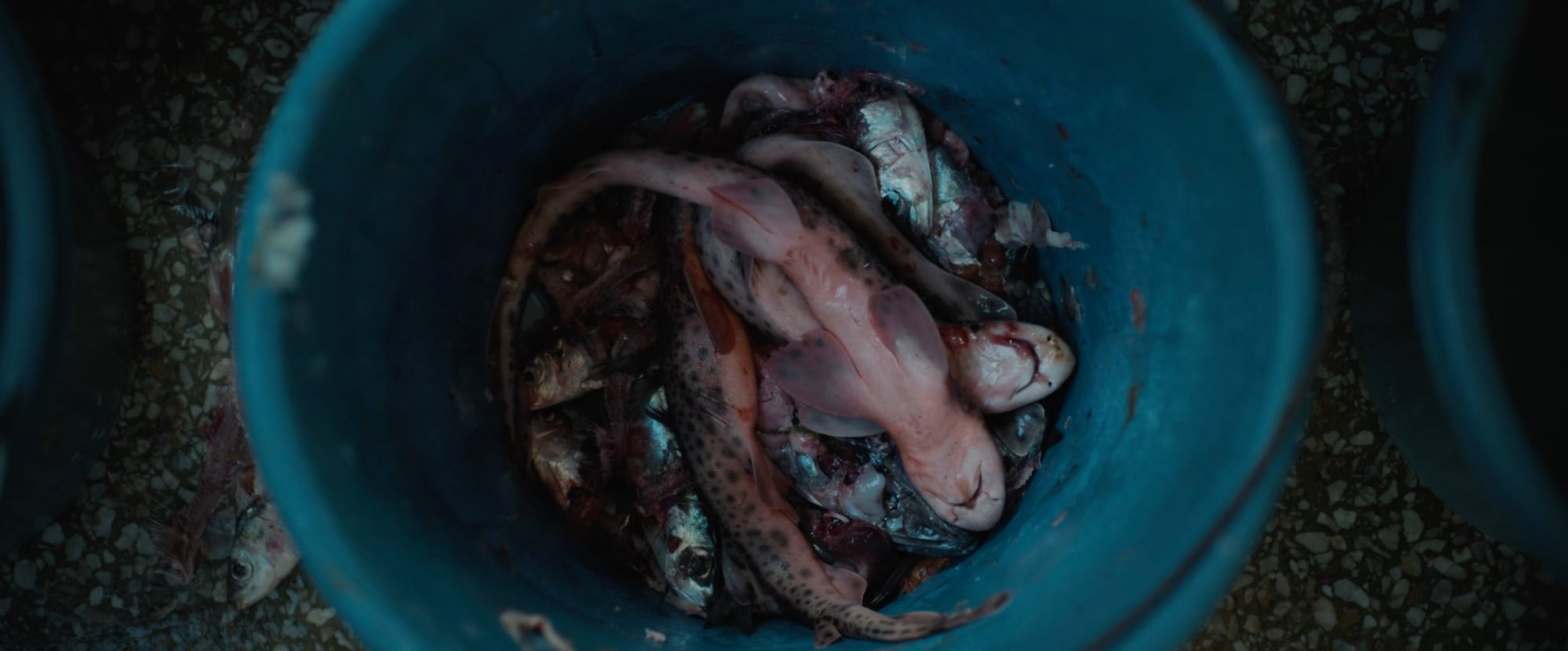
The surrealism, the decaying flowers, the shark babies, and all of your imagery, is exceptionally beautiful. Please tell us about those inclusions in the film
In the film, cultural specificity plays a crucial role, particularly through Moroccan allegory and superstition. The inclusion of henna, for example, is deeply symbolic. In Moroccan culture, finding henna on one’s hands unexpectedly can be linked to mystical events, like an encounter with a djinn. This particular element, while culturally specific, isn’t just for those familiar with the tradition. It’s meant to evoke a universal feeling of mystery and unease. The idea is to create an atmosphere that’s rich and intriguing, regardless of the viewer’s background.
This approach was inspired, in part, by reading authors like Toni Morrison and Laila Lalami. Their ability to weave culturally specific narratives without over-explaining, allowing the audience to immerse themselves and find their own meanings, was particularly influential. Like them, I believe in the intelligence and emotional depth of the audience. I want to offer viewers the space to interpret and relate to the film in their own unique ways. It’s not just about understanding every detail or cultural reference; it’s about feeling the emotions and the human experiences portrayed.
Ultimately, the film is an invitation for viewers to engage with a story that, while rooted in specific cultural experiences, speaks to universal themes of time, loss, and struggle. It’s about creating a space where audiences can bring their interpretations and experiences, enriching their understanding of the narrative. This, to me, is the beauty of storytelling – it’s a shared experience that resonates differently with each individual, yet has the power to connect us all on a deeper level.
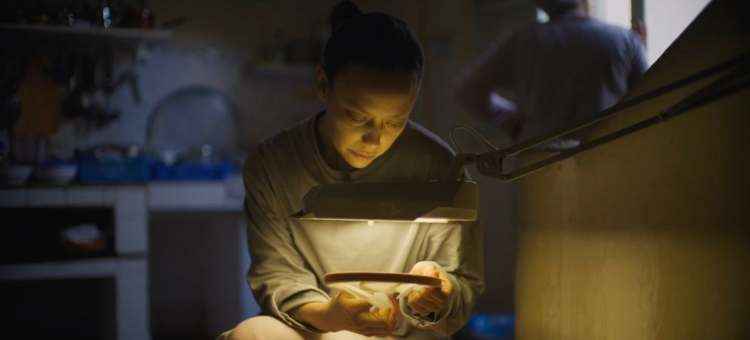
The cinematography is dark and foreboding. What references did you draw upon and how did you work on the look of the film?
Collaborating with Will Hanke on the cinematography was one of the most impactful aspects of directing this film. Will is not only incredibly talented but also brings a wealth of experience to his work, transitioning from a background in fine art into cinematography. When I approached him for this project, I was initially unsure if it would align with his interests, given his extensive experience and the calibre of his previous work. To my pleasant surprise, the project resonated with him deeply. This was a pivotal moment for me, especially as a first-time director, because having someone of Will’s expertise and vision on board was both reassuring and inspiring.
Our collaboration was marked by a strong alignment in aesthetic sensibilities and a shared commitment to visual storytelling. Will’s guidance was invaluable, not only in bringing my vision to life but also in elevating it with his keen understanding of cinematography. We engaged in detailed discussions about the types of shots we envisioned, often referencing a wide array of visual inspirations and finding ourselves in agreement on almost every aspect.
One of the standout features of Will’s work on this film was his use of source lighting, which he executed with an artist’s eye for detail. He devoted considerable effort to finding and customising the perfect vintage lamps, adding a layer of authenticity and ambience to every scene. This approach significantly contributed to the film’s brooding and somewhat claustrophobic tone, yet it also infused each shot with a certain beauty. Will’s adaptability and quick thinking were especially evident once we were on location. Despite his vast experience, he approached the project with a fresh perspective, readily adapting to the unique challenges of our shooting environment. In summary, working with Will Hanke was an extraordinary experience. His experience, skill, and creativity not only met but exceeded my expectations, playing a crucial role in shaping the film’s distinctive visual language. I am immensely grateful for his contribution and would highly recommend him for his exceptional talent in the field of cinematography.
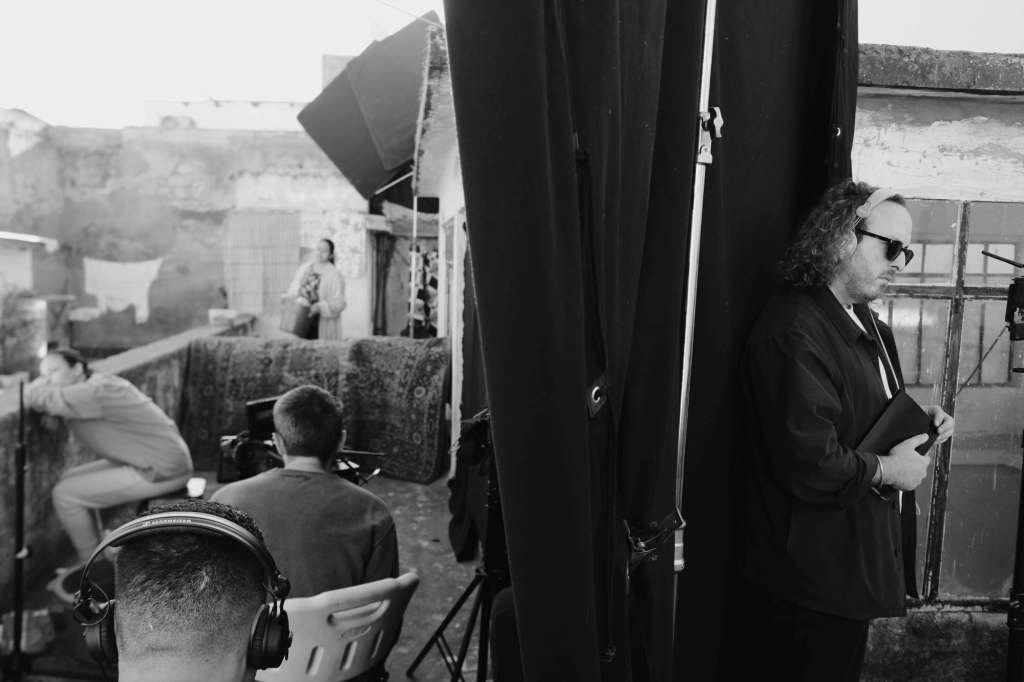
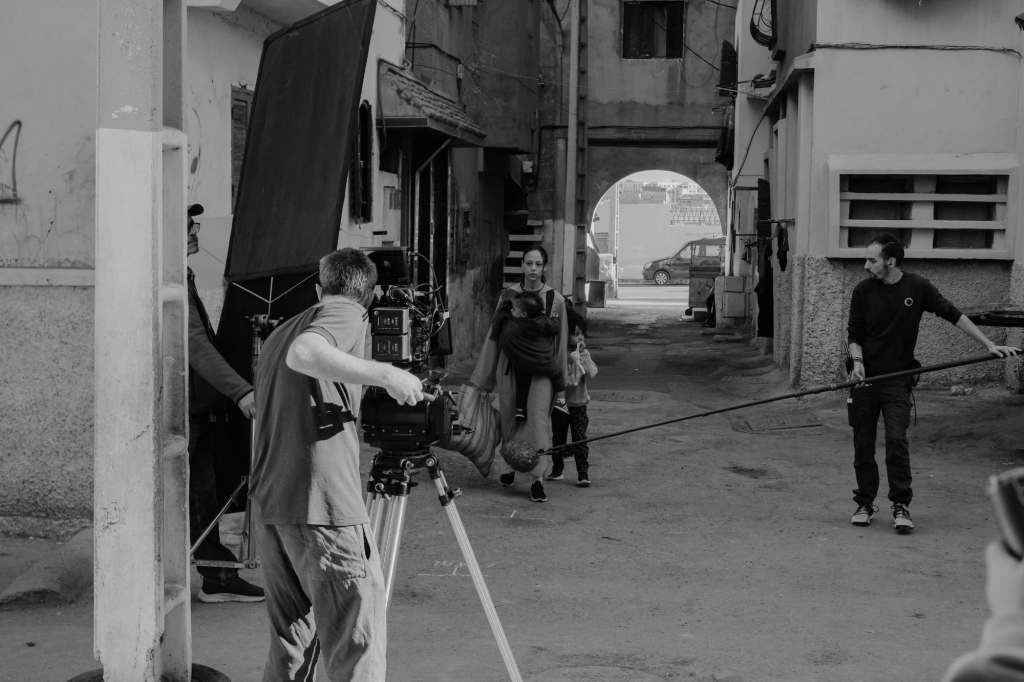
How did you find the production, especially shooting on the chaotic streets of Casablanca?
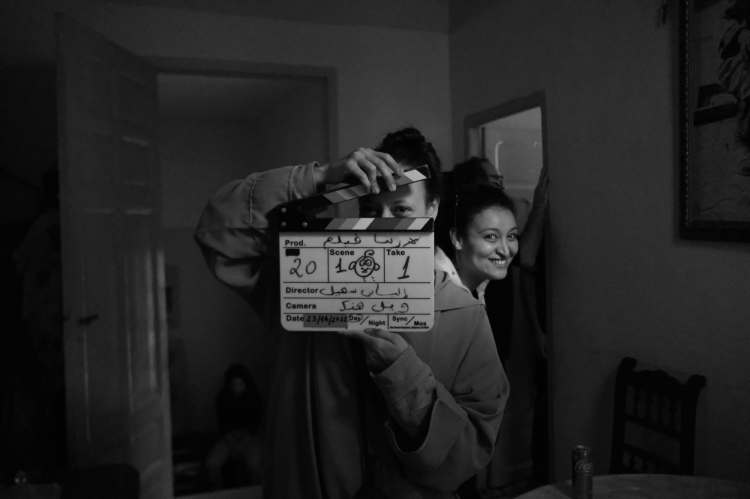
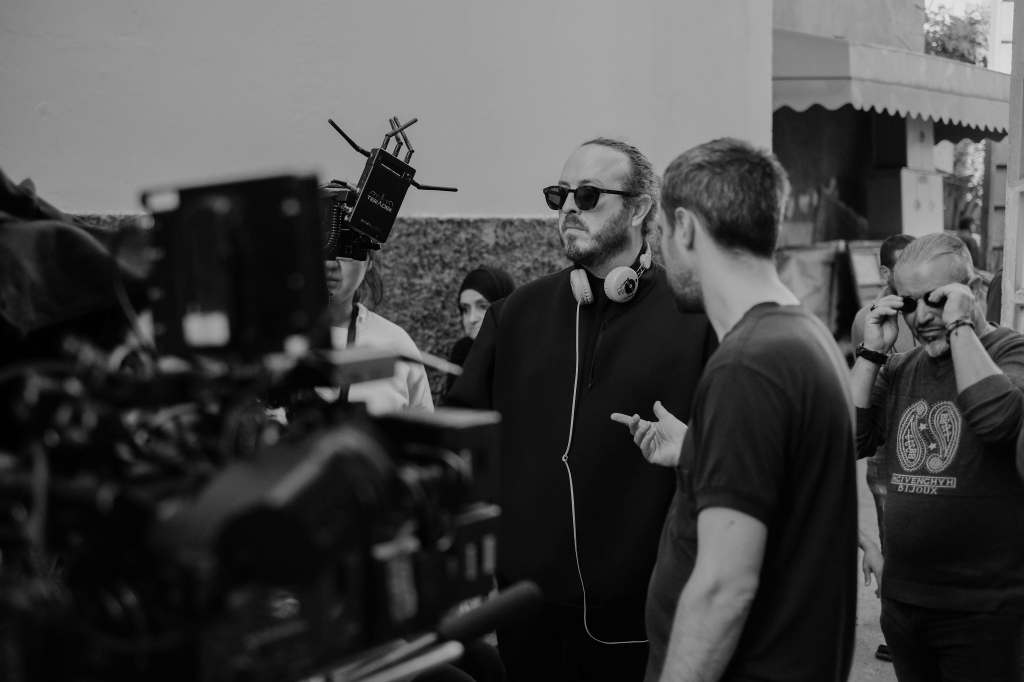
Shooting on the bustling streets of Casablanca was an exhilarating and eye-opening experience, made possible by our collaboration with the local production company, Montfleuri. I’m grateful to filmmaker Sofia Alaoui for recommending them. Their expertise and local knowledge were invaluable in navigating the complexities of filming in such a dynamic environment. Going into this as a first-time director, I think a certain degree of naivety worked in my favour. I was open to embracing all the possibilities and challenges that came with shooting in a city like Casablanca. Our line producer, Hajar, was initially concerned about the attention our shoot might draw, given the many unknown variables in such a bustling city. But the team at Montfleuri managed the process with exceptional skill and professionalism.
Despite our efforts to maintain a low profile, a camera on the streets inevitably draws attention. However, the production team worked seamlessly to ensure everything ran smoothly. I’m quite sure I was shielded from many of the challenges and problems they faced during the shoot. From my perspective, everything seemed to unfold with surprising ease. Hajar even commented at one point that it felt as if a higher power was watching over our shoot, considering how smoothly things were going amidst the potential for so many complications.
This smooth operation was also a testament to the collaborative spirit of everyone involved. As a director, holding onto the core story allowed me to remain flexible and open to the unexpected. The excitement of facing unknown elements and unforeseen challenges was thrilling, and I felt completely in my element. This was undoubtedly aided by the incredible crew behind me. Their dedication, expertise, and adaptability made this challenging shoot not only possible but also a truly memorable and rewarding experience.
Nisrine Adam broke my heart through her performance. What were you looking for in casting, and how did you work on her role?
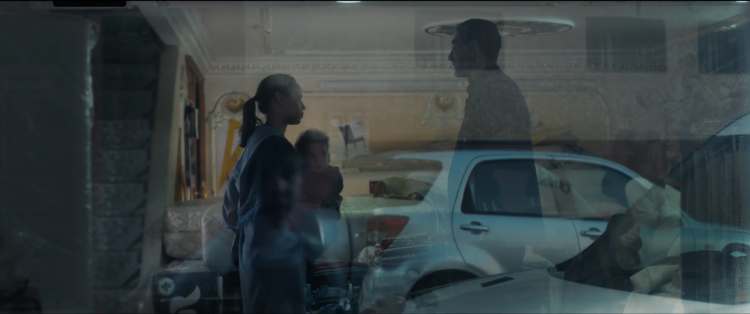
Finding the right actor for the role of Wedad was a crucial element in bringing this film to life, and Nisrine Adam’s performance exceeded all my expectations. Her recommendation first came from my producer, Arij, and then, coincidentally, from the local production company, Montfleuri. This serendipitous alignment reinforced my belief that she was perfect for the role. What solidified my decision was Nisrine’s response to a monologue I wrote, which had been featured in the ‘Margins to Mainstream’ series with Michael Sheen on BBC Sounds. I asked her to do a self-tape of this monologue, and she took the initiative to translate it into Darija Arabic. Her performance in that self-tape was so profound and moving that it brought tears to my eyes. It was clear that Nisrine possesses a deep emotional reservoir and an ability to convey complex feelings through subtle expressions, particularly through her eyes.
Nisrine’s reserved personality contrasts beautifully with her rich inner world and deep emotional capacity. This was especially evident in the departure scene of the film, where her character, Wedad, shares a moment with her mother. I had half-jokingly suggested to Nisrine that she could cry a single tear in this scene – a moment where her character needed to express a deeper emotion for the last time. Astonishingly, she did it on cue. It was a testament to her incredible talent and ability to tap into a wide range of emotions effortlessly. Working with Nisrine was not just a process of directing an actor; it was a journey of mutual understanding and exploration of the character’s depth. Her performance as Wedad is a heart-wrenching portrayal that resonates deeply with the audience, and I am in awe of her ability to bring such authenticity and emotional weight to the role.
Can you talk about how you got involved with the BFI Network Short Film Development Programme?
My journey to becoming involved with the BFI Network Short Film Development Programme began with an initial idea for a feature film. This idea led me to participate in the SAFAR Arab Film Development Programme, which was a pivotal moment in my creative journey. The programme, led by the talented British-Palestinian filmmaker Saeed Taji Farouky, was transformative for me. It marked the first time I seriously started to put pen to paper in a creative context, and it set me on a definitive path towards writing. After this inspiring experience, I learned about the BFI Network Short Film Development Programme. Although I don’t recall the exact way I came across it, I remember being compelled by the opportunity it presented. I submitted an application, and to my delight, I was accepted into the programme. This was another critical step that fuelled my passion for filmmaking. The nurturing environment of the BFI programme, along with the support and guidance I received, was incredibly motivating.
A significant moment during this programme was my meeting with their script editor, Jessica Jones. Our discussions and her insights were instrumental in reinforcing my belief that I was on the right path with my story. Her guidance not only helped in refining my script but also in affirming my conviction in the story I was telling. The entire experience with the BFI Network was invaluable; it not only honed my skills as a writer and a filmmaker but also provided me with the confidence and the encouragement to pursue my vision for the film.
After this phenomenal directorial debut, the question begs: what are you working on next?
I’m developing several projects, one of which is a feature film titled ‘The Nightingale,’ which takes place in 1930s Morocco. Inspired by a real yet largely overlooked historical figure, the story centres around a woman who manages a brothel. As the narrative unfolds, we discover she’s not only an informant but also a serial killer. The film is set over the course of a single day, and it explores both the violence in her personal life and the broader context of colonialism. A second project is a short film titled ‘End Terrace,’ based in contemporary Britain. It centres on Linda, a character known for her far-right opinions. This film delves into the real-world consequences and ripple effects of such extreme views becoming part of mainstream discourse. It’s about how her words impact her family, neighbours, and the wider community, revealing the far-reaching effects of divisive rhetoric on society.
What do you hope for your film?
My aim with ‘Beneath a Mother’s Feet’ is to initiate conversations about complex moral issues. The film doesn’t seek to judge or absolve its characters but rather presents a nuanced view of their decisions and experiences. I hope it encourages viewers to think deeply and engage with the moral ambiguities presented.
 Rocks Festivals Blog