

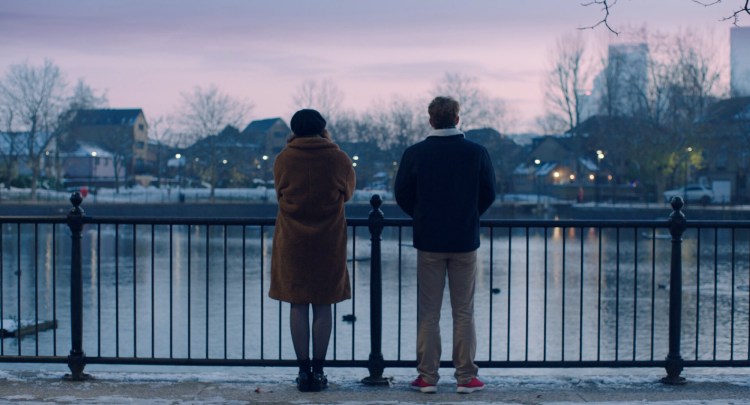
In a parallel universe, deftly crafted and brought to life by London Film School graduate Julie Magnaudet, there is treatment available for those terminally unlucky in love. ‘Broken Hearts’, set in a fantastical hospital, houses alternative therapy rooms and through a series of bonding exercises, love is encouraged to bloom. However those out there with any experience of the tumultuous world of dating know that nothing is quite that easy and the film delicately treads the line between comedy and drama as a hapless young couple navigate their way through the treatments.
‘Broken Hearts’ is Magnaudet’s graduation short and offers a welcome alternative to clichéd romantic stories, instead providing a more honest, empowering and heartfelt view of dating and romance. Over the 17-minute runtime we see a young woman clearly desperate for some sort of romantic connection eventually allow herself to be alone and come to the realisation that her worth is not determined by having a partner – a welcome lesson which I feel we need to see more of, both on and off the screen.
With this film, I want to tell a story about love that is not a romance. I want to speak of the universality of heartbreak and loneliness.
Where did this alternative look at the traditional rom-com form originate?
The very first spark of the idea happened while I was still in film school. We were in a camera practical class and were actioning a dolly move following two people. My friend said “right, you’re a doctor and you’re telling me my heart is broken” which was a lightbulb moment for me. I immediately turned to another student and said that would make such a great film, whilst they did not seem to agree, from there the seed of a broken hearts hospital was planted. I let it grow for months and it slowly shaped into the story it is today.
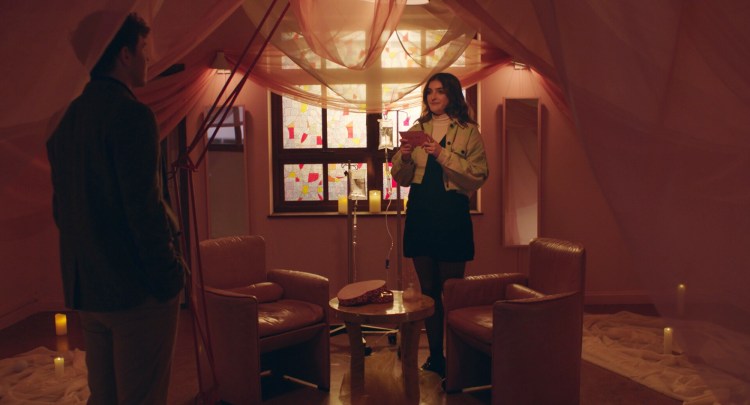
Your script hits so many emotional beats – the challenges of dating, mental health, and our own need for everything to be quick and easy. How did you develop all of this together?
I think these all happened quite naturally. It wasn’t my goal to talk about these issues specifically, but it was my goal to make a modern story,and these are very modern issues. I think these emotional beats hit because they’re all rooted within the characters and what they’re going through. In the script, we have two characters with opposing personalities, visions of love and life experiences and yet they’re going through the exact same thing – heartbreak and loneliness. When writing, I let my characters lead the story so the issues are all authentic to the character’s experiences.
This story is really about what it’s like to be a young adult in our lonely world. I wanted to capture the idea that a broken heart cannot be fixed. It can be helped along its journey, but there is no cure for it, only time. I kept redrafting until I felt like Chloe’s character journey was clear and she changed to be more empowered and understand that there is not one cure but that it’s all going to be ok.

‘Broken Hearts’ is imbibed with some great and much-needed female empowerment. Why was this important for you?
This was definitely a very important part for me, mainly because there is a lot of me in Chloe. I think society often puts the idea in young women’s minds that love is a necessity for happiness and that they are not whole until they’ve found a partner and growing up, I was very much influenced by this. Watching rom-coms and impossible romances where the women are always lost on their own and only find themselves in love, made me feel like this is what I needed to be happy. Eventually, I developed a certain dislike for romantic films as all they offered were unrealistic expectations about life, love, and romance. This film was really my way of healing this, by making an anti-romantic rom-com and telling a story about love that is not a romance. Chloe represents the modern young woman who has been influenced in her youth and needs to break away from it. This is her story of empowerment, for her to realise her worth and understand that it’s ok to be alone.
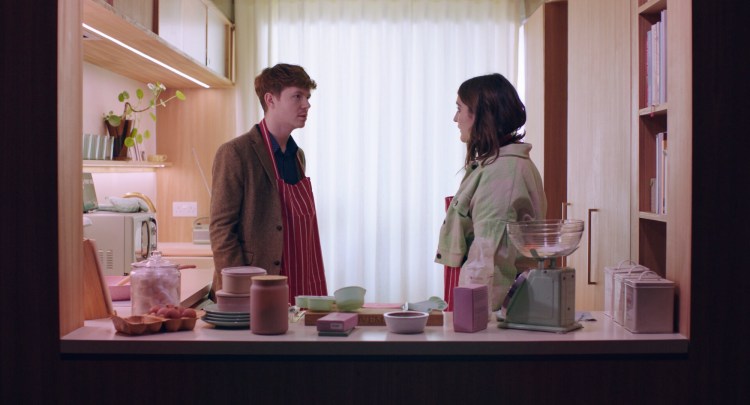
The film has quite an old-fashioned look to it. Why did you choose this for your dystopian “what if” world?
We very much went for an art deco aesthetic with this one, which was a deliberate choice in creating the look for the hospital. I did not want the film to look like a sci-fi but I also did not want it to look like a period film. Art deco style was my favoured choice as it’s very much in fashion now, but also fits the brief of a warmer and more welcoming hospital unlike those we’re used to seeing. This style also aligns well with the idea of the hospital being a bit rough around the edges, as they’re really trying to furnish/decorate it in a quirky and new way. Through this choice we were able to give the Hospital a unique soul and style in our current world and in a way, it is the Hospital itself that’s the parallel world.

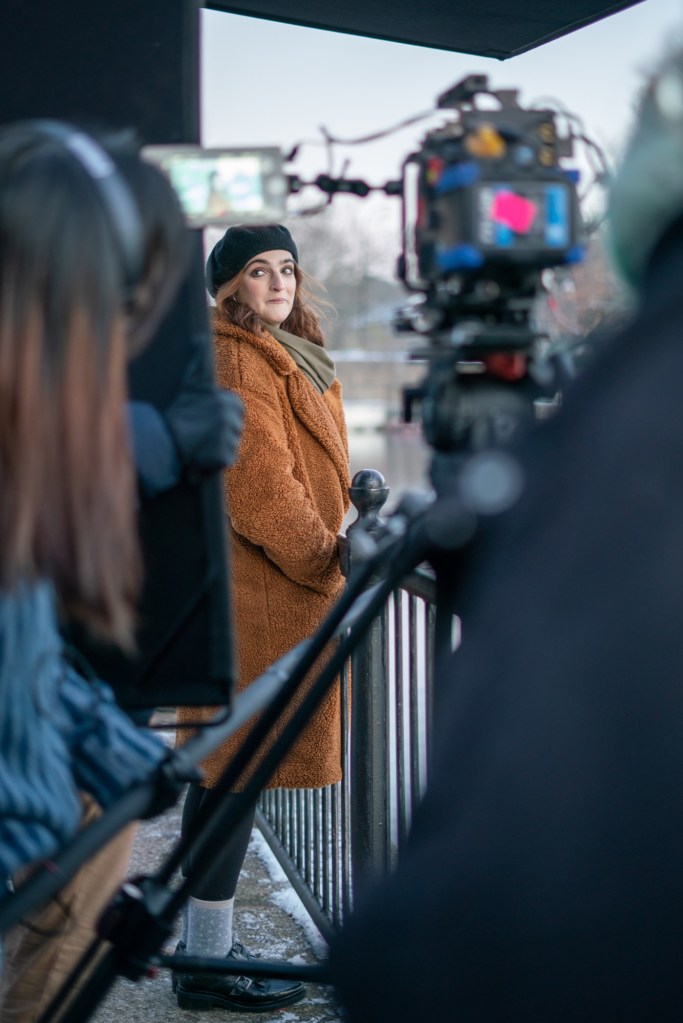
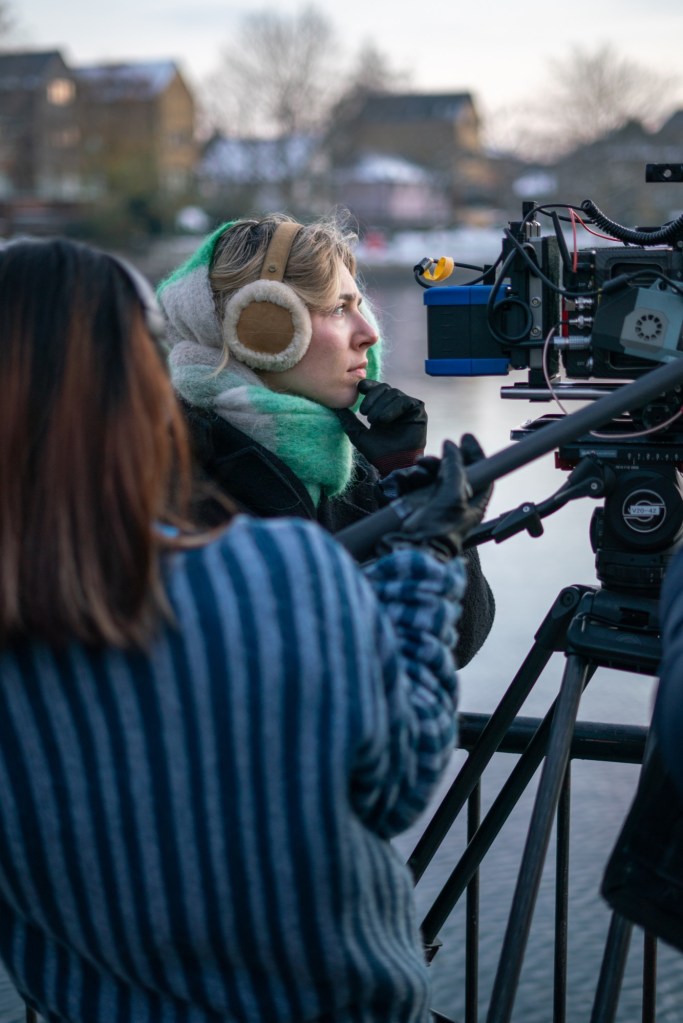
The whole production and set are amazing! How did you pull everything together on a student budget and I’m assuming very few shooting days?
I wanted our hospital to break the traditional codes, and feel colourful, warm and welcoming. We had to find something that resembles a hospital but with a completely different colour palette, and we were doing all this on a small budget – easy, right? Production design was always going to be a massive part and we had regular meetings with the PD and DOP to establish the colour palette on each room, making sure design and cinematography worked hand in hand in creating this unseen place and achieving the warm and colourful feel we were after.
We certainly did not have enough money for the ambition of the script and look we were after. The key was a lot of forward planning, thinking on our feet, calling in a lot of favours, and hoping for the best. We were blessed with an incredible cast and crew that worked very hard in making this film. We also had to get very creative in how to save money while still giving the look and feel we wanted – it was a very hands-on team effort. We repainted the hospital location ourselves in freezing weather, with no heating, in just a couple of hours. Thanks to everyone who were so dedicated to the project as this would not have been possible without all of them.
This is a phenomenal student project. What did you learn in the making of ‘Broken Hearts’ and what are you going to bring to your next endeavour?
I’ve learnt so many things it’s hard to know where to start. I’ve certainly learnt how to do a lot with very little. The budget was tight, the filming time crunched, and we had some technical problems on set. So in order to realise my vision, I had to be very communicative with the HoDs in pre-production and make sure we were all working towards the same thing. I also realised just how much I love working with actors and the value of having rehearsals. This project really made me feel like I’ve found my voice as a director and I’m excited to keep making films that feel very ‘me’. I’m definitely heading into my next project with more confidence, knowing that things do go wrong but that it’s ok as long as I’m clear on what I want and what I’m trying to say. I also know I want rehearsal time with my actors prior to shooting. I’m feeling confident in my own abilities as a director and am ready to take more risks and keep pushing myself.
What do you hope for your film?
This is my graduation project and also a proof of concept for a TV series. On one hand, I hope to use this film to help me showcase my voice as a director and whilst I’m aware it has its shortcomings, I have learnt so much making it and I hope it’ll show my potential. On the other hand, ‘Broken Heart’ was originally an idea for a TV series which I condensed into a short. It’s already attracted the attention of a couple production companies and I’m hoping it’ll continue to show its potential and hopefully lead me to make the TV series.
 Rocks Festivals Blog