

Shot entirely in black & white, ‘Daniel Came Home’ is a haunting and dramatic short brought to life by a considered and knowledgeable filmmaker Brian Gregory. The film, which was the worthy winner of the Best Micro Budget Film Award at this year’s Brighton Rocks Film Festival, features an outstanding performance by David Keyes, supported by newcomer Adam Eveson.
Adapted from the filmmaker’s own short story, the all-too-relatable troubled relationship between a father and son is imbibed with new depths of depravity by Brian, who drew upon his own lived experiences and those of people around him. Inspired by experimental and more alternative cinematic pieces, ‘Daniel Came Home’, moves beyond its independent roots by masterfully employing a variety of effective FX and drawing viewers into the frenzied bursts of dialogue that punctuate the carefully-constructed sound design. The audience, pumelled by the vitriolic and obscene commentary from Daniel’s father, are also left to decipher their own meaning from the film, so we highly recommend indulging in ‘Daniel Came Home’ more than once.
Where did this disconcerting look at a troubled father-son relationship originate from?
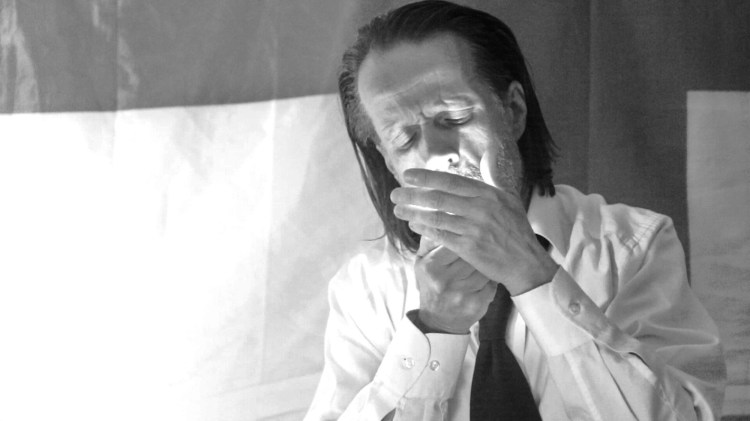
‘Daniel Came Home’ was originally a short story I wrote named ‘Daniel’. This ended up being published in a horror anthology,The Fifth BHF Book of Horror Stories, and I had always intended to make a short film of it with two actors in one setting. The idea was initially inspired by Bob Clarke’s ‘Dead of Night’ (1974) and the films of Alan Clarke. Other inspirations were a particularly unpleasant father of a friend of mine, my own father’s army experiences, childhood football memories, disgust at the Invasion of Iraq and Afghanistan, along with the lasting effect of dad’s experiences from the forces such as nuclear tests and indoctrination on both myself and my family. It’s quite a personal film and there is definitely some of myself in the character of Daniel.
How did you find the adaptation of the short story into the film?
I found the transition fairly straightforward as I had a very strong visualisation of the story, setting and characters in my head. It was a matter of taking out what worked solely in print and concentrating on the key dialogue and images, while maintaining the narrative. Plus, in the short film I could take viewers into Daniel’s mind in ways that were not possible in the short story. Obviously, I needed to edit the whole tale down for a suitable film length too.
How did you then move into the production of the film?
I was keen to work with David Keyes, as I had admired him in many shorts, on TV and even in Hollywood movies, knew that he lived near Brighton and could see that he’d be perfect to play Jack. I had heard that he liked my previous short, ‘Janet Devis’, so I plucked up the courage to send him the script and luckily, he liked it. Adam (Daniel) is a stage actor and after seeing one of his shorts, I knew he’d be perfect as Daniel. Rehearsals showed that the two had chemistry and empathy for each other. With little financial resources, I placed an emphasis on atmosphere and short bursts of dialogue, feeling that the story would work best in stark black and white, with a lot of time spent on sound FX and music choices. My sister is a trained film make-up artist, who has worked on various projects, and she took care of the make up and costumes. I hired another Gregory (no relation-Neil) to score the film with my suggestions. I’d created music with him many times before. Several people took turns as sound recordists, while I filmed and directed, all in one flat initially, later in another. In post, I added many home made sound FX and ended up shooting a fair bit more footage without the actors.
What appealed to you about shooting such a ‘bottle episode’ film with just two characters in a room?
I’ve always enjoyed films that are confined to one location with a minimal amount of characters. I find that the more you are restricted in budget and scale, the more you need to be creative and imaginative in your work. It suited the story too, as the sense of claustrophobia was heightened and we could focus on the father/son dynamic.
There is a theatrical quality to their performances and also to the writing. Was everything tightly scripted, and how did you work with the actors on their performances?
Yes, while filming, we discussed how ‘Daniel Came Home’ could probably work as a play. My original script had far more dialogue than we ended up using and the lines were quite specific, but I encouraged ad-libbing and improvisation too (particularly for Jack), so David and Adam would not appear too robotic or unnatural in delivery and achieve a more believable flow in their exchanges. The use of only a couple of settings and two main actors adds to the play-like feel. I’d been watching and enjoying The Servant (1963) around the time I was writing and shooting our film (itself a play turned film) and that probably bled into my subconscious.
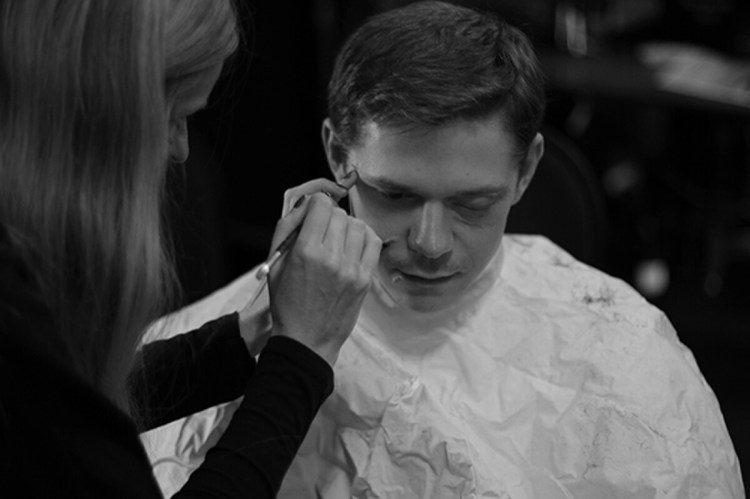
David Keyes found it quite tough to deliver some of Jack’s vile lines, as he is totally different to the character in real life and dearly loves his own son. He really had to dig deep and become the polar opposite of who he is. Due to the nature of our toxic father/son scenario, David became quite emotional at some points of filming and we’d have to cut. We spent quite a bit of time getting him into the role in rehearsal and on set, but once he got into the character of Jack, he became him completely and slipped in and out of character effortlessly-which just goes to show what an excellent actor David is, with so many years of experience. Adam was great too and took direction without any fuss, always full of enthusiasm, and quickly latching onto what I was trying to achieve. Wearing the eye prosthetic was quite uncomfortable after a period of time, but he never complained. He played Daniel exactly as I had envisioned him, a great performance and so empathetic. Some lines were tricky to deliver as we only had Adam and David together for two hours. I often had to speak the other actor’s lines off camera for them to react to. Not easy for either of them.
Sam Connolly, who played young Daniel, took only two takes to get his part wrapped. Pretty impressive for a non-actor! He was chosen primarily for his close physical resemblance to Adam. My sister, Jeanette Gregory, took care of the make up (especially Adam’s eye prosthetic) and narrated the voice of Heather (Daniel’s mother) in post. She also appears fleetingly on screen as Jack’s new girlfriend, Molly. Everyone got on so well and, amazingly, despite the long hours and cramped conditions, there were no arguments. We were all focused on doing our best.
The moment of tenderness between father and son followed by the ethereal dreamlike scene is such a moment of release from the violence and hatred. Why did you want to include this for the audience?
Yes, the tender moments between father and son were deliberately placed where they are to give the audience a release from the tension and bitter exchanges. Daniel, despite everything (and being a sensitive soul), had some love for his father, understanding that violence breeds violence and how his army experiences, Jack’s upbringing, alcoholism and self-hate had turned Jack into the selfish, racist monster that he became. A photo of Jack’s own father, a strict military man, is included at the beginning of that sequence. Similarly, Daniel understands how all these events had led to his own fate. He wants to end the cycle and avenge his mother. This then leads to a surreal trip through Daniel’s mind, back to his childhood home and an ambiguous ending. I am a big fan of 60’s psychedelic cinema and wanted to create fever dream-like visuals and sound, in an attempt to capture Daniel’s own subjective experience, as well as try to realise some interesting imagery.
The sound design (the storm raging outside of the silence moving into the abrasive electronic sounds) is so key to the film. Can you go into more details about the development, recording and weaving into the film?
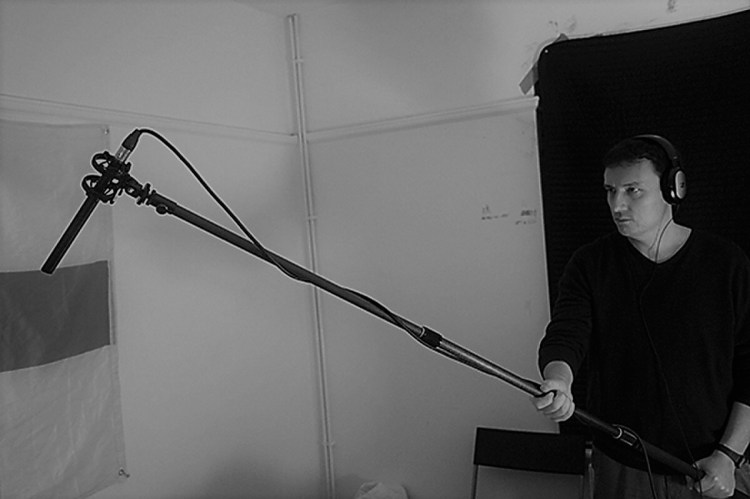
I think that with such a limited budget of only a few hundred pounds, sound design is crucial to create atmosphere and rise above budget limitations. Plus, I love creating sound FX! I find it very creative and highly enjoyable. In the short story, the storm was clearly supernatural and rages uncontrollably, causing considerable damage to the building. For the film, it’s almost another character, adding an ominous, foreboding atmosphere and representing both Daniel (and his mother’s) anger and resentment. Maybe even mother nature’s revenge! I was quite clear in my mind where the sound FX would be used when writing the script. I carried out various field recordings of the wind and heavy storms and played around with vocals/vocal speeds. I even spent time collecting, then breaking, twigs and crinkling an old wallet to replicate bones breaking for foley sounds. I am not a fan of most audio presets, as, for me, they are used too often and lack character. For the soundtrack, I wanted an analogue score, again no generic presets. I had a temp score which I admire from ‘The Offence’ (1972), which actually fitted perfectly. Neil Gregory then used that as a guide to create his own analogue synth pieces. The music over the more tender moments was made more emotive, lighter and less intense than the temp soundtrack, to be more complimentary for the scene. We actually had a song Neil and I had written, named Father, sung by a session singer, for the end credits but simple sounds of the city and rain worked far better.
How did the film change in the edit to the final piece we see today?
Ah, the edit! This film spent quite a while in post. I went through two abandoned edits before settling on the finished piece. The first attempt had far too much dialogue and wasn’t gelling, it had no rhythm. The second attempt involved still images with narration, combined with sudden pieces of moving image. A nice idea but, again, it didn’t quite gel. I then took ideas from each version, shot quite a few inserts last year to add to the mix and created the finished film (though the fever dream sequences with Daniel remained pretty much the same). There is a tiny piece of narration left in at the end from the second edit.
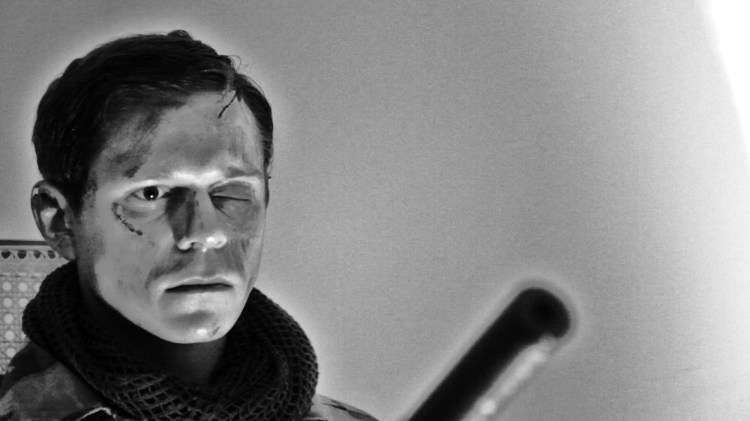
Why did you think black and white would work so well and what equipment did you use for the shoot?
I always intended to shoot in black and white. There are several reasons: It suited the very stark, bleak nature of the film; I am a big fan of monochrome, particularly old TV shows, such as The Twilight Zone and several b/w films from all decades; plus, on micro-budget films I think that it can add a more cinematic quality. Filming in black and white also allowed me to have a sudden burst of dramatic colour at the end. My equipment was pretty basic. Two, old Canon 7D and 600d cameras, with a couple of kit lenses- and an effective Canon 17-55mm f/2.8 IS USM lens, which was used for wide angles and atmosphere. A mixture of tripod and some hand-held shooting was utilised. I undertook all the filming and lighting myself, which was pretty exhausting. We recorded the audio on a Sennheiser MKH 416 P48 mic and a Zoom hand-held sound recorder. I had several different sound recordists for this task over the three weekends: Neil Gregory, Matthew Timoney and Sherine Kamel. They all did a great job, so we didn’t need to record any ADR (another advantage of shooting indoors) and all the dialogue was recorded live and on set. I also used this mic for my field foley recordings. The only dolly shot was created by taping a camera to a skateboard and pulling it slowly backwards. That’s micro-budget film-making at its finest!
What do you hope for your film?
I have finished shooting my first horror feature named ‘Witch’ (Brighton and Isle of Wight shoots). It’s a micro-budgeter shot and directed by myself. I’m very pleased with it (just started post) and hope that ‘Daniel Came Home’ may act as a calling card, impress distributors, actors, film fans, etc and gather some interest in it.
 Rocks Festivals Blog