

Liv Boren’s sensitive multi-layered exploration of trauma and grief in her short drama ‘REVERB’ are a clear testament to the filmmaker’s depth of understanding of these themes and an excellent reminder of the myriad of opportunities the big screen offers us. A brother and sister, both wading through torrid emotional waters, experience a shocking and unexpected trauma at what should be a joyful music-fuelled evening, unravelling the younger sister’s fragile protective shell.
Liv, whose studies and passion for filmmaking were renewed during the pandemic, bravely moved her entire life from the US to the UK in order to complete the project. Working with her husband Chris Dooly, she re-connected with industry acquaintances and friends and ploughed herself into the production of REVERB as part of Jack and Grace Productions. The film delighted audiences at Brighton Rocks this year with its poignant and resonating writing, enhanced by formidable performances by young actors Connie-Kiss Mee & Zac Pile who were expertly directed and guided by Liv. Last but not least, REVERB is also a “love-story to music”, and offers an absorbing and well-curated musical score which echoes through the film with intended fervour.
How has your career and progression as a filmmaker led you to the creation of ‘REVERB’?
The initial concept came to me as a daydream; a young girl at her first concert, overwhelmed and exhilarated by the experience, then witnesses a tragedy that forces her to grow up before she’s ready. I started writing the scene I had imagined and then a bigger story began to unfold. At that point, my production partner and husband, Chris Dooly, began adding to the story and editing what I had written. Within a month of the initial idea, we decided to make it a short film and shoot it in my childhood neighbourhood in London.
I’ve always loved making videos, as a kid, it was on my Sony DCR handycam in North West London. I chose to study Film & TV at university and realized how much I loved directing. But after moving to NYC and getting a job in marketing, I no longer had the time to make films. I continued to write in my free time but all of my projects kept being put off. When the pandemic hit, I was given a chance to refocus my creative energy on making films and that’s when my partner, Chris Dooly, and I wrote and filmed a short for an online Quarantine Film Festival. We won the festival and that old spark was re-lit. Since 2020, I’ve been building up my production company, Jack and Grace Productions, writing scripts and producing videos (corporate, educational and film) on a freelance basis. ‘REVERB’ was really the culmination of years of passion and dreams and then more years of writing and making connections. Finally in 2021, when the idea came to me, I had the confidence, ability and freedom to make it happen. And now I see ‘REVERB’ as an empowering jumping off point for the next project.
From idea to completion, it took just over a year, we were living in NY at the time so we knew we had to fly to London and find a London-based crew. We flew over, along with our two dogs, and settled in for a 6 month stint, most of which was spent crowdfunding the project, putting out cast and crew calls and location scouting. We connected with an old friend and our associate producer, Sophie Max, and she was a huge help in connecting us with the London film-scene, which I’ve been away from for quite a few years now. After a few months of reworking the script and bringing together our vision, we flew over our good friend and wonderful artist, Dave Quay, to DP the project. By the time our 4 day shoot came around, we’d brought together a fantastic cast and crew that really made the whole experience smooth and beautiful. We filmed in my best friend’s childhood home, my mum made and served home-cooked meals each day and the whole energy of the set was really special.

Grief and trauma are such heavy and delicate subjects to broach, particularly as seen through the eyes of a child. How was this approached in the writing?
What was really important to me was honouring the depth & complexity of a child’s grief. Darker emotions, like grief, loss and trauma, are often simplified when it comes to kids on film. While writing the script, I didn’t think about two “children going through this,” I thought about two siblings dealing with complex feelings and yet, both driven by love. Casting the right young actors was essential for the authenticity needed to bring this script to life.

It is well known that working with a young cast can potentially pose a myriad of problems, yet your young protagonists are phenomenal. How was casting for the role and what is your approach as a director in guiding your actors?
Our two young actors, Connie and Zac, were fantastic. Honestly, the best actors I’ve ever worked with. We had so much fun. Casting Vivienne was a breeze; we met with Connie and her mom once via zoom and instantly knew she was right for the role. We then began casting for Joseph, we needed someone who could match Connie’s energy and really embody the protective, gentle big brother that Joseph is. We held chemistry tests with a handful of talented young actors. Immediately Connie and Zac had brilliant chemistry; not only did they look great together on screen but they were playful and sweet with one another in a way that came naturally.
I like building real connections with my actors. I want our relationship to exist outside of the film, and for me to be a resource they can come to with questions, concerns or just to chat on break. To build those relationships for ‘REVERB’, we met on zoom as a group a few times before our first shoot day. We used that time to get to know each other, talk about our favorite films, funny stories and do some light rehearsal. It was important to me that both of our young actors felt comfortable on set so we really built a family dynamic during the shoot. It was imperative to me, especially with the subject matter we were dealing with, that the environment was safe and open for everyone working on the film.
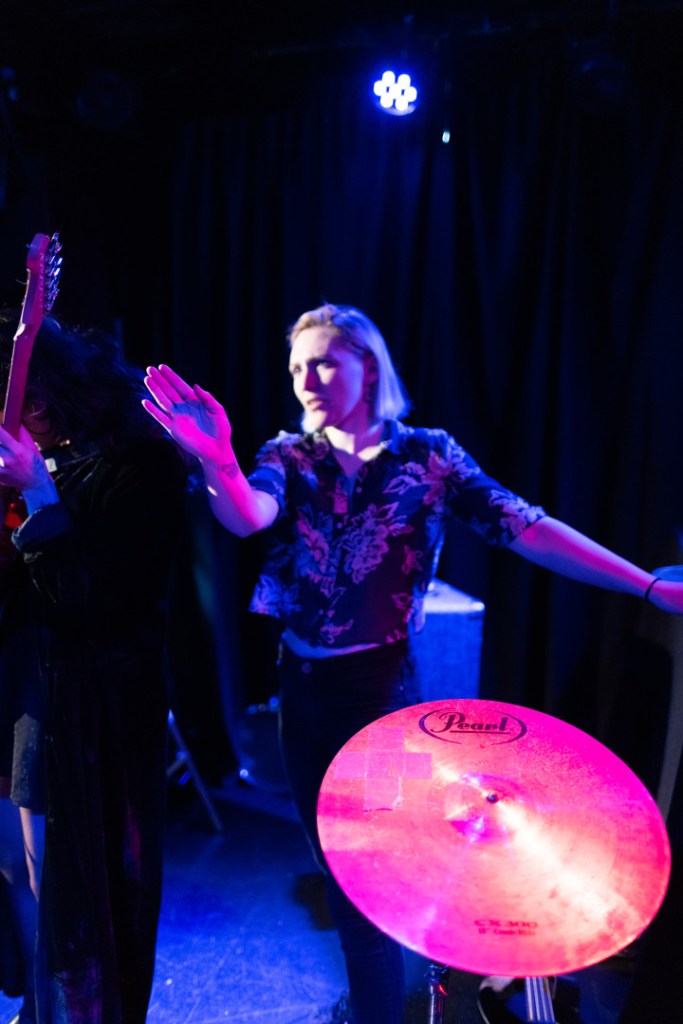
I love the camera angles in the gig sequence, concentrating on feet, and the extremely well-executed shots of Vivienne & Joseph. Why did you approach this scene that way?
At the gig, our lead characters are out of their comfort-zone. It’s exciting. It’s crowded. It’s a little bit dangerous. I really wanted to show that with our camera work. The close-ups on their hands and feet reflect the chaos and excitement; building anticipation as the two make their way towards the stage. The camera is alive with the action and the audience is going along for the ride. This is Vivienne’s story and we chose to keep the camera focused on her journey as she enters this new world. Eventually, the camera engages with the artists and the bigger scene and that’s when things start to get out of control.
Your cinematography and lighting are all very soft, leaning into the authenticity of the story. How did you work with your DP in planning the tonal look of the film?
A favorite quote of mine is “limitations breeds creativity” which sums up many of our production choices. We didn’t have a large selection of lighting equipment going into filming and during our early meetings with Dave Quay, we discussed options for renting more equipment. However, we eventually decided to roll with it, agreeing that the softer lighting would lend to the authenticity of the film and the intimacy of the at-home scenes between Vivienne and Joseph. The majority of lighting inside of the home was practical. It was a fun challenge and Dave was instrumental in bringing to life the beautiful and simple tones we see there.

Music is so integral to the film. How did you decide on the punk-rock vibe, the band to work with, and how to weave this into the script?
This film really is a love-story to music. We had so much fun searching for bands and it was important to me that we found local British musicians and worked with them all directly. My brother happens to be a fantastic London-based musician and his music helped me to pin-point the style I was looking for. We would listen to different artists for hours, reading the script over and over to see if they fit the story we were trying to tell. All of the bands we worked with, Youth Sector, from Brighton, Saloon Dion and Black Bordello were hand-picked and helped bring the vision to life. We were especially excited to not only use Black Bordello’s music but to have Sienna Bordello perform in the film. I wanted our lead musician to be female-presenting, to amplify the experience for Vivienne and deepen the connection between this tragedy and the passing of her mother.

Can you tell us more about Jack and Grace Productions?
Jack & Grace Productions is the production house that Chris and I started in 2020. We had the name and idea to start one for a few years before that, along with a handful of scripts we’d been writing, but it was our first film, ‘Quiet in the City,’ that officially launched it. The names are actually our own middle names, Jack and Grace, and we’ve found that to be more confusing than we’d expected! So we’re currently in the process of a rebrand – stay tuned on that one! We’re also excited to be working on some really cool projects this summer; producing a short film in partnership with Dave Quay in New York, working on a micro-short that I’ll be directing late in the summer and writing our first feature script.
What do you hope for your film?
Whilst the initial concept came to me in a daydream, the final vision brought together my own experiences and trials of childhood, growing up, loss and grief. Experiences that I believe are universal. So, what I hope is that audiences connect with the themes of REVERB and can feel their own experiences reflected on screen. I hope that it’s healing, I hope that our main character’s journey serves as an offering; an exploration of painful topics through a lens of innocence and vulnerability and a demonstration on the power of love.
 Rocks Festivals Blog