

Forge Photography & Film Production are an ambitious company whose recent focus on documentary filmmaking has led to the fruition of ‘Never Too Young Never Too Old’. Father and Son duo Mick and George Child wanted to find a way to commemorate the memory of their beloved family member Sid Metcalfe, who they began filming and documenting in 2019. ‘Never Too Young Never Too Old’ has since evolved and grown into a beautiful and touching tribute to Sid and the other veterans.
The documentary features the affable Nick Beilby, who runs the York Normandy Veterans Association. Nick’s relationship with these men is incredibly touching, and his connection and understanding of them allows for the recreation of intimate snapshots of a time these men have often chosen not to remember. Film student George Child shines with his skills as first AD and DP, as the documentary flows through these men’s stories and the commemoration of their roles in the war. ‘Never Too Young Never Too Old’ will be showing at Brighton Rocks on the 24th of June at 12pm at The Actors, marking an impressive journey taken by this documentary with director Mick Child at the helm.
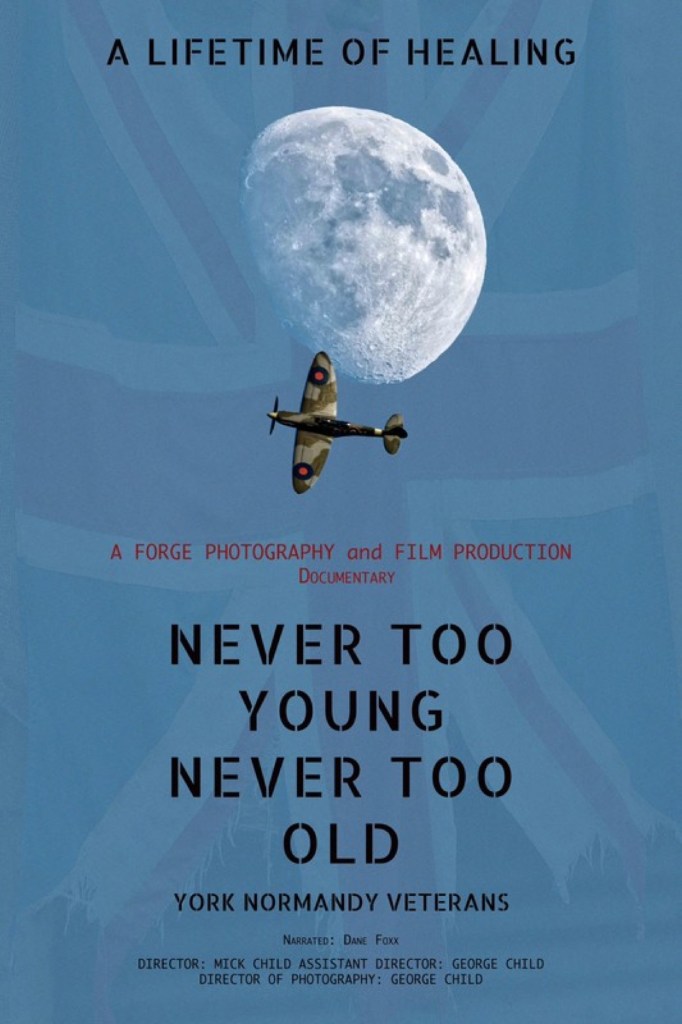
In loving memory of Sid Metcalfe; 30/12/1922 – 11/11/2022 and all of the wonderful friends that we’ll never forget. Dedicated to York Normandy Veterans Organiser; Nick Beilby 2014 – present.
Lest we forget.
The film is so educational and engaging. How much research was put into everything before you started the shoot?
George: When my great grandad passed away on 11th November 2022, in line with his wishes, I wanted to complete the film. Ironically, in many ways, the interview I’d originally started was perfect. I had over an hour’s footage, and I no longer wanted to make the original film as I’d intended, because that had been done. So in discussions with my father and director Mick and Nick Beilby, we set about outlining a story idea for how best to broach what York Normandy Veterans had meant to the individuals both past and present. In discussion, and following initial interviews with people, it soon became apparent that these people were helping each other to come to terms with the atrocities they’d witnessed first hand, and in most cases, lived with for so many years. It was a release for them, peer to peer.
George, as there is such a generational disparity between you and the subject matter, how were you able to broach that through your filmmaking?
George: I started filming with my Great Grandad in 2019 following a school trip to Belgium and France to learn about the two world wars. My Great Grandad had never spoken to me, or in fact anyone else about the war until 2018 when he joined the York Normandy Veterans Group. When I was young we took Great Grandad to the war graves in Merlot Holland, and even then he didn’t mention the war, other than his friend George who’d been killed beside him.
Through my grandad and York Normandy Veterans I was able to write lots of questions that I wanted Great Grandad to answer. When I filmed he was poorly with a bad cold, and he certainly didn’t follow my questions, so I wanted to re-film with him, however covid struck and the restrictions stopped me filming.
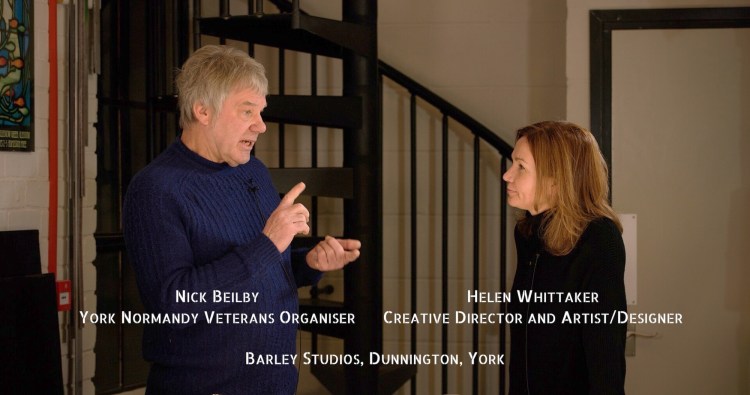
Nick, you are a total camera natural! How did you find the whole approach from Mick & Geroge, and how did they guide you in your involvement?
Nick: The filmmakers made it very easy for me as they outlined very clearly what they were looking for and then said just be yourself and talk to my friends as though it were a normal meeting with them, which of course it was. They also asked me to use my own initiative with the questioning which is something that I really liked.
There are some wonderful stories recounted. What interviewing style did both of you adopt in order to garner the most in-depth responses?
Nick: My style is to let the interviewee talk with just the odd prod or interjection from me, and importantly to encourage. They know their subject and have such enthusiasm and feeling for it which makes my job so much easier. I like to think that the interview is more of a discussion between friends with me doing most of the listening.
George: From my perspective, Great Grandad’s discussion on camera failed in terms of me getting the answers I’d originally wanted. However, in between lockdowns, a local museum commissioned a series of films with York Normandy Veterans that emulated my idea. Great Grandad completed four such interviews which covered all of the topics I’d originally planned. Fast forward to Remembrance Day 2022.

What planning and strategy did you put into the shoot in order to get everything you needed?
George: As director of the initial footage with Great Grandad, and now with me acting as DP and AD of this new venture, which included my dad and a huge input from Nick, when interviewing our subjects I wanted to adopt a similar approach. There was no presenter visible in the shots, it was the subject talking to a person off camera. I personally like the informal interview style whilst focussing solely on the subject which leads to a relaxed inclination.

George, as first AD, what were your key roles in the whole process?
George: I like run-and-gun documentaries because the filmmaker has to think so much on their feet and as the action unfolds. In many ways I had an idea about how our subjects might respond to our line of questioning, but each and every one of them added so much more. And not only on camera. They would suggest locations within their museums or work environments, and exhibits and personal knowledge of the individuals within the York Normandy Veterans group itself as we filmed. As an AD and DP, it was like being in a candy shop. It was B-roll heaven.
Nick, your work with this group is amazing. What does it mean to you to have participated in and to have a film like this being made?
Nick: Some years ago, one of my now departed Veteran friends famously said “when we snuff it, everything will go in a skip and we will be forgotten”. This documentary ensures that the contribution of the York Normandy Veterans to our lives 80 years right up to the present day endures and they will never be forgotten. The film is a wonderful testimony to these people and their comrades and gives future generations the opportunity to understand and recognise how our lives have been shaped by these people and as a result enjoy the life that we do.
For me to have played a small part in these proceedings means so much, it is another opportunity for me to say thank you, how lucky I am to have known these men.

What do you both hope for the film?
Nick: My hope for the film is two fold, most importantly that the filmmakers receive the recognition and acclaim that they truly deserve and that Veterans across the board will see the film and see a little of themselves and beam with pride.
George: I hope that our film teaches and educates future generations of the importance of talking through issues as well as taking the time to listen to others. The mental health of our veterans is really important, whatever war they’ve fought in. There is a high rate of depression and suicide in individuals who find it hard to cope after experiences they have had to endure in a short space of time and most of us will never experience in a lifetime. The veteran groups and associations provide a safe space for our servicemen and women. In these spaces they can open up about the horrors they’ve witnessed without fear of being judged or offending others who may not understand. They can feel valued as individuals and respected by those that take the time to listen. Incredibly, whilst filming, our BTS photographer, a Falklands veteran himself, was able to discuss similar issues he’d experienced with 97 year old Normandy Veteran Ken Cooke. They have become firm friends. It’s unbelievable that these very organisations set up to help tend to be completely reliant on fundraising and donations from the public and we want to shine a light on the work they do.
 Rocks Festivals Blog